


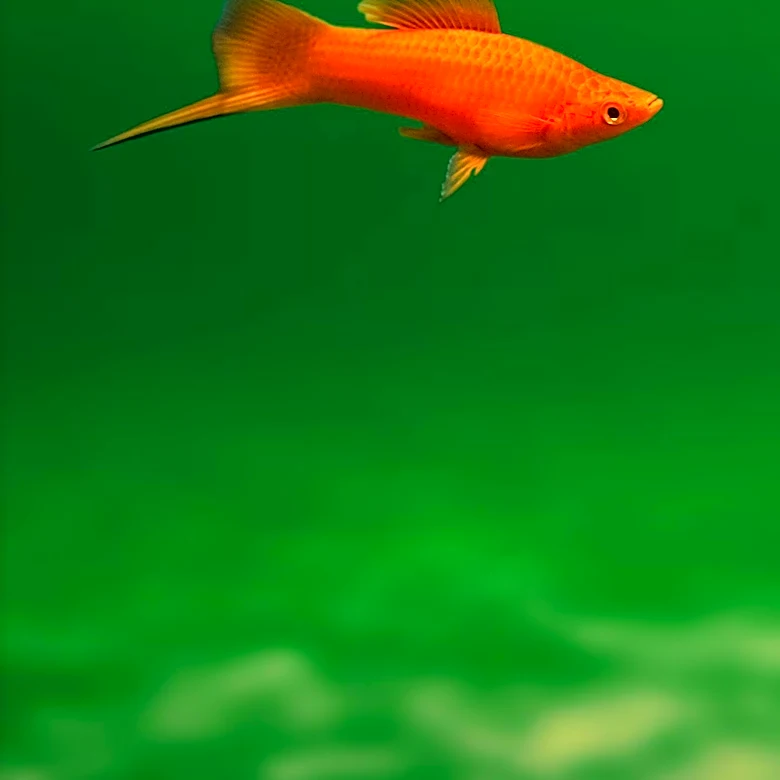



The platy, a common name for freshwater fish in the genus *Xiphophorus*, is a highly popular choice for aquariums. These small, vibrant fish are native to the east coast of Central America and southern Mexico. Known for their livebearing reproduction, platies are related to other well-known aquarium fish like guppies and mollies. Their adaptability and diverse coloration have made them a staple in the aquarium hobby, though most platies sold today
are hybrids resulting from extensive interbreeding between species such as the southern platyfish and the variatus platy.
Origins and Species
The platy's natural habitat spans from Mexico south to Belize, Guatemala, and Honduras. They thrive in plant-rich, still or slow-moving waters, often found near shorelines in dense vegetation. The two primary species contributing to the modern aquarium platy are the southern platyfish (*Xiphophorus maculatus*) and the variable platyfish (*Xiphophorus variatus*). The southern platyfish can reach a maximum length of 2.8 inches (7.0 cm), while the variable platyfish also grows to a similar size. Wild varieties of these fish typically exhibit more subdued coloration, such as olive with black marbling or spots, lacking the bright hues seen in captive-bred specimens.
Over time, these two species have been interbred to such an extent that distinguishing between them has become challenging. The vast majority of platies available in pet stores are hybrids, showcasing a wide array of colors and fin shapes not found in their wild ancestors. This hybridization has contributed to their hardiness and the extensive variety that appeals to aquarists.
Physical Characteristics and Sexual Dimorphism
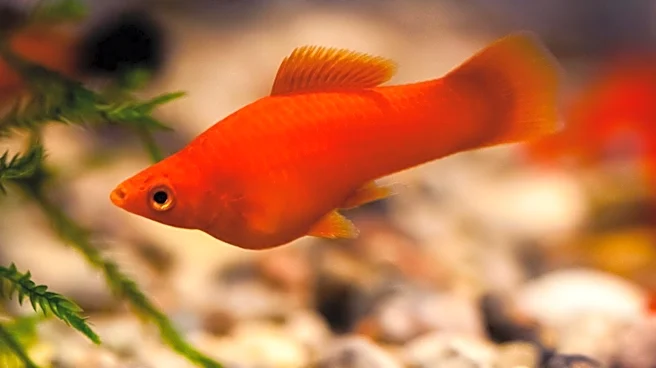
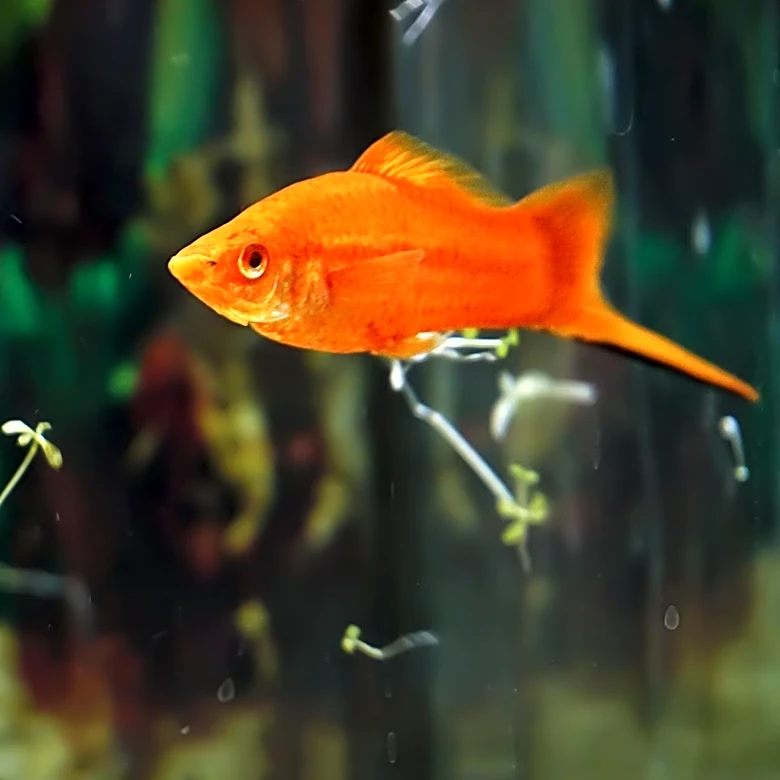
Platies possess a stocky body that is high-backed and flattened on the sides. While both sexes are relatively small, there are subtle differences. Male platies typically range from 0.8 to 1.6 inches (2 to 4 cm) and are generally more slender than females, which can grow to 1.2 to 2 inches (3 to 5 cm). The male's caudal fin is often more pointed, and its anal fin has evolved into a stick-shaped reproductive organ called a gonopodium. In contrast, the female southern platyfish has a fan-shaped anal fin.
Coloration is highly variable, especially in captive-bred forms. Wild platies often have a yellowish-gray base color that can shimmer blue or green under light. Some populations in Belize are notably orange or red. Many forms display black or brown spots, speckles, or vertical stripes on their sides, and often have black or brown markings at the base of their caudal fin. Males tend to exhibit more intense coloration than females, adding to their visual appeal in an aquarium setting.
Social Behavior and Aquarium Care
Platies are not schooling fish in the strict sense, but rather live in loose social groups. They are active and curious, constantly searching for food, and generally peaceful, making them suitable for community aquariums. They tend to occupy the middle and upper levels of the water column and will seek refuge in aquatic plants when threatened. It is recommended to keep platies in groups, as they are social creatures and should not be housed alone.
When keeping platies, a ratio of at least two to three females per male is often advised to prevent excessive harassment of individual females by the males, who are very active in courtship. While some studies suggest that a male-heavy ratio might reduce stress on females due to increased male rivalry, the general consensus in aquaristics favors a female surplus. Platies are omnivores, with a preference for plant matter and algae. Their diet in the wild includes algae, plant parts, insects, and small crustaceans, which should be reflected in their aquarium feeding to ensure their health.