

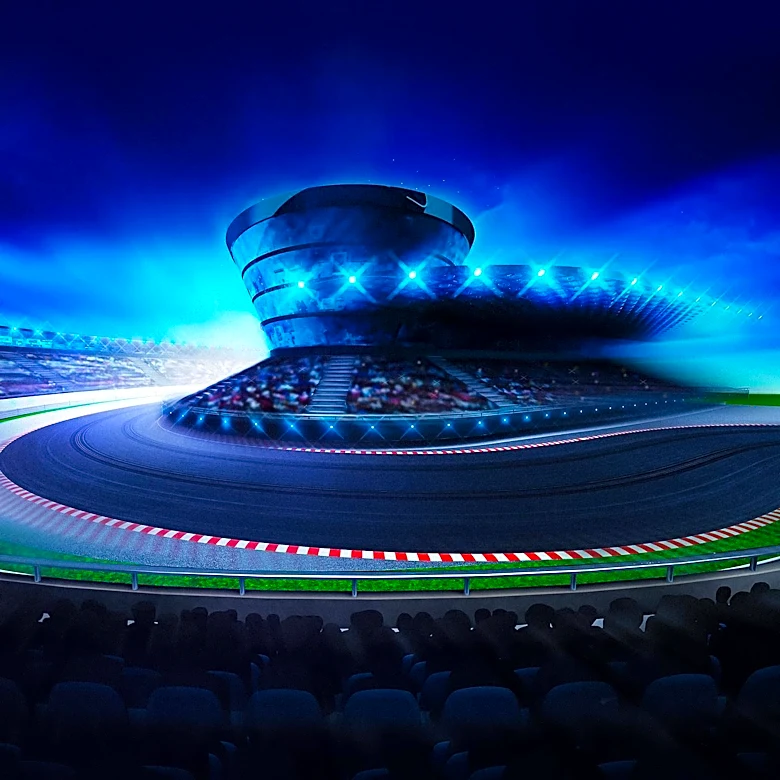
The Las Vegas Motor Speedway stands as a testament to versatility in the world of motorsport and entertainment. Located in Clark County, Nevada, near North Las Vegas, this expansive 490-hectare complex is far more than just a single race track. It is a dynamic venue that hosts a broad spectrum of racing disciplines, from high-speed NASCAR and IndyCar events to drag racing and short track competitions. Beyond the roar of engines, the Speedway has also
embraced large-scale entertainment, transforming into a major festival ground, showcasing its adaptability and importance as a regional attraction.
A Spectrum of Racing Disciplines
The Speedway's commitment to diverse racing is evident in its multiple track configurations. Initially, the complex, then known as the Las Vegas Speedrome, featured a road course and a dragstrip upon its opening in 1972. Over the years, this foundation expanded significantly. A 3/8-mile short track was added in 1985, catering to different forms of oval racing. The most significant addition was the $72 million superspeedway, inaugurated in September 1996, which immediately began hosting major events like IndyCar and NASCAR Truck Series races. This superspeedway, with its reconfigured D-oval and increased banking in 2006, became a prime venue for stock car racing, attracting top series like the NASCAR Cup Series.
Further enhancing its racing capabilities, the dragstrip was relocated and became known as The Strip at Las Vegas Motor Speedway, maintaining its role for high-speed acceleration contests. A new 2.400-mile (3.862 km) road course was also built, utilizing the former dragstrip area, providing a challenging circuit for road racing enthusiasts. In 2012, a third road course, designed by Romain Thievin, was introduced. This 1.400-mile (2.253 km) course features eleven turns and an 1,800-foot (548.6 m) straightaway, offering yet another distinct racing experience. Additionally, a quarter-mile (402 m) oval was constructed within the central area of the circuit, specifically designed for Legends Cars, Bandoleros, and Thunder Roadster vehicles, ensuring that a wide range of racing categories can find a home at the Speedway.
Beyond the Track: Major Entertainment Events
While motorsport remains at its core, the Las Vegas Motor Speedway has successfully diversified its offerings to include large-scale entertainment events, significantly broadening its appeal. A prime example is the Electric Daisy Carnival (EDC), a highly popular rave party hosted by Insomniac Events. The Speedway first welcomed EDC in June 2011, drawing over 235,000 attendees over three days. The festival's popularity grew exponentially, with attendance reaching 315,000 in 2012 and an impressive 345,000 in 2013. This success led to a 10-year agreement with the site owners, ensuring the festival's presence through 2022.
This integration of non-racing events highlights the Speedway's strategic vision to maximize its vast complex. The ability to transform its grounds from a high-octane racing environment to a massive festival site demonstrates remarkable operational flexibility. The construction of amenities like the Neon Garage fan zone and a new press center, alongside the repositioning of the pit lane closer to the grandstands, further underscores the commitment to enhancing the overall visitor experience, whether for a race or a concert. This multi-faceted approach has cemented the Las Vegas Motor Speedway's reputation not just as a premier racing facility, but as a significant entertainment destination in the Las Vegas area.