




The Las Vegas Motor Speedway, a prominent motorsport complex in Nevada, has undergone several significant ownership changes and developmental milestones that have profoundly shaped its identity and capabilities. From its humble beginnings as the Las Vegas Speedrome to its current status as a sprawling 490-hectare facility, the Speedway's journey is marked by strategic investments and expansions. These pivotal moments, particularly changes in ownership,
have driven the continuous evolution of the complex, allowing it to host a diverse array of racing and entertainment events.
Early Development and Initial Ownership
The genesis of the Las Vegas Motor Speedway can be traced back to 1972 with the opening of the Las Vegas Speedrome. This initial complex was established after the closure of the Stardust International Raceway in 1970, fulfilling the need for a new automotive facility in the Las Vegas area. It began with a basic setup, including a road course and a dragstrip, laying the groundwork for future growth. A significant shift occurred in 1983 when Richie Clyne of the Imperial Palace acquired the circuit. Under Clyne's ownership, the complex was renamed Las Vegas Speedway Park, and a 3/8-mile short track was added in 1985, signaling the first major expansion and a clear vision for enhancing the facility's racing capabilities.
The most substantial early investment came with the construction of a new superspeedway, a project costing $72 million. This state-of-the-art track was inaugurated in September 1996, marking a new era for the Speedway. Its opening was celebrated with an IndyCar race on September 15, won by Richie Hearn, followed by a NASCAR Truck Series race in November of the same year. These events immediately positioned the Speedway as a significant venue for national racing series, attracting attention and setting the stage for its future as a premier motorsport destination.
Speedway Motorsports, Inc. Acquisition and Subsequent Growth
A transformative moment arrived in December 1998 when Speedway Motorsports, Inc., a major entity based in Charlotte, North Carolina, acquired the Las Vegas Motor Speedway for $215 million. This acquisition was a game-changer, bringing the complex under the umbrella of a company with extensive experience in managing top-tier racing facilities. Following the acquisition, Chris Powell, a seasoned publicist in motor sports, was appointed president and general manager, a role he continues to hold, overseeing the strategic direction and ongoing development of the Speedway.
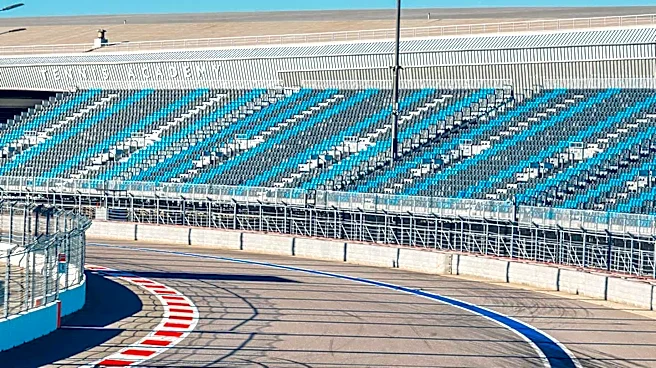
Under Speedway Motorsports, Inc.'s ownership, the complex underwent extensive modernization and expansion. The dragstrip was relocated and rebranded as The Strip at Las Vegas Motor Speedway, and a new 2.400-mile (3.862 km) road course was constructed. The 3/8-mile oval was rebuilt with a new pit lane and a repositioned start/finish line. A major reconfiguration of the D-oval track in 2006 saw increased banking in the turns, ranging from 12 to 20 degrees, and the addition of a fan zone called the Neon Garage, a new press center, and a pit lane moved closer to the grandstands. Further diversification included a new quarter-mile (402 m) oval for Legends Cars, Bandoleros, and Thunder Roadster vehicles, and a third road course designed by Romain Thievin in 2012. These continuous investments and strategic decisions by Speedway Motorsports, Inc. have been instrumental in solidifying the Las Vegas Motor Speedway's status as a leading motorsport and entertainment venue.