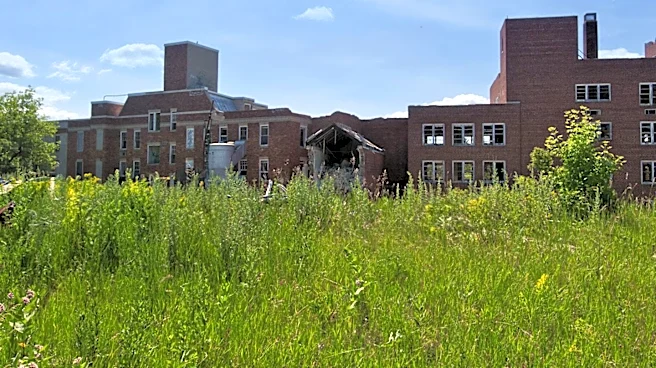








Eastern State Hospital, located in Williamsburg, Virginia, holds a significant place in American history as the first public facility in the present-day United States built exclusively for the care and treatment of the mentally ill. Established in 1773, its foundation marked a pivotal shift in societal attitudes towards mental illness, moving away from superstition and towards a more compassionate, science-based approach. The original structure, though
later reconstructed in 1985 after a fire, represented a groundbreaking commitment to institutional care for those suffering from mental health conditions.
The Vision of Governor Francis Fauquier
The genesis of Eastern State Hospital can be traced back to the impassioned speeches of Francis Fauquier, the Royal Governor of the colony of Virginia. On November 6, 1766, and again on April 11, 1767, Governor Fauquier addressed the House of Burgesses, advocating for the establishment of a facility for the mentally ill. He highlighted the plight of "poor unhappy set of People who are deprived of their senses and wander about the Country, terrifying the Rest of their fellow creatures," arguing for "A legal Confinement, and proper Provision" for these individuals. Fauquier emphasized that "Every civilized Country has a Hospital for these People, where they are confined, maintained and attended by able Physicians, to endeavor to restore to them their lost reason." His persistent appeals underscored a growing recognition of mental illness as a condition requiring medical attention and humane care.
Enlightenment Principles and Changing Perceptions
Governor Fauquier's advocacy was deeply rooted in the Enlightenment principles prevalent in the 18th century. This era was characterized by a rejection of superstitions and religious dogma, favoring instead science and logical reasoning. Philosophers like David Hume and Voltaire were exploring the value of human life, which began to reshape perceptions of the mentally ill. In contrast to the treatment of "insane people" in London, who were often viewed as entertainment and comical relief—with institutions like Bethlehem Royal Hospital (Bedlam) even attracting tourists to parades of inmates—Enlightenment attitudes encouraged greater sensitivity. There was a burgeoning belief that mental illness was a legitimate illness of the mind, akin to a physical disease, and therefore treatable.
From Public Gaol to Dedicated Care
Before Fauquier's interventions, individuals deemed mentally ill were not diagnosed by medical professionals but rather judged by a panel of 12 citizens, much like a jury, and classified as criminal, lunatic, or idiot. Many of those labeled "lunatic" were confined in the Public Gaol in Williamsburg. The idea of a dedicated hospital likely gained traction among taxpayers who had family members or close friends affected by mental illness. Prior to Eastern State Hospital, the Pennsylvania Hospital, a Quaker institution in Philadelphia, was one of the few places where mentally ill patients were sometimes admitted. However, until Benjamin Rush's campaign in 1792, these patients were often relegated to the basement, kept out of sight from other patients needing medical assistance. The eventual establishment of Eastern State Hospital, though after Fauquier's death in 1768, represented a significant step forward, providing a dedicated space for the care and potential recovery of the mentally ill in the American colonies.