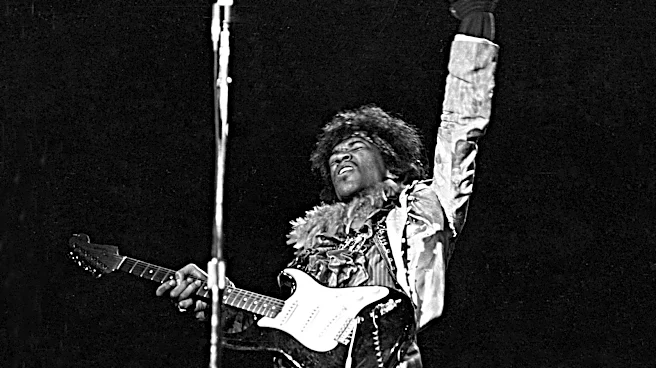








Jimi Hendrix, an American guitarist whose influential career spanned from 1962 to 1970, left behind a significant recorded legacy. His discography, specifically the recordings released during his lifetime up until his death on September 18, 1970, showcases his evolution from a backing musician to a global rock icon. This period saw the release of best-selling studio albums, numerous singles, and important live recordings that cemented his place in music history.
Early Career as a Sideman
Before achieving widespread fame, Jimi Hendrix honed his skills as a backing guitarist for various American R&B artists. During this formative period, he recorded 24 singles as a sideman. Notable artists he worked with included the Isley Brothers and Little Richard. This experience provided him with a foundation in performance and recording, contributing to the unique style he would later develop. These early recordings, though not under his own name, are an integral part of his overall musical journey and demonstrate his versatility and talent even before his solo career took off.
His work as an accompanist appears on several different labels, reflecting the diverse nature of his early engagements. These contributions as a sideman are distinct from his later, more famous releases, offering a glimpse into the musical landscape he navigated before forming his own band and gaining international recognition. The sheer volume of 24 singles as a sideman highlights a busy and productive period of his career, laying the groundwork for his future success.
The Jimi Hendrix Experience and Studio Albums
Beginning in late 1966, Hendrix's career took a dramatic turn with the formation of the Jimi Hendrix Experience. With this group, he recorded three best-selling studio albums and 13 singles. These albums were originally released by Track Records in the United Kingdom and Reprise Records in the United States. The studio albums were critical and commercial successes, establishing Hendrix as a groundbreaking artist.
In addition to the studio albums, an Experience compilation album was also issued prior to his death. These recordings captured his innovative guitar work, songwriting, and vocal performances, defining the sound of a generation. The material from the Jimi Hendrix Experience forms the core of his most recognized work, showcasing his unique blend of blues, rock, and psychedelic influences. The impact of these albums was immediate and lasting, influencing countless musicians.
Live Performances and Post-Experience Releases
Live performances were a crucial aspect of Hendrix's artistry, and several recordings from these shows were released during his lifetime. Half of a live album recorded at the Monterey Pop Festival was issued before his death, capturing one of his most iconic performances. After the breakup of the Experience in mid-1969, songs from his live performances were included on the *Woodstock: Music from the Original Soundtrack and More* album, documenting another legendary festival appearance.
Following the Experience, Hendrix also worked with the Band of Gypsys. A studio single with the Band of Gypsys was released, as was their self-titled album. The *Band of Gypsys* album was issued by Track Records but, due to an American contract dispute, was released by Capitol Records in the U.S. The *Woodstock* soundtrack album was issued by Atlantic Records and its subsidiary Cotillion Records in the U.S. These later releases continued to demonstrate Hendrix's evolving musical direction and his commitment to live performance, even as his career neared its untimely end.