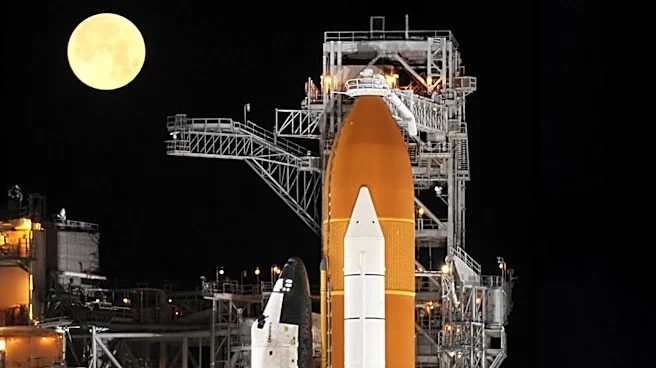





The STS-114 mission was a landmark in NASA's history, not only for its role in returning the Space Shuttle to flight but also for the technological innovations and safety measures it introduced. Following the Columbia disaster, NASA was determined to enhance the safety of its missions, and STS-114 was the first to implement these new protocols. This mission was a critical testbed for technologies that would shape the future of space exploration.
Technological Advancements
One
of the most significant technological advancements introduced during STS-114 was the Orbital Boom Sensor System (OBSS). This system was designed to inspect the shuttle's heat shield for any potential damage that could occur during launch. The OBSS was equipped with a laser distance range imager and a laser camera system, capable of detecting damage with millimeter precision. This technology was crucial in ensuring the safety of the shuttle during re-entry, addressing one of the key vulnerabilities highlighted by the Columbia disaster.
In addition to the OBSS, the mission also involved the deployment of the Raffaello Multi-Purpose Logistics Module and the External Stowage Platform-2. These components were essential for the maintenance and operation of the International Space Station (ISS). The mission also included the replacement of a Control Moment Gyroscope, which was vital for the station's stability and orientation.
Safety Measures and Procedures
Safety was a paramount concern for NASA during STS-114, and the mission incorporated several new procedures to mitigate risks. The launch was initially delayed due to unresolved fuel sensor anomalies, highlighting NASA's commitment to addressing even the smallest potential issues before proceeding with the mission. This cautious approach was a direct result of the lessons learned from the Columbia disaster.
The mission also included a series of spacewalks to test new repair techniques for the shuttle's heat shield. These spacewalks were designed to evaluate the effectiveness of various repair methods, ensuring that astronauts could address any damage encountered during future missions. The successful execution of these spacewalks demonstrated the feasibility of in-flight repairs, a critical capability for the safety of the crew and the shuttle.
Impact on Future Missions
The innovations and safety measures implemented during STS-114 had a lasting impact on NASA's Space Shuttle program. The mission set a new standard for safety and technological excellence, paving the way for future missions. The successful deployment of the OBSS and the testing of new repair techniques were instrumental in restoring confidence in the Space Shuttle program.
STS-114 was a testament to NASA's resilience and commitment to safety. The mission not only honored the memory of the Columbia crew but also ensured that their legacy would lead to safer and more successful missions in the future. The advancements made during STS-114 continue to influence space exploration today, highlighting the importance of innovation and safety in the pursuit of knowledge.