





The PBS NewsHour, a staple of American public television, has a rich history of evolution, beginning as a focused local news program and growing into a comprehensive national broadcast. What started as a half-hour show dedicated to in-depth coverage of single issues on a New York City station eventually expanded its reach across the country, adapting its format, name, and production over several decades. This journey reflects a commitment to detailed
journalism, marked by key partnerships and strategic changes that shaped its identity and influence in the media landscape.
The Genesis: The Robert MacNeil Report
The program's origins can be traced back to October 20, 1975, with the debut of *The Robert MacNeil Report*. This initial iteration was a half-hour local news program produced by WNET, a public television station in New York City. Its unique approach was to dedicate each episode to a single issue, allowing for a deeper exploration than typical news segments. This format quickly gained traction, leading to its expansion beyond local New York audiences. By December 1, 1975, just over a month after its premiere, *The Robert MacNeil Report* began airing on PBS stations nationwide, signaling its potential as a significant national news offering.
The success of this early format laid the groundwork for future developments. The program's commitment to in-depth, single-topic coverage set it apart and established a foundation for its reputation for serious journalism. This initial phase was crucial in demonstrating the viability of a public television news program that prioritized substance over brevity, a characteristic that would define its subsequent iterations.
The MacNeil/Lehrer Era: A Partnership Takes Shape
A pivotal moment in the program's history occurred on September 6, 1976, when it was renamed *The MacNeil/Lehrer Report*. This change reflected the growing partnership between Robert MacNeil and Jim Lehrer, who became co-anchors. The program adopted a distinctive two-anchor, two-city format, with MacNeil broadcasting from WNET's studios in New York City and Lehrer anchoring from WETA's studios in Arlington, Virginia. This dual-location setup became a hallmark of the broadcast, symbolizing its national scope and collaborative nature.
The partnership between MacNeil and Lehrer solidified the program's identity. In 1977, Charlayne Hunter-Gault joined the series as a correspondent, often serving as a substitute host when MacNeil or Lehrer were absent. Her role expanded significantly in 1983 when she became the series' national correspondent, further enhancing the program's journalistic depth and reach. This period established the core team that would guide the program through significant growth and rebranding.
Expanding Horizons: From Report to NewsHour
The program underwent another significant transformation in 1983, rebranding as *The MacNeil/Lehrer NewsHour*. This change marked an expansion in scope and duration, reflecting a move towards a more comprehensive daily news broadcast. The "NewsHour" designation indicated a longer format, allowing for even more extensive coverage of national and international events. This evolution positioned the program as a major player in evening news, offering an alternative to commercial network broadcasts with its signature in-depth approach.
Following Robert MacNeil's departure in 1995, the program was renamed *The NewsHour with Jim Lehrer*, with Lehrer continuing as the sole anchor. This period highlighted Lehrer's enduring presence and leadership. The program maintained its commitment to detailed reporting and analysis under his guidance. In 2009, the program was again rebranded to its current title, *PBS NewsHour*, two years before Jim Lehrer formally ended his tenure as a regular anchor in 2011. This rebranding aimed to modernize its image and integrate more closely with its online presence, while still upholding its long-standing journalistic principles. The program also expanded its offerings, introducing weekend editions in 2013, initially produced by WNET before WETA assumed full production responsibilities in 2022, further solidifying its role as a comprehensive news source across the week.
Modern Adaptations and Future Directions
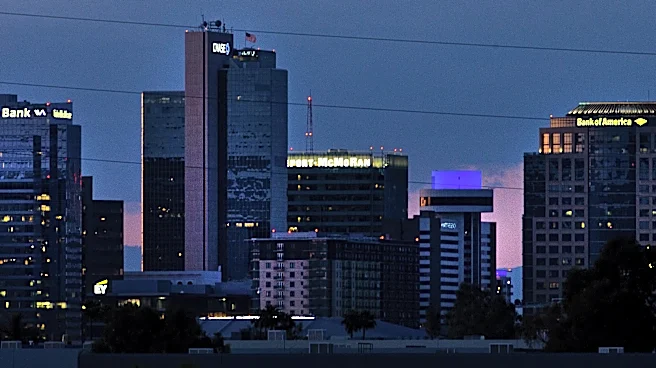
The *PBS NewsHour* has continued to adapt to changing media landscapes. In 2019, *PBS NewsHour West* launched, a regional bureau based in Phoenix, Arizona, affiliated with Arizona State University. This bureau produced updated news summaries for Western U.S. viewers and online audiences, demonstrating an effort to provide more timely and regionally relevant content. While *PBS NewsHour West* concluded operations in late 2025, its creation reflected an ongoing commitment to innovation.
Further changes in 2022 saw Amna Nawaz and Geoff Bennett named co-anchors, succeeding Judy Woodruff, who stepped down at the end of that year. The program also introduced a new logo and studio in 2024, aligning with PBS's broader rebranding efforts. These continuous updates, from its initial local broadcast to its current multi-platform presence, underscore the *PBS NewsHour*'s enduring mission to provide in-depth, reliable news coverage to the American public, constantly evolving while maintaining its core journalistic values.