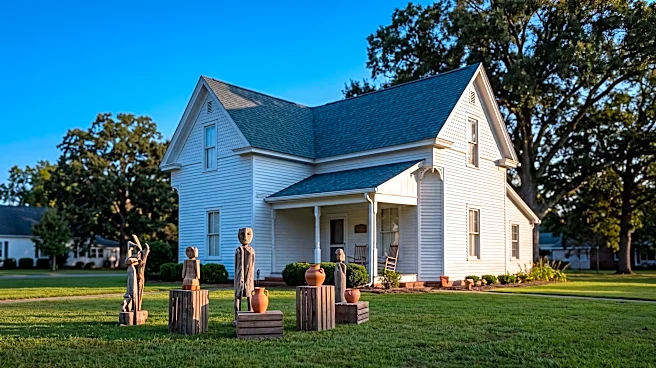








Angela Yvonne Davis, born on January 26, 1944, in Birmingham, Alabama, grew up in a neighborhood known as "Dynamite Hill." This area was particularly significant as it was an African American neighborhood in a city where Jim Crow laws enforced racial segregation throughout the Southern United States. Her early life was deeply influenced by the racial tensions and systemic inequalities prevalent during this period, setting the stage for her future
as a prominent activist and scholar. The environment of her childhood, marked by both racial oppression and the burgeoning Civil Rights Movement, played a crucial role in shaping her political and philosophical outlook.
Family Background and Educational Influences
Davis's family provided a foundation of education and resilience. Her father was a graduate of St. Augustine's College, an institution specifically for Black Americans located in Raleigh, North Carolina. He briefly worked as a high school history teacher but, finding his salary insufficient, left teaching to acquire a gas station in Birmingham's Black community. Her mother, who had grown up in a foster family, also pursued higher education and became an elementary school teacher. This emphasis on education and self-sufficiency within her family, despite the limitations imposed by segregation, instilled in Davis a strong sense of purpose and intellectual curiosity from a young age.
Exposure to Radical Ideas in New York
Davis's move to New York marked a new phase in her political socialization. She lived with Reverend William Howard Melish, a pastor who had lost his position at Brooklyn's largest Episcopal church due to his anti-McCarthyism stance and affiliation with the Soviet-American Friendship Organization. The faculty at the Elisabeth Irwin secondary school, which Davis attended, largely consisted of teachers barred from public education due to their left-leaning political views. It was in this environment that she first encountered the concept of socialism, becoming particularly fascinated by utopian experiments like those of Robert Owen.
Embracing Marxism and Early Activism
Reading the Communist Manifesto was a pivotal moment for Davis, leading her to understand the problems faced by Black people within the broader context of a working-class movement. This intellectual journey led her to join Advance, a Marxist-Leninist youth organization, marking her first direct experience with activism. She connected with long-time friends like Margaret Burnham and Mary Lou Patterson, and also reconnected with Bettina Aptheker, daughter of communist historian Herbert Aptheker, whose home often hosted the group's meetings. Despite feeling a sense of frustration at having left the South just as the Civil Rights Movement gained momentum with sit-ins starting in Greensboro in February 1960, Davis heeded her parents' advice to complete her school year in New York, continuing her political development and laying the groundwork for her future advocacy.