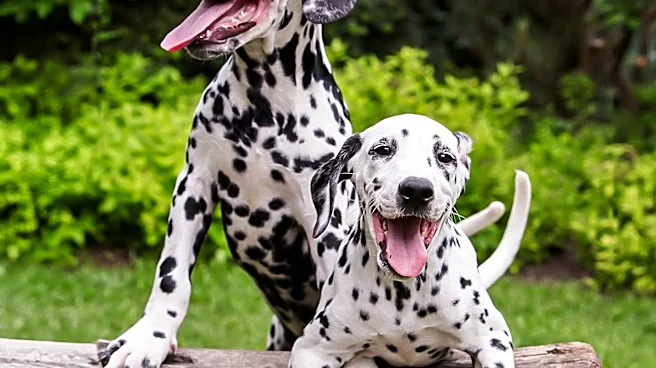










The Dalmatian dog, with its distinctive white coat and dark spots, is a breed that has captured the imagination of many. Known for its energetic personality and unique appearance, the Dalmatian has a rich history that traces back to Croatia. This article delves into the historical journey of the Dalmatian, exploring its origins and evolution over the centuries.
Origins in Croatia
The Dalmatian breed is believed to have originated in Croatia, specifically in the historical
region of Dalmatia. The first known written reference to a Dalmatian dog dates back to 1375, when Peter, Bishop of Đakovo, mentioned a hunting dog found in Dalmatia with short white hair and black round spots. This early reference highlights the breed's long-standing presence in the region. The breed was initially known as Canis Dalmaticus, a name that reflects its geographical roots.
The earliest illustrations of the Dalmatian have been discovered in Croatia, including an altar painting in Veli Lošinj from the early 17th century and a fresco in Zaostrog. These historical depictions provide visual evidence of the breed's existence and its significance in Croatian culture. By the early 18th century, the Dalmatian was well-documented in the archives of the Archdiocese of Đakovo, further cementing its place in history.
Evolution as a Carriage Dog
As the breed evolved, the Dalmatian became known for its role as a carriage dog. In the 18th century, when the breed was introduced to England, it quickly became the preferred choice for accompanying carriages. The Dalmatian's ability to trot alongside carriages and protect the occupants from banditry made it an invaluable asset to the wealthy and traders.
The Dalmatian's role as a carriage dog was not only practical but also a symbol of status. The number of Dalmatians accompanying a carriage often indicated the wealth and social standing of the occupants. This association with carriages led to the breed being synonymous with the term "carriage dog." The British Carriage Dog Society continues to preserve this heritage, highlighting the breed's historical significance.
Modern Popularity and Challenges
In modern times, the Dalmatian has transitioned from a working dog to a popular companion animal. Its distinctive appearance and energetic nature have made it a favorite among dog enthusiasts. The breed is commonly entered into kennel club competitions, showcasing its beauty and agility.
However, the Dalmatian faces certain health challenges, such as hyperuricemia, which can lead to kidney and bladder stones. Efforts like the Dalmatian-Pointer Backcross Project have been initiated to address these genetic health issues. Despite these challenges, the Dalmatian remains a beloved breed, celebrated for its unique history and enduring charm.