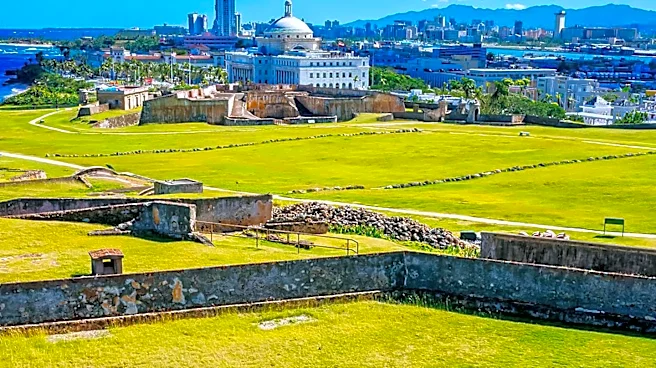







The Spanish settlement of Puerto Rico marks a significant chapter in the history of the Americas. It began with the arrival of Christopher Columbus and continued with the establishment of the first Spanish settlements. This article delves into the early days of Spanish colonization, focusing on the initial landing and the founding of the first settlements on the island.
Columbus's Arrival and Naming of the Island
On November 19, 1493, Christopher Columbus landed on the island during his second
voyage to the New World. He named the island San Juan Bautista in honor of Saint John the Baptist. This marked the beginning of Spanish interest in the island, which would later become a crucial part of the Spanish Empire in the Caribbean. Columbus's landing was a pivotal moment, as it set the stage for further exploration and eventual colonization by the Spanish.
The island's strategic location in the Caribbean made it an attractive site for Spanish settlement. It served as a gateway to the rest of the Americas, providing a base for further exploration and conquest. The name San Juan Bautista would eventually be transferred to the island's capital, while the island itself became known as Puerto Rico.
Establishment of Caparra and Early Challenges
The first Spanish settlement on the island was Caparra, founded on August 8, 1508, by Juan Ponce de León, a lieutenant under Columbus. Ponce de León later became the first governor of Puerto Rico. Caparra was located near the modern-day city of San Juan, but it was soon abandoned due to its unfavorable location. The settlement faced numerous challenges, including a lack of fresh water and difficulties in defending against attacks.
In 1511, a second settlement, San Germán, was established in the southwestern part of the island. This settlement marked the beginning of a more permanent Spanish presence on the island. Despite the challenges, these early settlements laid the groundwork for the development of Puerto Rico as a Spanish colony.
Transition to Puerto Rico and San Juan
During the 1520s, the island underwent a significant transformation. The name Puerto Rico, meaning "rich port," was adopted for the island, while the port city became known as San Juan. This change reflected the island's growing importance as a hub of trade and commerce in the Caribbean.
The establishment of these early settlements and the renaming of the island were crucial steps in the Spanish colonization of Puerto Rico. They set the stage for the island's development as a key part of the Spanish Empire, influencing its culture, language, and architecture for centuries to come. The legacy of these early days of settlement is still evident in Puerto Rico today, as the island continues to celebrate its rich Spanish heritage.