



The Kansas Speedway, a prominent tri-oval motor racing track located in Kansas City, Kansas, represents a significant development in American motorsport infrastructure. Its journey from a conceptual idea in the 1990s to a fully operational racing venue in the early 2000s was marked by ambitious planning, unexpected delays, and substantial renovations. Owned by the International Speedway Corporation (ISC), the track has become a key fixture in the NASCAR
calendar, hosting annual Cup Series races and evolving its facilities to meet modern racing demands.
Initial Ambitions and Early Challenges
The genesis of the Kansas Speedway can be traced back to the 1990s, a period characterized by a boom in oval track construction across the United States. In December 1996, the International Speedway Corporation (ISC) publicly announced its preliminary intentions to construct a new track in the Midwest. The initial vision was for a substantial facility, projected to cost $100 million and boast a seating capacity of 120,000. John Story, an official with ISC, identified the Kansas City metropolitan area as a prime candidate for this ambitious project, a sentiment echoed and supported by the Kansas City Area Development Council.
Early in 1997, the city of Gardner, Kansas, put forward an initial bid to host the track. However, this proposal encountered considerable local opposition. City officials, after observing the 1997 Daytona 500, came to the realization that situating such a large-scale development in Gardner would lead to significant issues, particularly due to its proximity to existing residential areas and the inevitable heavy traffic congestion. Consequently, Gardner withdrew its bid. By April of that year, ISC had narrowed its potential sites down to 16 locations, which included plots in Platte County, Missouri, and Wyandotte County, Kansas. The following month, ISC considered a site near Interstate 29, close to the Kansas City International Airport. By July, the Kansas City area was declared ISC's "No. 1" choice, with the corporation requesting local financial support for the project. Three specific locations were then identified: one in Missouri near Interstate 29, and two in Kansas—one near the intersection of Interstate 70 and Interstate 435, and another near 110th Street and Parallel Parkway. Both Kansas and Missouri officials actively lobbied ISC, traveling to the corporation's headquarters to advocate for their respective areas, with the project generally receiving positive public support. By mid-August, Wyandotte County officials entered into negotiations with ISC, receiving strong backing from local county agencies.
Construction Delays and Financial Negotiations
By October, the plot of land near I-70 and I-435 in Wyandotte County was ultimately selected. Initial plans for this site projected a seating capacity of 75,000, with the potential for expansion to 150,000. The track's budget was estimated at nearly $200 million, and construction was slated to commence in the spring of 1998, with an anticipated completion date in 2000. However, a guarantee of a NASCAR Winston Cup race weekend was not immediately secured, as the NASCAR Winston Cup Series schedule was already experiencing significant growth in the 1990s. It was suggested that a "radical plan" would be necessary to secure such a prestigious event.
As final negotiations concluded, the project's cost escalated to over $252 million. ISC was offered a tax break extending until 2027, contingent on no changes in Kansas law. A proposed bill aimed to prolong this abatement period from 20 to 30 years, sparking considerable debate within the Kansas legislature regarding the duration of such tax incentives. After successfully passing through both the Kansas House of Representatives and the Kansas Senate, the tax breaks were officially signed into law by Bill Graves, who was the Governor of Kansas at the time. Despite these financial agreements, the track faced multiple lawsuits from homeowners residing in the area, which caused construction delays of several months. These legal challenges ultimately pushed back the track's opening from the planned year 2000 to 2001. The very first race held at the Kansas Speedway took place on June 2, 2001, featuring the NASCAR Winston West Series' Kansas 100.
Significant Renovations and Modernization Efforts
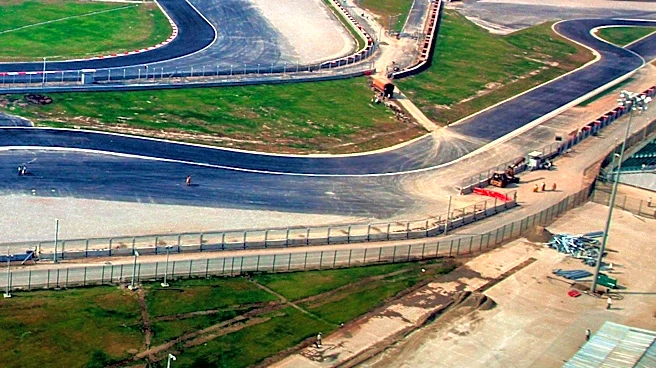
Over a decade after its initial opening, the Kansas Speedway underwent significant renovation efforts to modernize its facilities and enhance the racing experience. On July 8, 2011, plans for these renovations were officially announced. The scope of work included a complete repaving of the oval track, a crucial upgrade for maintaining competitive racing surfaces. Additionally, a new road course was to be established within the infield of the Speedway. These improvements were completed in 2012, with the "Roval" road course being fully integrated into the infield layout. A key aspect of the oval track's renovation was the alteration of its banking. The turns, which previously had a constant banking, were reconfigured to feature a progressive banking ranging from 15 to 20 degrees. This change was designed to offer more dynamic racing lines and potentially increase passing opportunities. These renovations underscore the ongoing commitment to maintaining the Kansas Speedway as a premier racing venue capable of hosting various forms of motorsport.