






The journey of "Black Panther: Wakanda Forever" from an initial idea to a completed film was marked by significant creative evolution and unforeseen challenges. As the sequel to the highly successful 2018 film "Black Panther," expectations were high, but the production faced a pivotal moment with the tragic passing of its lead actor. This event necessitated a fundamental shift in the film's narrative and production approach, transforming its development
into a testament to adaptation and remembrance within the Marvel Cinematic Universe.
The film's creation involved a meticulous process of writing, pre-production, filming across multiple locations, and extensive post-production work. Each stage contributed to shaping the final product, which ultimately became a poignant continuation of the Wakandan saga while honoring the legacy of its original star.
Initial Development and Unexpected Changes
Discussions for a sequel to "Black Panther" began almost immediately after the first film's release in February 2018, signaling Marvel Studios' confidence in the franchise. Ryan Coogler, who directed the original, entered negotiations to return as director in the months following, and Marvel Studios officially confirmed the sequel's development in mid-2019. Coogler also co-wrote the screenplay with Joe Robert Cole, indicating a consistent creative vision for the follow-up.
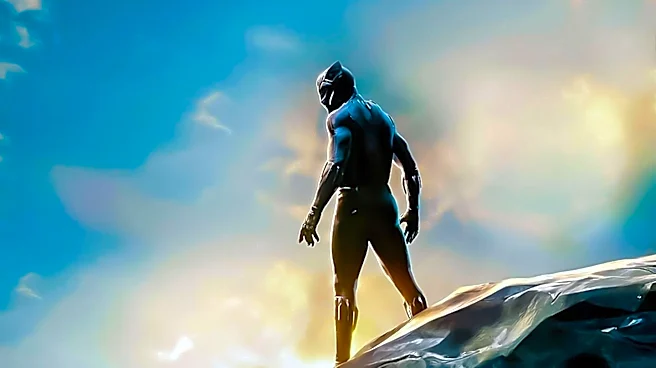
However, the plans for the film underwent a profound change in August 2020 with the death of Chadwick Boseman, the actor who portrayed King T'Challa and Black Panther, from colon cancer. This tragic event led Marvel to make the decision not to recast his role, a choice that significantly impacted the direction of the sequel. Instead of replacing Boseman, the filmmakers opted to address his character's absence within the narrative, leading to a story centered on the leaders of Wakanda fighting to protect their nation in the wake of King T'Challa's death. The return of other main cast members from the first film was confirmed in November 2020, and the sequel's title, "Black Panther: Wakanda Forever," was revealed in May 2021, setting the stage for a new chapter.
Filming and Production Hurdles
Principal photography for "Black Panther: Wakanda Forever" commenced in late June 2021. Filming primarily took place in Atlanta, utilizing both Trilith Studios and Tyler Perry Studios, which are prominent production facilities. The production then moved to Massachusetts in August 2021, indicating the need for diverse locations to capture the film's expansive scope.
A significant hurdle arose in November 2021 when filming was temporarily halted. This pause was necessary to allow actress Letitia Wright, who plays Shuri, to recover from an injury she sustained during the production. Such interruptions are not uncommon in large-scale film productions but can pose challenges to schedules and budgets. Despite this setback, filming resumed by mid-January 2022, demonstrating the crew's commitment to completing the project. The production officially wrapped in late March 2022 in Puerto Rico, bringing the extensive filming process to a close.
Post-Production and Final Touches
Following the completion of principal photography, the film entered its post-production phase, where the raw footage was transformed into the final cinematic experience. This stage involved editing, visual effects, sound design, and the composition of the musical score. The film's music was composed by Ludwig Göransson, who also scored the first "Black Panther" film, ensuring a consistent auditory landscape. Michael P. Shawver, Kelley Dixon, and Jennifer Lame were responsible for editing the film, a crucial role in shaping its narrative flow and pacing.
The extensive visual effects required for a superhero film of this scale would have been a major component of post-production, bringing the fantastical elements of Wakanda and Talokan to life. The combination of dedicated direction, a resilient cast and crew, and a thoughtful approach to the narrative challenges ultimately allowed "Black Panther: Wakanda Forever" to honor its predecessor while forging its own path within the Marvel Cinematic Universe.