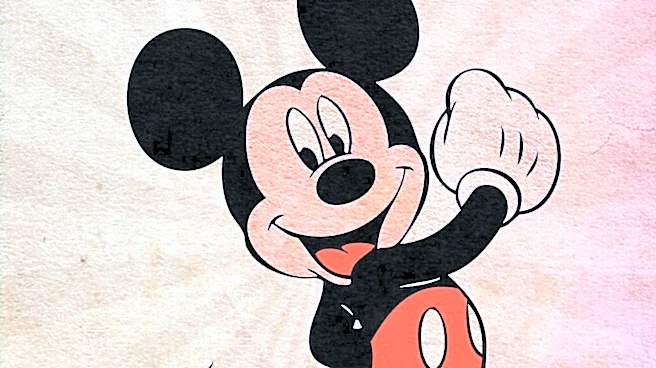





"Steamboat Willie," released on November 18, 1928, is celebrated not only for its pioneering use of synchronized sound but also as the official debut of Mickey Mouse. This short film introduces audiences to the iconic character in a lively and mischievous role, setting the stage for his future adventures. The narrative unfolds aboard a paddle steamer, showcasing Mickey's personality through his interactions with Captain Pete, Minnie Mouse, and various
farm animals. The plot, while simple, effectively highlights Mickey's resourcefulness, playful nature, and burgeoning charm, establishing the foundational elements of a character that would become a global phenomenon.
Mickey's Early Antics on the Steamboat
The film opens with Mickey Mouse at the helm of a side-wheeler paddle steamer, cheerfully whistling the tune "Steamboat Bill" and sounding the boat's whistles. This initial scene immediately establishes Mickey's lighthearted and somewhat carefree demeanor. His authority is quickly challenged by Captain Pete, who orders Mickey off the bridge. In a display of early defiance, Mickey blows a raspberry at Pete, narrowly avoiding a kick and causing Pete to accidentally kick himself. This comedic exchange sets up the dynamic between the two characters, with Mickey often outsmarting or annoying his larger, gruffer superior.
Mickey's early mishaps continue as he falls down the stairs, slips on a bar of soap, and lands in a bucket of water. A parrot laughs at his misfortune, prompting Mickey to retaliate by throwing the bucket on the bird's head. These moments, while brief, paint a picture of a character who is prone to comical accidents but also quick-witted and not easily intimidated. Captain Pete, meanwhile, takes over piloting the steamboat, engaging in his own crude humor by spitting chewing tobacco into the wind, which amusingly rings the boat's bell, before a second attempt backfires on him.
Minnie's Arrival and Musical Mayhem
The steamboat makes a stop at "Podunk Landing" to pick up livestock, leading to another display of Mickey's ingenuity. He struggles to get a slim cow onto the boat, eventually solving the problem by filling the cow's stomach with hay to fatten it into the harness. Just as they depart, Minnie Mouse appears, running to catch the boat. Mickey, initially unaware, hears her calls and heroically brings her aboard by hooking the cargo crane to her bloomers, a somewhat undignified but effective rescue.
Upon landing on the deck, Minnie accidentally drops her ukulele and sheet music for "Turkey in the Straw," which are promptly eaten by a goat. After a comical tug-of-war with the goat over the partially eaten ukulele, Mickey loses his grip, and the instrument lands inside the animal. This unexpected event leads to a moment of musical discovery: the force from the ukulele makes the goat begin to play musical notes. Mickey, seizing the opportunity, instructs Minnie to turn the goat's tail like a crank, effectively using the animal as a phonograph. This sequence escalates into a full-blown musical number, with Mickey using various objects on the boat as percussion and even "playing" the animals as instruments, showcasing his playful and improvisational spirit.
Consequences and Character Resolution
Captain Pete, clearly unamused by the impromptu concert, puts Mickey to work peeling potatoes. Mickey, in a display of petty defiance, wastefully peels the potatoes, discarding most of the vegetable along with the skin. The same parrot that laughed at him earlier reappears, mocking him again. Fed up, Mickey throws a half-peeled potato at the bird, knocking it into the river. The film concludes with Mickey laughing at the parrot's predicament, sitting among the potatoes. This ending reinforces Mickey's character as a mischievous but ultimately good-natured figure who gets the last laugh, solidifying his persona for audiences in his very first official appearance.