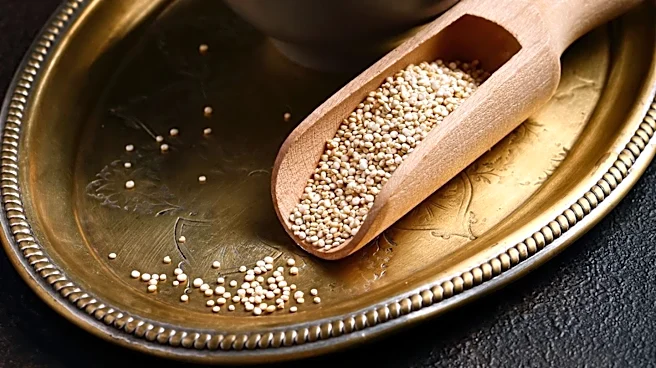






Quinoa, once a sacred crop to the Inca and a staple for Andean communities, has undergone a remarkable transformation from a regional food source to a globally recognized commodity. This journey has been marked by significant shifts in production, consumption, and economic dynamics, particularly in the early 21st century. The increasing international interest in quinoa, driven by its nutritional benefits, has reshaped agricultural practices in its native
lands and spurred cultivation efforts across the globe, creating both opportunities and challenges for producers and consumers alike.
The Rise of Global Demand and Price Fluctuations
For centuries, quinoa remained largely confined to the Andean region, cultivated by indigenous farmers. However, starting in the early 2000s, global interest in quinoa began to surge. Between 2004 and 2011, quinoa transitioned into a more prominent commodity, with growing excitement for its health benefits. This period saw Bolivia and Peru emerge as the primary major producers, supplying an increasingly eager international market. The demand from North America, Europe, and Australasia played a significant role in this expansion.
This heightened demand led to a dramatic increase in prices. Between 2006 and 2014, quinoa crop prices tripled, creating a boom-and-bust economic cycle. The quadrupling of prices paid to producers between 2011 and 2014 incentivized a substantial increase in cultivation, leading to a doubling of production in just four years. In 2014, global quinoa production reached a record 186,147 tons. However, this rapid growth eventually stabilized, with production fluctuating between 148,000 and 185,000 tons in subsequent years as the market adjusted and new producers entered the scene.
Shifting Production Landscapes
The global interest in quinoa spurred its cultivation beyond its traditional Andean home. By 2013, quinoa was being grown in approximately 70 countries, a significant increase from the mere eight countries cultivating it in the 1980s. This expansion included nations like Kenya, India, the United States, and various European countries. For instance, large-scale quinoa cultivation was introduced in France starting in 2009, with production growing from 100-200 hectares to 1,500 hectares by 2015, yielding over 2,000 tons annually. This French production, though higher in price, appealed to consumers prioritizing local agriculture.
In the United States, quinoa cultivation began in 1983 in the high-elevation San Luis Valley of Colorado. Experimental production also occurred in the Palouse region of Eastern Washington, and farmers in Western Washington began growing the crop, benefiting from a climate similar to coastal Chile. Varieties specifically developed for the high-altitude Snake River Plain in Idaho have become the largest planted varieties in North America. This global spread means that, due to the high diversity of Chilean landraces and the plant's adaptability, quinoa is now potentially cultivable almost anywhere in the world.
Socio-Economic and Environmental Considerations
The surge in global demand and production has brought both positive and negative consequences. While increased revenues have benefited some Andean farmers, they have also led to tensions over land within village communities. The intensification of quinoa production has sometimes come at the expense of traditional activities like llama farming, which provided both meat and wool, and whose manure fertilized the soil. This shift can lead to environmental concerns, such as soil depletion due to reduced fallow periods or mechanization.
Furthermore, the increased value of quinoa has raised concerns about food security for the indigenous original consumers. As producers rise above subsistence-level income, some may switch their own consumption to Western processed foods, which can be less healthy than a traditional, quinoa-based diet. This can happen either because quinoa is deemed too valuable to keep for personal consumption or because processed foods carry a higher social status despite their poorer nutritional value. Efforts are being made in some areas to distribute quinoa more widely and ensure that farming and poorer populations have access to it and understand its nutritional importance, including through school breakfast programs and government provisions for pregnant and nursing women.