


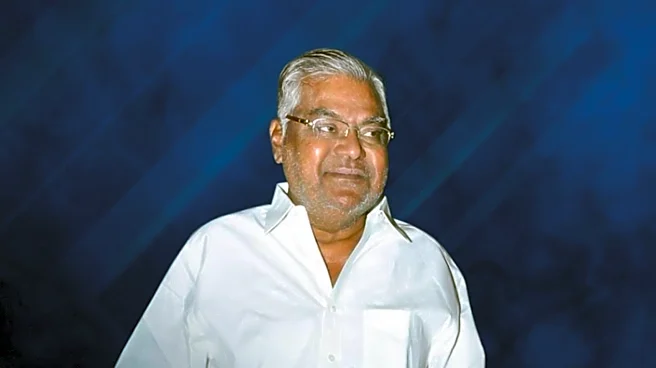
Richard Emerson Smith, widely known as "The Godfather of Make-Up," was an American special make-up effects artist and author whose innovative work profoundly impacted the entertainment industry. Born on June 26, 1922, and passing away on July 30, 2014, Smith's career spanned decades, leaving an indelible mark on both film and television. His self-taught expertise and relentless pursuit of new techniques revolutionized prosthetic makeup, allowing actors
unprecedented freedom of expression and bringing fantastical characters and realistic aging effects to life on screen. His contributions were recognized with numerous accolades, including an Academy Award for Best Makeup and an Academy Honorary Award for his career's work.
Early Career and Television Innovations
Smith's journey into professional makeup began after a period of military service, and he was entirely self-taught. Initially, his attempts to enter the film industry were met with rejection. However, a suggestion from his father led him to explore the burgeoning medium of television. This proved to be a pivotal moment, as Smith was appointed the first make-up director of WNBC, NBC's station in New York City, where he worked for fourteen years, often collaborating with producer David Susskind.
During his time at WNBC, Smith began to pioneer the development of prosthetic makeup, which is now more commonly known as special make-up effects. He conducted much of this groundbreaking work from the basement of his home in Larchmont, New York, a district where he resided for most of his life. This period was marked by a lack of collaboration among his peers, as Smith noted in a 2008 interview that colleagues tended to be secretive, and there wasn't much make-up work in New York, with Hollywood feeling like a distant world. Despite this environment, Smith pushed the boundaries of the craft.
Revolutionizing Prosthetic Makeup
One of Smith's most significant innovations involved prosthetic face masks. At the time, these were typically made in a single, rigid piece, which severely limited an actor's ability to convey emotion. Smith ingeniously developed a technique to create these prosthetics in three separate foam latex pieces. This multi-piece approach allowed actors to utilize their full range of facial expressions, bringing a new level of realism and nuance to characters requiring extensive makeup.
Initially, Smith's methods faced criticism from many professional make-up artists. However, the superiority of his techniques soon became evident. According to Rick Baker, Smith's protégé, the methods Smith invented for applying prosthetics to faces are now considered standard in the industry. This fundamental shift in technique not only improved the quality of on-screen makeup but also expanded the creative possibilities for filmmakers and television producers.
Memorable Works and Lasting Legacy
Smith's early television work showcased his burgeoning talent. For a 1959 television adaptation of *The Moon and Sixpence*, he transformed Laurence Olivier into a leprosy victim. Olivier's reaction, "Dick, it does the acting for me," underscored the profound impact of Smith's artistry. Other notable early contributions included his work on *Way Out* (1961), a supernatural syndicated series. For one episode, he created a memorable makeup of a man whose face was half-erased by spilled photo retouching fluid, and in another, a Hunchback of Notre-Dame makeup became permanently affixed to an evil actor.
His work on *Dark Shadows* in 1967, where he designed appliances for vampire Barnabas Collins' rapid aging, proved to be valuable preparation for his later film successes. Smith's filmography includes iconic works such as *Little Big Man* (1970), where he aged Dustin Hoffman from a teenager to a 121-year-old man, *The Godfather* (1972), *The Exorcist* (1973), *Taxi Driver* (1976), *Scanners* (1981), and *Death Becomes Her* (1992). His exceptional work on *Amadeus* (1985) earned him an Academy Award for Best Makeup. Beyond his practical work, Smith also shared his knowledge, publishing *Dick Smith's Do-It-Yourself Monster Make-up Handbook* in 1965, further cementing his legacy as a mentor and innovator in the field of special make-up effects.