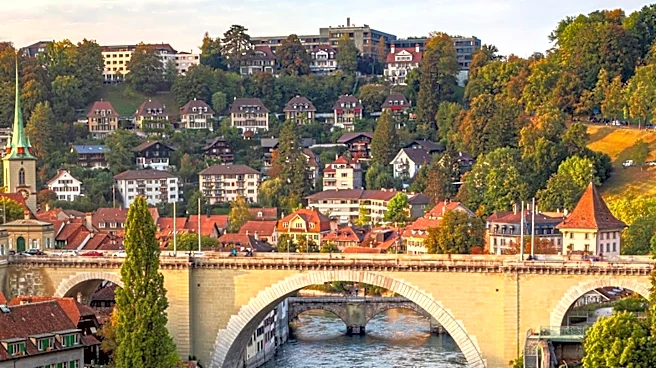








Bern, the capital of Switzerland, is not only a city rich in history and culture but also a significant center for education and economic activity. The city hosts a robust educational infrastructure, including the University of Bern, and boasts a diverse economy that supports a large workforce. This blend of academic excellence and economic vitality contributes to Bern's standing as a dynamic and thriving urban area, attracting both students and professionals.
A Flourishing Educational Landscape
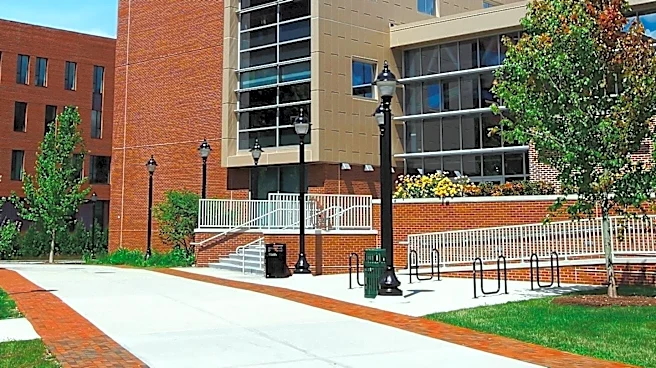
At the heart of Bern's educational system is the University of Bern, whose main buildings are primarily located in the Länggasse quarter. Founded in 1834, the University of Bern is a public research university regulated and financed by the Canton of Bern. It offers a broad selection of courses and programs across eight faculties and approximately 150 institutes, making it the third-largest university in Switzerland with around 19,000 students. The university's roots trace back to the sixteenth century when a collegiate school was established to train new pastors after the Reformation, evolving into an academy with four faculties by 1805, allowing for studies in theology, law, and medicine.
Beyond the university, Bern also hosts the University of Applied Sciences (Fachhochschule) and several vocational schools. The canton of Bern's school system includes one year of non-obligatory kindergarten, followed by six years of primary school and three years of obligatory lower secondary school, where pupils are separated by ability. Many residents pursue higher education, with about 39.2% completing non-mandatory upper secondary education and 18.9% completing additional higher education, including university or Fachhochschule. The city is also home to eight libraries, including the Schweiz. Nationalbibliothek/Bibliothèque nationale suisse and the Universitätsbibliothek Bern, which collectively held over 10 million books and media in 2008, with over 2.6 million items loaned out that year.
A Diverse and Growing Economy
Bern's economy is characterized by a low unemployment rate, recorded at 3.3% in 2010. The city's economic structure is predominantly tertiary, with 135,973 people employed in this sector across 7,654 businesses as of 2008. This sector encompasses a wide range of services, including wholesale and retail sales (10.4%), movement and storage of goods (9.4%), hospitality (4.7%), information industry (6.7%), insurance and financial industry (7.7%), technical professionals and scientists (9.7%), education (4.9%), and healthcare (16.4%).
The secondary sector also plays a significant role, employing 16,413 people in 950 businesses. Manufacturing accounts for a substantial portion of this sector (49.4%), alongside construction (41.3%). The primary economic sector, though smaller, still employs 259 people in about 59 businesses, primarily in agriculture and forestry. Bern is a net importer of workers, with approximately 5.7 workers commuting into the municipality for every one leaving, highlighting its role as a regional employment hub. Public transport is a popular choice for commuters, with 50.6% using it to get to work, while 20.6% use private cars.