








The men's 100 meter butterfly event at the 2004 Summer Olympics in Athens, Greece, was a showcase of elite swimming talent, drawing competitors from numerous nations. Held at the Olympic Aquatic Centre, this event unfolded over two days, featuring heats, semifinals, and a thrilling final. The competition was marked by record-breaking performances and incredibly close finishes, ultimately culminating in a memorable medal ceremony that saw athletes
from the United States and Ukraine on the podium.
Global Participation and the Competitive Field
The 2004 Olympic men's 100 meter butterfly attracted a significant international contingent, with 59 competitors representing 52 nations. This broad participation underscored the global appeal and competitive nature of Olympic swimming. Athletes from diverse backgrounds converged in Athens, each vying for a chance at Olympic glory. The presence of such a large and varied field contributed to the high level of competition observed throughout the event, from the initial heats to the final race.
Among the notable competitors were two American swimmers, Michael Phelps and Ian Crocker, both of whom were considered strong contenders. Crocker, in particular, held the world record in the event, adding an extra layer of anticipation to their performances. Ukraine's Andriy Serdinov also emerged as a key figure, demonstrating his prowess by setting a European record in the final.
Record-Breaking Moments in the Semifinals
The path to the final was paved with impressive swims, including two instances where the Olympic record was broken. The first record-breaking performance in the semifinals came from Andriy Serdinov of Ukraine. He posted a time of 51.74 seconds, surpassing the previous Olympic record that had been held by Australia's Geoff Huegill since the Sydney Games four years prior. This early record indicated the high caliber of swimming that would characterize the event.
However, Serdinov's record was quickly eclipsed. In a subsequent semifinal heat, American swimmer Michael Phelps further lowered the Olympic record. Phelps completed his race in 51.61 seconds, improving upon Serdinov's time by 0.13 seconds. These back-to-back record-breaking swims in the semifinals built considerable excitement for the final, signaling that the medal race would likely be exceptionally fast and competitive.
The Final Showdown and Medalists
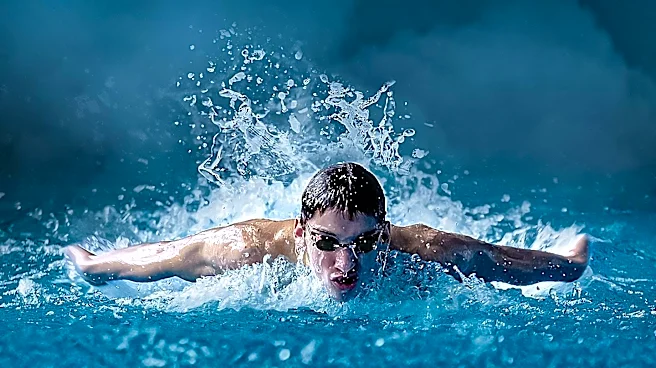
The final of the men's 100 meter butterfly was held on August 20, 2004, and it did not disappoint. Michael Phelps of the United States ultimately claimed the gold medal, setting a new Olympic record with a time of 51.25 seconds. His victory was incredibly narrow, as he finished just four-hundredths of a second ahead of his teammate, Ian Crocker, who secured the silver medal. Crocker, despite being the world record holder, was unable to overcome Phelps in this particular race.
The bronze medal went to Andriy Serdinov of Ukraine, who finished with a European record time of 51.36 seconds. The close times among the top three medalists highlighted the intense competition and the exceptional skill of these athletes. The event was a testament to the dedication and training required to reach the pinnacle of Olympic swimming, with all three medalists delivering performances that were both record-setting and memorable.