




Death Valley, located in Eastern California, is renowned for its extreme climate conditions. Known as the hottest place on Earth, this desert valley is part of the Mojave Desert and is characterized by its intense heat and arid environment. The unique geographical and topographical features of Death Valley contribute to its record-breaking temperatures and minimal precipitation, making it a fascinating subject for climate studies.
The Heat Phenomenon
Death Valley's reputation
as the hottest place on Earth is well-deserved. On July 10, 1913, a temperature of 134 °F was recorded at Furnace Creek, marking the highest ambient air temperature ever recorded on the planet. Although some modern experts dispute this reading due to observer issues, the valley continues to hold the record for the highest reliable temperature of 130 °F, recorded in 2020 and 2021. The valley's extreme heat is a result of several factors, including its clear, dry air and dark, sparsely vegetated land, which undergo intense solar heating.
The valley's unique topography also plays a significant role in its extreme temperatures. The high, steep valley walls trap warm air, which is continually reheated as it descends back to the valley floor. Additionally, the valley's north-south orientation runs perpendicular to prevailing winds, further trapping warm air. These conditions create a cycle of heating that contributes to the valley's scorching temperatures.
The Dryness Factor
Death Valley is one of the driest places on Earth, with an average annual precipitation of just 2.36 inches. This extreme dryness is due to the valley's location in the rain shadow of four major mountain ranges, including the Sierra Nevada and Panamint Range. As moisture-laden air masses move inland from the Pacific Ocean, they are forced upward by these mountain ranges, causing the moisture to condense and fall as precipitation on the western slopes. By the time the air reaches Death Valley, it has lost most of its moisture, resulting in minimal rainfall.
The valley's low elevation, which descends below sea level, also contributes to its dryness. The compressed air at this elevation heats up, further reducing the likelihood of precipitation. These conditions create a perpetual drought-like environment, with little cloud formation and rare occurrences of rain.
The Impact of Climate on the Landscape
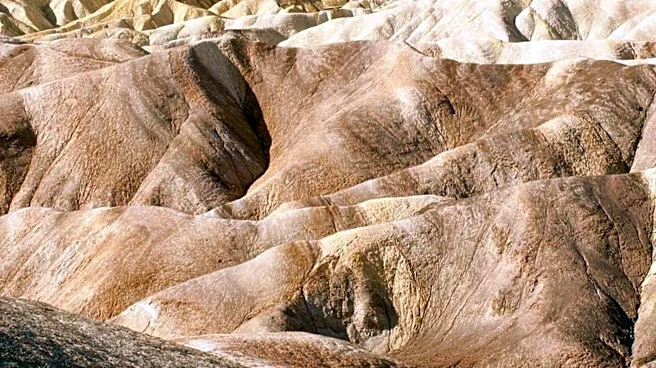
The extreme climate of Death Valley has a profound impact on its landscape. The intense heat and dryness prevent the growth of vegetation, leaving the valley with a stark, barren appearance. The valley's surface is covered with evaporitic salts, remnants of ancient lakes that once filled the basin. These salts, along with the valley's unique geological features, create a striking and otherworldly landscape.
Despite its harsh conditions, Death Valley is home to a variety of plant and animal species that have adapted to the extreme environment. The valley's climate and landscape offer a unique opportunity for scientific study and exploration, providing insights into the effects of extreme weather conditions on the natural world.