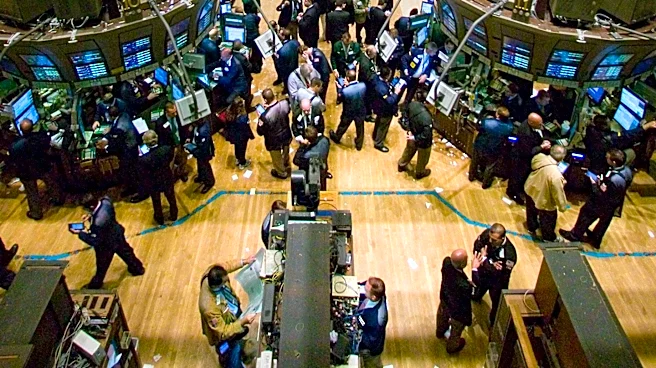









The NYSE American, a significant stock exchange in New York City, boasts a rich history that traces back to the informal, bustling world of curbstone brokers in the early 20th century. What began as the New York Curb Market Agency in 1908 has undergone numerous transformations, reflecting the dynamic nature of American financial markets. Its journey from an unorganized outdoor trading space to a modernized, formally structured exchange illustrates
a pivotal period in the development of U.S. stock trading, eventually becoming a part of the larger NYSE Euronext and Intercontinental Exchange family.
The Genesis of the Curb Market
In the early 1900s, securities trading in New York was not exclusively confined to the formal New York Stock Exchange. A parallel market, known as the "curb market," operated with brokers conducting trades outdoors, often on the streets. By 1907, E. S. Mendels provided some informal rules based on seniority, but the curb brokers largely resisted formal organization. This resistance stemmed from a belief that formal organization might lead exchange authorities to compel members to divest their other exchange memberships.Despite this initial reluctance, the need for structure became apparent. In 1908, the New York Curb Market Agency was established, a crucial step towards formalizing the curbstone brokers' activities. Mendels played a key role in organizing this agency and developing appropriate trading rules. This was followed by the formation of the informal Curb Association in 1910, aimed at weeding out undesirable elements from the market. The curb exchange often found itself at odds with the New York Stock Exchange, which reportedly viewed it as a trading place for "cats and dogs." However, when the NYSE abolished its unlisted department in 1910, many of those "homeless" stocks sought domicile on the curb, provided they met the "Curb list" requirements. In 1911, Mendels and his advisors drafted a constitution, leading to the formation of the New York Curb Market Association, which is considered the first formal constitution of what would become the American Stock Exchange.
Modernization and Renaming
The mid-20th century brought significant changes and modernization to the exchange. In 1953, the New York Curb Exchange was officially renamed the American Stock Exchange (AMEX), signaling a move towards a more contemporary identity. This period was not without its challenges; the exchange faced a scandal in 1961, prompting a reorganization effort that began in 1962. To address its damaged reputation, Edwin Etherington was appointed president in 1962, tasked with cleaning up and reinvigorating the exchange alongside executive vice president Paul Kolton.By 1971, AMEX had grown to become the second-largest stock exchange in the United States. Paul Kolton, who succeeded Ralph S. Saul as president in 1971, became the first leader selected from within the exchange. He later became its first chief executive officer in 1972 and oversaw the introduction of options trading in January 1975. Kolton notably opposed a merger with the New York Stock Exchange, advocating for the responsiveness of two independent exchanges. The late 20th and early 21st centuries saw further transformations, including a merger with Nasdaq in 1998, which was ultimately unsuccessful, and subsequent acquisitions by NYSE Euronext in 2008, leading to its rebranding as NYSE Alternext U.S., then NYSE Amex Equities, NYSE MKT LLC, and finally NYSE American, complete with a "speed bump" trading delay.