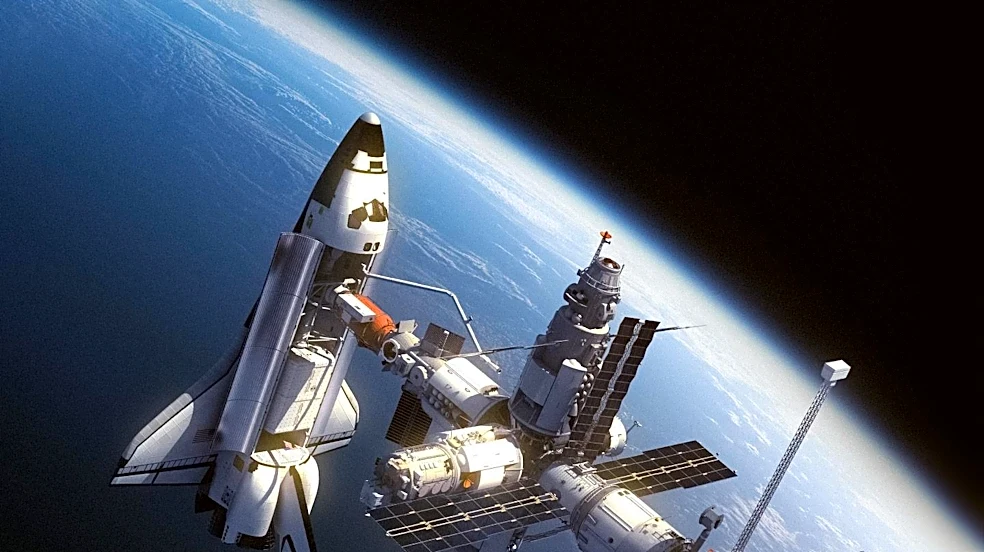





The STS-52 mission, launched aboard the Space Shuttle Columbia on October 22, 1992, was a testament to the breadth of scientific inquiry possible in Earth orbit. Lasting nearly ten days, the mission was packed with an array of payloads and experiments, each designed to push the boundaries of knowledge in fields ranging from geodynamics to material science and life sciences. This intricate collection of instruments and research projects, many involving
international collaboration, transformed the Columbia into a flying laboratory, yielding valuable data and insights into the complexities of space and its effects.
Geodynamics and Microgravity: Core Mission Objectives
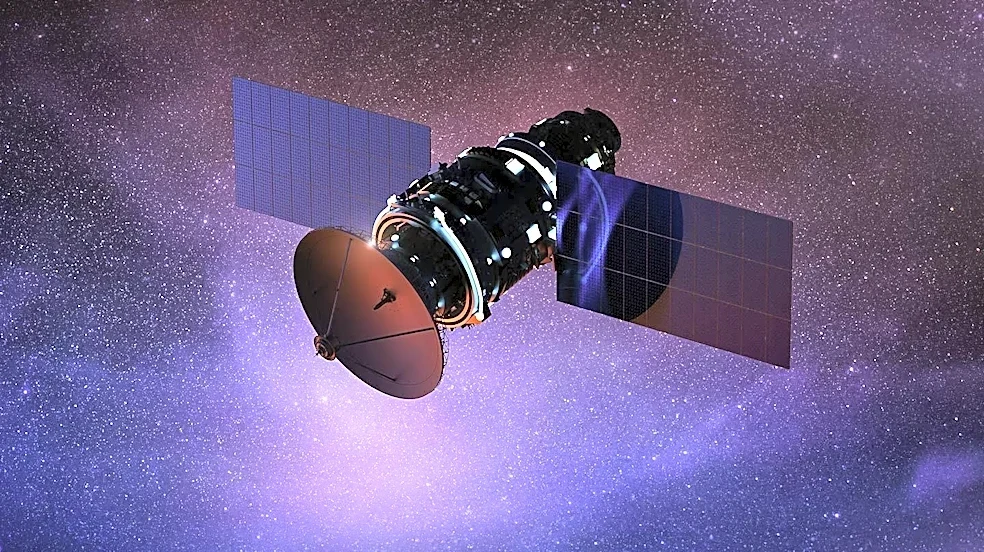
At the heart of STS-52 were two primary mission objectives: the deployment of the Laser Geodynamics Satellite 2 (LAGEOS-2) and the operation of the U.S. Microgravity Payload-1 (USMP-1). LAGEOS-2, a joint venture between NASA and the Italian Space Agency (ASI), was crucial for precise geodetic measurements, helping scientists understand Earth's shape, gravitational field, and tectonic plate movements. Its deployment on day two involved the Italian Research Interim Stage (IRIS) for initial orbital insertion, followed by its own apogee kick motor to achieve a stable 3,700-mile (5,900 km) circular orbit.
The USMP-1, activated early in the mission, focused on the unique environment of microgravity. Mounted in the orbiter's cargo bay on specialized support structures, it housed three key experiments. The Lambda Point Experiment investigated critical phenomena in superfluid helium, while MEPHISTO (Matériel pour l'Étude des Phénomènes Intéressant la Solidification sur et en Orbite), sponsored by France's CNES, studied solidification processes in space. The Space Acceleration Measurement System (SAMS) meticulously recorded the minute accelerations experienced by the spacecraft, providing crucial context for microgravity experiments. These investigations aimed to unravel fundamental physical behaviors unobservable under Earth's gravity.
International Collaboration: Canadian and European Contributions
STS-52 showcased significant international cooperation, with payloads from Canada and Europe contributing to the mission's scientific output. The Canadian experiment (CANEX-2) was a comprehensive suite of instruments distributed across the orbiter's cargo bay and middeck. This included the Space Vision System (SVS), designed for robotic vision in space; Materials Exposure in Low-Earth Orbit (MELEO), studying the effects of the space environment on materials; and the Queen's University Experiment in Liquid-Metal Diffusion (QUELD), investigating material transport in microgravity. Other CANEX-2 components like PARLIQ (Phase Partitioning in Liquids), SPEAM-2 (Sun Photospectrometre Earth Atmosphere Measurement-2), OGLOW-2 (Orbiter Glow-2), and SATO (Space Adaptation Tests and Observations) explored diverse phenomena from fluid behavior to atmospheric measurements and astronaut adaptation. A dedicated Canadian Target Assembly (CTA) was even deployed to support SVS experiments.
From Europe, the European Space Agency (ESA) provided the ASP payload, featuring three independent sensors mounted on a Hitchhiker plate in the cargo bay. These were the Modular Star Sensor (MOSS), Yaw Earth Sensor (YES), and Low Altitude Conical Earth Sensor (LACES). These sensors were designed to test and validate advanced technologies for spacecraft navigation and Earth observation, demonstrating the global reach of space research on STS-52.
Diverse Research in the Middeck and Beyond
The middeck of the Space Shuttle Columbia was a hub for a variety of smaller, yet equally important, experiments. Commercial interests were represented by the Commercial Materials Dispersion Apparatus Instrument Technology Associates Experiments and a Commercial Protein Crystal Growth experiment, both aimed at leveraging microgravity for industrial applications. The Chemical Vapor Transport Experiment Heat Pipe Performance Experiment (CVTEHPPE) investigated thermal management technologies for future spacecraft.
Life sciences were addressed through the Physiological Systems Experiment (PSE), which involved 12 rodents, providing critical data on how living organisms adapt to spaceflight. The Shuttle Plume Impingement Experiment (SPIE) studied the effects of thruster firings, important for understanding spacecraft interactions. In a unique operational role, the orbiter itself served as a calibration target for an Ultraviolet Plume Instrument on an orbiting Strategic Defense Initiative Organization (SDIO) satellite. Finally, the Tank Pressure Control Experiment/Thermal Phenomena (TPCE/TP) was housed in a Getaway Special (GAS) canister, exploring fluid behavior in propellant tanks. This extensive array of payloads underscored STS-52's role as a versatile platform for scientific advancement.