




The *Turtle*, an innovative submersible designed by David Bushnell during the American Revolutionary War, represents a pioneering effort in underwater warfare. Its design incorporated several groundbreaking features for its time, yet its operation presented immense challenges that ultimately contributed to its limited success in combat. Understanding the *Turtle*'s mechanics and the physical demands placed on its pilot offers insight into the early
struggles of submarine technology and the ambitious spirit of its creators.
Mechanical Innovations and Pilot Demands
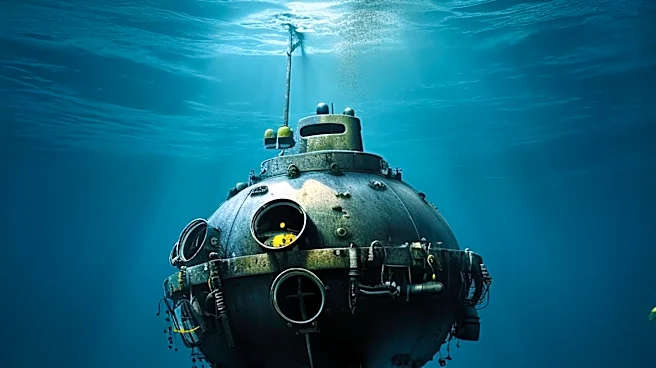
Bushnell's *Turtle* was an oval-shaped vessel constructed of wood and brass, a remarkable feat of engineering for the late 18th century. Its design included tanks that could be filled with water to submerge the craft and then emptied with a hand pump to bring it back to the surface. Propulsion was achieved through two hand-cranked propellers, allowing for both vertical and lateral movement underwater. The cabin was equipped with small glass windows on top and instruments illuminated by naturally luminescent wood, enabling the operator to read them in the dark.
Operating the *Turtle* was an incredibly demanding task, requiring significant physical stamina and coordination. The pilot had to simultaneously adjust the bilge to control depth, crank a propeller for forward motion, and steer the submersible using a lever that operated a rudder at the back. Adding to these complexities, the air supply within the cabin was limited to only 30 minutes, after which the operator would need to surface to replenish the air through a ventilator. This intricate interplay of controls meant that extensive training was essential for any pilot hoping to successfully navigate and deploy the *Turtle* in a combat scenario.
The Mine and Attack Mechanism
A central component of the *Turtle*'s offensive capability was its mine, an explosive charge designed to be attached to the hull of an enemy ship. The plan involved the pilot surfacing just behind the target ship's rudder and using a screw mechanism to attach the explosive to the hull. Once attached, the pilot would dive the *Turtle* and make an escape, leaving the timed explosive to detonate. The development of this mine itself faced several delays, pushing its completion from 1771 to 1776.
During the actual attack on HMS *Eagle*, Sergeant Ezra Lee, the pilot, attempted multiple times to stab the explosive device into the ship's underside. However, he was unable to pierce the *Eagle*'s hull. While a popular, though likely inaccurate, story attributed this failure to copper sheathing on the ship's bottom, Bushnell himself believed the more probable cause was an iron plate connected to the ship's rudder hinge. This highlights a critical design vulnerability: the reliance on a single point of attachment and the difficulty of overcoming unforeseen structural defenses on enemy vessels.
Environmental and Operational Obstacles
The *Turtle*'s combat mission against the *Eagle* was further complicated by severe environmental and operational obstacles. Sergeant Lee's journey to the *Eagle*'s anchorage off Governors Island took two hours, a testament to the strenuous effort required to manipulate the hand-operated controls and foot pedals against a strong current. The darkness of the night also made visibility extremely difficult, adding another layer of challenge to an already complex maneuver. Lee began his mission with a mere 20 minutes of air, a tight window that left little room for error or unexpected delays. The combination of darkness, strong currents, and the inherent difficulties of operating the submersible all contributed to thwarting his plan.
Even after abandoning the attempt to attach the explosive, Lee faced further challenges. He reported being spotted by British soldiers, forcing him to release the charge prematurely. The subsequent explosion, while reported by Lee as violent, was not corroborated by British records, leading some historians to question the full veracity of the account. The *Turtle*'s story, therefore, serves as a compelling narrative of early technological ambition meeting the harsh realities of combat and the limitations of 18th-century engineering.