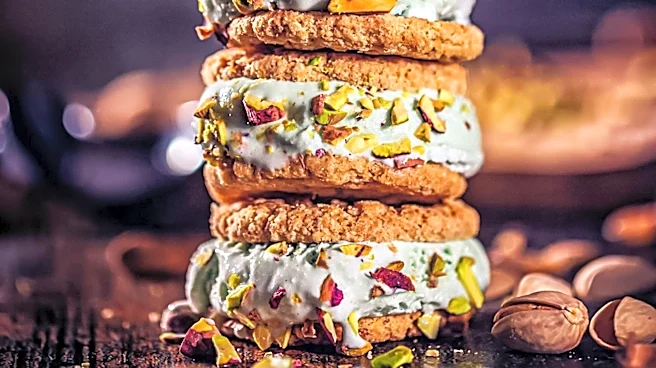

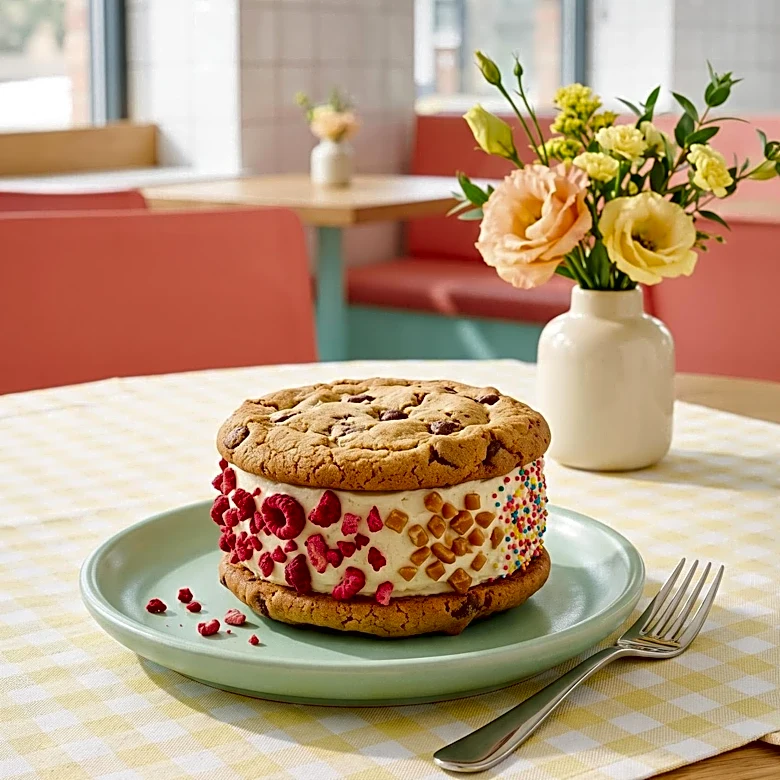






The ice cream sandwich, a beloved frozen dessert enjoyed in many countries, has a surprisingly rich history that spans continents and culinary innovations. This simple yet ingenious treat, typically consisting of ice cream nestled between two pieces of a bread-like substance, has evolved from a refined London confection to a staple of American street vendors. Its journey highlights how a basic concept can transform through different cultural contexts
and entrepreneurial spirit, becoming a convenient and popular novelty item.
Early Beginnings in London and the United United States
The earliest known recipe for an ice cream sandwich emerged in London in 1894. This initial version was a more elegant affair, featuring ice cream layered between two slices of sponge cake. This suggests a somewhat sophisticated origin, perhaps served in parlors or at special events, rather than as a casual street food. The concept of using a baked good to contain ice cream, making it easier to eat, was clearly present from the start.Across the Atlantic, the ice cream sandwich made its appearance in the United States by 1899. In New York, street vendors were already selling slabs of ice cream, often referred to as "hokey pokey," between sheets of paper. This method, while practical for serving, lacked the edible container that would soon become a hallmark of the ice cream sandwich. The pivotal moment came when someone had the innovative idea to replace the paper with cookies, transforming the simple slab of ice cream into a more cohesive and enjoyable dessert.
The Rise of the American Ice Cream Sandwich
Following the introduction of cookies as the "bread" component, the ice cream sandwich quickly gained traction in the United States. Photos from the Jersey Shore around 1905 depict ice cream sandwiches being sold for a penny each, indicating their growing popularity and affordability as a treat for the masses. This period marked a significant shift from a potentially more upscale dessert to an accessible street food item.Manufacturers soon recognized the potential of this creation. A notable recipe for the ice cream sandwich was included in Charles Herman Senn's 1900 book, *Ices, and How to Make Them*, further solidifying its place in culinary literature. The rising popularity of the ice cream sandwich was also documented in contemporary publications, with articles appearing in the *American Kitchen Magazine* in 1901 and the *New York Tribune* in 1902. This media attention underscores the dessert's increasing cultural footprint and consumer demand.
Innovation and Mechanization
The evolution of the ice cream sandwich also saw advancements in its production. The earliest U.S. patent related to ice cream sandwiches, No. 1,387,613, was granted to Russell H. Proper in 1921 for an "Ice Cream Sandwich Machine." This invention highlights the growing industrialization of food production and the desire to efficiently meet the demand for popular treats. Mechanization allowed for wider distribution and greater availability, moving the ice cream sandwich beyond just street vendors to grocery stores and ice cream parlors.One of the most iconic American ice cream sandwiches, the It's-It, was invented in 1928 by George Whitney. This particular creation featured a scoop of ice cream sandwiched between two oatmeal cookies and then dipped in dark chocolate. The It's-It became a regional favorite, initially sold exclusively at Whitney's shop at Playland at the Beach in San Francisco for nearly 45 years. Its unique combination of flavors and textures further diversified the ice cream sandwich landscape, demonstrating how regional variations and specific recipes could create lasting legacies within the broader category of this beloved frozen dessert.