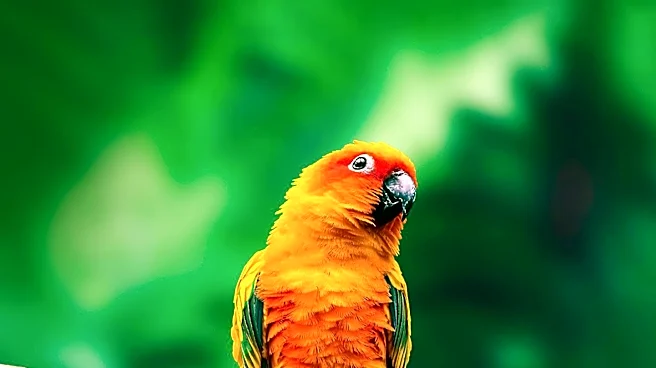









Conures represent a diverse and somewhat loosely defined group of small to medium-sized parrots, primarily found in the Western Hemisphere. These birds are often considered either large parakeets or small parrots. While the term "conure" is widely used in bird keeping, scientific classification tends to refer to them more generally as "parrots" or "parakeets." They belong to several genera within the long-tailed group of the New World parrot subfamily
Arinae, with most falling into the tribe Arini, though Myiopsitta is an exception. This broad classification highlights the variety within the group, making it challenging to characterize all conures uniformly.
Defining Characteristics and Behavior
Despite their diversity, conures share some common physical traits. They are typically lightly built with long tails and possess small, yet strong, beaks. Their beaks always feature a small cere and are usually horn-colored (gray) or black. Most conure species are highly social, living in flocks that can number 20 or more birds. This flock-oriented behavior often translates into their reputation as the "clowns of the parrot world," known for their constant attention-seeking antics, such as hanging upside-down or swaying in a "dancing" motion.
Conures are analogous in size and lifestyle to the rose-ringed parakeets of Afro-Eurasia or the Australian parakeets. All living conure species are native to Central and South America. An notable exception was the extinct Carolina parakeet, which was indigenous to the United States. Their diet often includes grain, which has led to them being considered agricultural pests in some regions.
Genera and Popular Species
In aviculture, the term "conure" typically encompasses species within the genera Aratinga, Pyrrhura, Eupsittula, and Psittacara, along with several single-species and one two-species genus. However, not all members of these genera are consistently called "conures"; some are more frequently referred to as parakeets. The Aratinga conures, for instance, are generally larger with brighter plumage and are known for being noisier, more outgoing, and more demanding. Popular pet species like the colorful sun conure and jandaya parakeet belong to this genus. While they can be quite loud, they can make excellent pets for responsible owners, with lifespans ranging from 20 to 30 years.
The Pyrrhura genus includes species such as the green-cheeked conure, maroon-bellied conure, and black-capped conure. These conures are usually smaller, have more subdued green colors, and are considerably quieter than their Aratinga counterparts. Their affectionate and intelligent personalities, combined with their relatively quiet nature, have contributed to their growing popularity as pet birds. Pyrrhura conures typically live for about 20 to 25 years. Other notable conures include the golden conure (or Queen of Bavaria conure), known for its bright yellow feathers and rarity, and the Patagonian conure, the largest conure species, recognized for its sweet nature and intelligence.