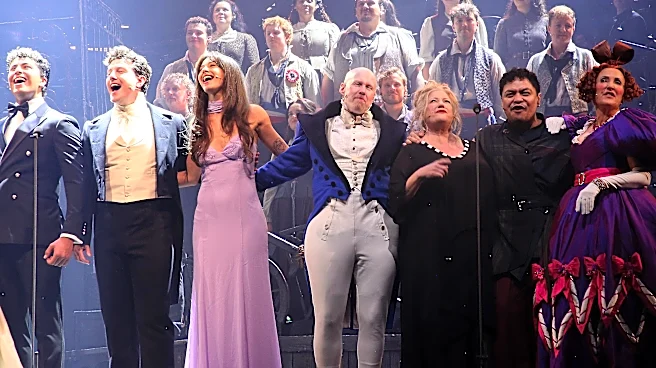






The beloved musical *Guys and Dolls*, known for its vibrant characters and memorable songs, has a rich origin story rooted in the distinctive literary world of Damon Runyon. Conceived by producers Cy Feuer and Ernest Martin, the musical was envisioned as an adaptation of Runyon's short stories, which painted a vivid picture of the New York underworld in the 1920s and 1930s. These tales were populated by gangsters, gamblers, and other colorful figures,
all speaking in Runyon's unique comic dialect—a blend of highly formal language, devoid of contractions, and lively slang. This distinctive narrative voice provided a fertile ground for a musical that would capture the essence of these characters and their world.
Adapting Runyon's Unique World
The core of *Guys and Dolls* draws heavily from two of Damon Runyon's short stories: "The Idyll of Miss Sarah Brown" and "Blood Pressure." Beyond these primary sources, the musical also incorporated characters and plot elements from other Runyon narratives, such as "Pick the Winner," creating a comprehensive tapestry of his fictional universe. The challenge for the creative team was to translate Runyon's specific literary style and characterizations into a musical format. This involved not only crafting a compelling plot but also ensuring that the dialogue and songs resonated with the spirit of Runyon's original works. The producers brought in Frank Loesser, a seasoned lyricist for movie musicals, to serve as both composer and lyricist, entrusting him with the crucial task of giving voice to these iconic characters through song.
The Collaborative Creative Process
The development of *Guys and Dolls* was a collaborative, and at times, iterative process. George S. Kaufman was initially hired as the director, bringing his theatrical expertise to the project. The first version of the show's book, or dialogue, was penned by Jo Swerling. However, this initial draft was ultimately deemed unusable by Feuer and Martin. This led them to bring in Abe Burrows, a radio comedy writer, to undertake a complete rewrite of the book. This decision proved pivotal, as Burrows's comedic sensibilities and understanding of character would significantly shape the final production.
Interestingly, much of Frank Loesser's score had already been composed to align with Swerling's initial book. Burrows later reflected on this unique situation, noting that Loesser's fourteen songs were all exceptional, and the new book had to be constructed in such a way that the story naturally led into each musical number. He humorously recalled that while critics praised the show for its "integration"—meaning the songs gracefully followed the storyline—they had actually achieved this integration in reverse, by fitting the story around the pre-existing songs. This backward approach ultimately contributed to the seamless quality of the musical, where songs and plot feel intrinsically linked.
Crafting Iconic Roles
Abe Burrows specifically tailored certain roles to the actors he had in mind, a practice that greatly influenced the characterizations. For instance, he crafted the role of Nathan Detroit around Sam Levene, who committed to the project long before Burrows had written any dialogue. Burrows noted that having the sound of the actors' voices in his head, along with their speech rhythms, helped him create sharper and more realistic dialogue. Although Sam Levene, a Broadway and movie veteran, was not a singer, he was considered perfect for Nathan Detroit, a character Runyon himself admired. Frank Loesser agreed that it was easier to adjust the music to Levene's vocal limitations than to find a better singer who couldn't act. This is why Nathan Detroit has only one song, the duet "Sue Me," which Loesser specifically wrote for Levene, structuring it so Levene and Vivian Blaine, who played Miss Adelaide, never sang their parts simultaneously. Similarly, the character of Miss Adelaide was created specifically to fit Vivian Blaine into the musical, after Loesser decided she was not suited for the more conservative role of Sarah Brown, showcasing the dynamic interplay between casting and character development in the creation of this enduring Broadway classic.