




Gemini 11, NASA's ninth crewed mission, marked a significant milestone in space exploration, pushing the boundaries of human presence in Earth orbit. Launched from September 12 to 15, 1966, this mission, crewed by astronauts Charles Conrad Jr. and Richard F. Gordon Jr., achieved a record-setting altitude that stood for decades. Beyond its impressive height, Gemini 11 demonstrated crucial capabilities for future space endeavors, including advanced
rendezvous and docking procedures, and even an early experiment in artificial gravity, all while operating within the ambitious Project Gemini program.
Reaching Unprecedented Heights
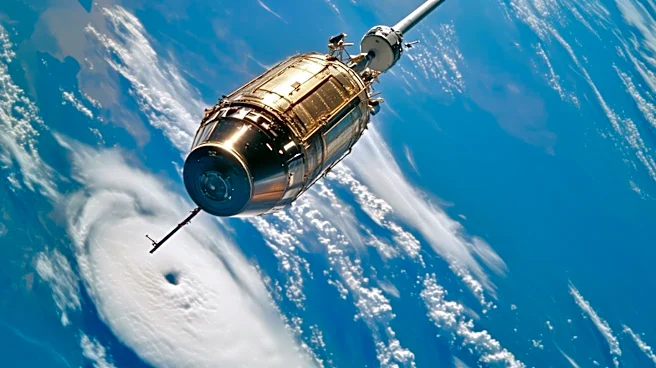
One of the primary achievements of the Gemini 11 mission was its record-breaking apogee. The spacecraft, in conjunction with its Agena Target Vehicle, reached a maximum altitude of 1,374.1 kilometers (853 miles). This was the highest Earth orbit ever attained by a crewed spacecraft at that time, a record that remained unbroken until the Polaris Dawn mission in 2024. While humans had traveled further from Earth by flying to the Moon, Gemini 11's achievement represented a new frontier for orbital flight around our home planet.To put this into perspective, the maximum operational altitude of the Space Shuttle, for instance, was significantly lower, with STS-31 in 1990 reaching 621 kilometers (386 miles). Even the September 2021 SpaceX Inspiration4 flight, while higher than most Space Shuttle missions, only reached 585 kilometers (364 miles). Gemini 11's perigee, the lowest point of its orbit, was 288 kilometers (179 miles), and at this point, the spacecraft achieved a maximum velocity of 28,915 kilometers per hour (17,967 miles per hour).
Precision Rendezvous and Docking
The Gemini 11 mission showcased remarkable precision in orbital mechanics, performing the first direct-ascent rendezvous with an Agena Target Vehicle. This critical maneuver involved docking with the Agena just 1 hour and 34 minutes after launch, relying heavily on the on-board computer and radar equipment with minimal ground support. This rapid and efficient rendezvous capability was a vital step in developing the techniques necessary for future lunar missions, where precise timing and orbital alignment would be paramount.The crew, Conrad and Gordon, demonstrated their mastery of these procedures by docking and undocking four times during the mission. Despite these multiple maneuvers, they still had sufficient Gemini maneuvering fuel remaining for an unplanned fifth rendezvous, highlighting the robustness and efficiency of their flight plan and execution. This ability to repeatedly dock and undock was crucial for practicing the complex operations that would be required for assembling spacecraft in orbit and transferring crews.
Innovative Experiments and Challenges
Beyond the altitude record and rendezvous achievements, Gemini 11 also conducted innovative experiments. One notable experiment involved creating a small amount of artificial gravity. This was attempted by connecting the Gemini spacecraft to the Agena Target Docking Vehicle with a 30-meter (100-foot) tether line. By firing their side thrusters, the combined craft were slowly rotated, generating approximately 0.00015 g of artificial gravity through centrifugal force, much like a slow-motion pair of bolas.Astronaut Richard F. Gordon Jr. also performed two extra-vehicular activities (EVAs) during the mission. The first EVA, intended to last two hours, involved attaching the tether from the Agena's docking collar to the Gemini's docking bar. However, similar to previous Gemini EVAs, working for an extended period in space proved more fatiguing than ground simulations, and this EVA had to be terminated after only 30 minutes. Gordon's second EVA was more successful, lasting over two hours, during which he stood up with his head and shoulders out of the hatch to photograph Earth, clouds, and stars, demonstrating that certain tasks could be performed effectively outside the spacecraft.