




Milton Friedman, an American economist born on July 31, 1912, in Brooklyn, New York, embarked on a distinguished career that spanned academia, public intellectualism, and high-level government advising. His intellectual journey began with studies at Rutgers University, Columbia University, and ultimately led him to the University of Chicago, a place that would become synonymous with his economic school of thought. Friedman's career was marked by significant
contributions to various fields of economics and a steadfast commitment to advocating his principles on a global stage.
A Pillar of the Chicago School of Economics
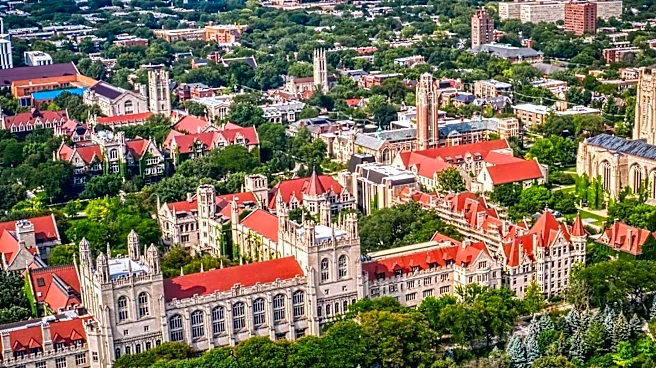
Friedman spent three decades at the University of Chicago, where he collaborated with notable economists like George Stigler. During his tenure, he made major contributions to macroeconomics, microeconomics, economic history, and statistics. His work at Chicago helped solidify the institution's reputation as a hub for free-market economic thought, often referred to as the "Chicago School." He challenged prevailing economic theories, particularly what he termed "naive Keynesian theory," starting in the 1950s with his reinterpretation of the consumption function.
His academic rigor and innovative thinking were recognized with the Nobel Prize in Economic Sciences in 1976. The award specifically cited his achievements in consumption analysis, monetary history and theory, and his demonstration of the complexity of stabilization policy. This prestigious honor underscored the profound impact of his research and theoretical frameworks on the understanding of economic systems.
From Academia to Policy Influence
Beyond his academic pursuits, Friedman extended his influence directly into the realm of public policy. He became a prominent economic advisor to President Ronald Reagan, playing a significant role in shaping the economic policies of the 1980s. His advice, which often centered on tax cuts, reduced government spending, and deregulation, aligned with the administration's goals of fostering economic growth through market-oriented reforms. His counsel was also sought by British Prime Minister Margaret Thatcher, further demonstrating the international reach of his economic ideas.
Friedman's advisory roles allowed him to translate his theoretical convictions into practical policy recommendations. He advocated for policies such as a volunteer military, flexible exchange rates, and school choice, believing these would enhance individual liberty and economic efficiency. His involvement in the elimination of the military draft in the U.S. was an achievement he reportedly considered one of his proudest. Through his direct engagement with political leaders, Friedman helped to shift the global economic discourse towards greater emphasis on free markets and limited government intervention.