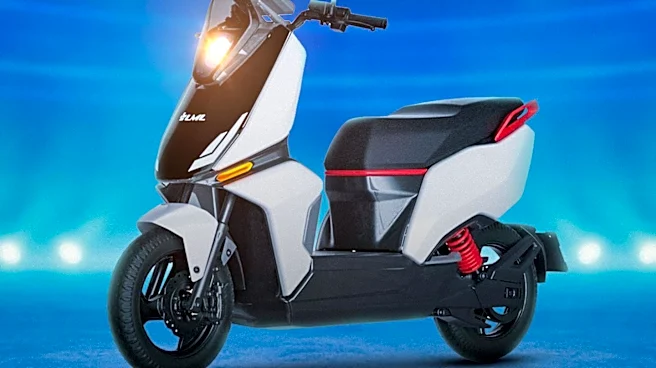









Shock absorbers are essential components designed to dampen vibrations and impacts, playing a crucial role in various mechanical systems. While often associated with vehicles, their applications extend to a surprising range of fields, from enhancing safety in climbing to improving comfort in seating. These devices primarily function by converting kinetic energy into heat, effectively dissipating the forces that would otherwise lead to jarring movements
or structural stress. The evolution of shock absorber technology has led to specialized designs tailored for specific needs, highlighting their versatility and importance across different industries.
Fundamental Principles and Automotive Applications
The core principle behind a shock absorber involves the conversion of kinetic energy. When a vehicle encounters a bump or an uneven surface, the suspension system absorbs the impact, and the shock absorber then works to control the subsequent oscillations. This energy conversion process is fundamental to maintaining stability and ride comfort. In the automotive world, shock absorbers are integral to suspension systems, contributing significantly to vehicle safety and performance. They are categorized under automotive suspension technologies, motorcycle suspension technology, and vehicle safety technologies, underscoring their critical role in ensuring smooth and controlled movement on the road.
Beyond basic functionality, automotive shock absorbers have seen considerable innovation. For instance, the category includes specialized types like the Telescopic shock absorber, a common design that allows for linear movement. More advanced systems, such as the Toyota Electronic Modulated Suspension and Toyota Super Strut suspension, demonstrate the integration of electronic control for adaptive damping. These technologies allow vehicles to adjust their suspension characteristics in real-time, optimizing for different driving conditions and enhancing both comfort and handling. The continuous development in this area reflects the ongoing effort to refine vehicle dynamics.
Specialized Designs and Broader Uses
The utility of shock absorbers extends far beyond conventional vehicles. For example, the Energy absorber (climbing) is a critical safety device used to mitigate the impact forces during a fall, protecting climbers from severe injury. This application highlights how the fundamental concept of energy dissipation is adapted for life-saving purposes in extreme sports. Similarly, Friction disk shock absorbers represent an older, yet effective, technology that uses friction to dampen motion, showcasing the diverse mechanical approaches to achieving the same goal.
Other notable types include the Magnetorheological damper, which utilizes a special fluid whose viscosity can be changed by an electromagnetic field, offering highly responsive and controllable damping. Vane shock absorbers, on the other hand, employ a rotating vane within a fluid-filled chamber to create resistance. The development of Shock-mitigating suspension seats further illustrates the broad impact of this technology, providing enhanced comfort and protection for occupants in various vehicles, particularly those operating in challenging environments. These examples collectively demonstrate the wide array of designs and applications that fall under the umbrella of shock absorbers, each engineered to address specific challenges in vibration and impact control.