

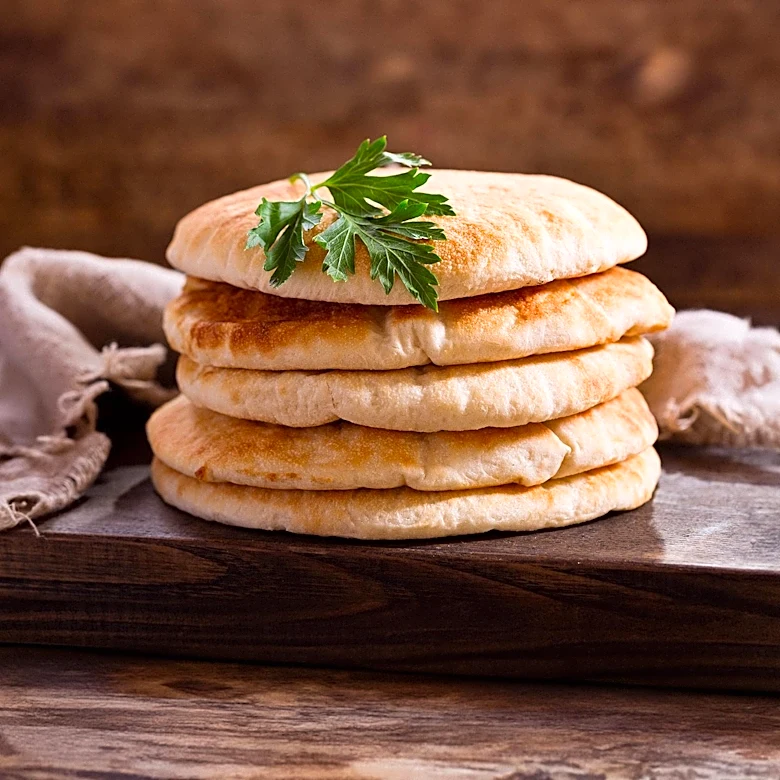



Pita, a yeast-leavened flatbread, holds a significant place in the culinary traditions of the Mediterranean, Middle East, and surrounding regions. While often recognized in the United States for its distinctive interior pocket, the term "pita" encompasses a much broader array of flatbreads and even pastries depending on the cultural context. This versatile bread is known by many names, reflecting its widespread adoption and adaptation across different
cuisines, from being a staple wrap for savory fillings to a component in various regional dishes.
The Many Names of Pita
In English-speaking countries, "pita" typically refers to the pocket bread, but its origins and local names are far more varied. It is also known as Greek bread, Arabic bread, Arab bread, Syrian bread, Lebanese bread, and pocket bread. This multitude of names highlights its deep roots in diverse cultures. For instance, in the United Kingdom, "pitta" is often used for pocket versions, particularly those served with barbecued souvlaki. However, the Western name "pita" can sometimes be applied to other flatbreads that have distinct local names, such as various styles of Arab "khubz" (meaning 'bread'). This demonstrates how a single term can become a catch-all for similar, yet culturally specific, food items.
Regional Variations and Culinary Applications
The form and function of pita vary significantly from one region to another. In Cyprus, for example, pita is typically rounder and fluffier, often baked on a cast-iron skillet. Here, it serves as a crucial accompaniment for local specialties like souvlakia, sheftalia, halloumi with lountza, and gyros. The Greek interpretation of "pita" diverges even further; in Greece, the word primarily means "pastry" and is used for various cakes and pastries such as spanakopita (spinach pie) and karydopita (walnut cake), which are entirely unrelated to the flatbread known as pita in English. Traditional Greek breads are typically leavened loaves like the round "karvéli" or the oblong "frantzóla." The flatbread style of pita, as understood in English, is almost exclusively used in Greece as a wrap for souvlaki or gyros, often garnished with tzatziki sauce, tomatoes, onions, and french fries.
Beyond the Pocket: Other Flatbreads and Pastries
While the pocketed version is widely recognized, not all pita-like breads form a pocket. Some are baked without pockets and are simply referred to as "pocket-less pita." In other regions, the term "pita" or its local equivalent refers to entirely different culinary items. For instance, Druze pita is a unique preparation filled with labneh (thick yogurt) and topped with olive oil and za'atar, showcasing a distinct use of the flatbread. In Bosnia, Croatia, Bulgaria, and Serbia, local styles of pita are known as lepinja, somun, purlenka, or pitica. These are commonly served with barbecued foods like ćevapi, pljeskavica, kebapche, or grilled sausages. Interestingly, in these same countries, the word "pita" itself is used more broadly for pie in a general sense, often referring to börek or various sweet phyllo pastry dishes, with the notable exception of baklava, which retains its specific name. The cuisine of the Aromanians also features pita, further illustrating its diverse presence across different cultures and culinary traditions.
The Science of the Pocket and Modern Production
The characteristic pocket of many pita breads is a result of high-temperature baking. Most pita breads are baked at temperatures ranging from 450–475 °F (230–245 °C). This intense heat rapidly turns the water in the dough into steam, causing the pita to puff up and create the internal pocket. Once removed from the oven, the layers of baked dough remain separated inside the deflated pita, allowing it to be easily opened. Traditionally, pita is served fresh from a wood-fired oven, similar to a pizza oven, and is best consumed soon after baking or on the same day, often served warm. Modern commercial pita bread production is a highly automated process, utilizing advanced machinery that can process massive quantities of flour and produce thousands of pitas per hour. These commercial ovens operate at even higher temperatures, between 800–900 °F (430–480 °C), baking each pita in just about one minute. After baking, the pita are air-cooled on conveyor belts for approximately 20 minutes before being shipped or stored in commercial freezers at 10 °F (-12 °C).