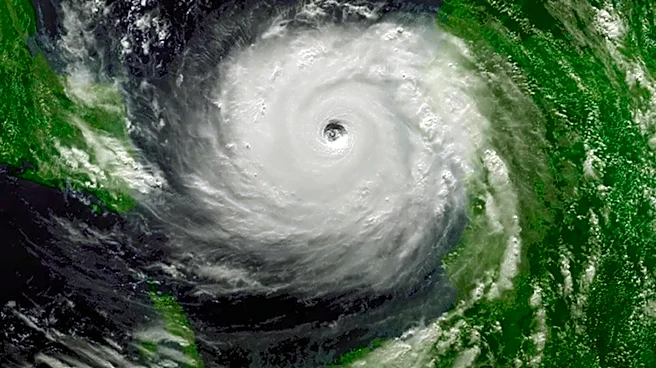






Hurricane Andrew, a powerful Category 5 storm, left a trail of devastation across the United States in 1992. While its impact on South Florida is widely known, the storm also posed a significant threat to the Gulf Coast, prompting widespread evacuations and causing substantial damage, particularly in Louisiana. The hurricane's journey through the Gulf of Mexico after its initial Florida landfall led to urgent preparations and ultimately resulted in considerable
economic losses and fatalities across several states. This article delves into the specific measures taken and the consequences experienced by communities along the Gulf Coast as Andrew approached and made landfall.
Emergency Preparations and Evacuations
As Hurricane Andrew emerged into the Gulf of Mexico from southern Florida, the National Hurricane Center swiftly issued hurricane watches and warnings for the Gulf Coast of the United States. These advisories began at 13:00 UTC on August 24, initially covering the area from Mobile, Alabama, to Sabine Pass, Texas. The scope of these watches and warnings was subsequently expanded to include regions stretching from Mobile, Alabama, all the way to Freeport, Texas, underscoring the broad threat posed by the storm. These critical warnings remained in effect until late on August 26, when the hurricane finally moved inland over Louisiana, allowing for their discontinuation.The impending threat of Hurricane Andrew triggered a series of urgent preparations across the Gulf Coast. In the Gulf of Mexico itself, workers on oil platforms were forced to evacuate, highlighting the immediate danger to offshore operations. The Coast Guard took proactive measures, moving their boats inland to protect them from the severe weather. Mississippi officials recommended that approximately 100,000 residents in coastal counties evacuate their homes. To accommodate those seeking refuge, shelters were opened in Hancock and Harrison counties, though interestingly, only 68 people utilized a shelter in Hancock County. Gambling ships, a common sight in some coastal areas, were also moved into harbors and inland canals for safety. The disruption caused by the hurricane even extended to the political sphere, with two run-offs for special legislative elections, originally scheduled for August 25, being postponed.
Louisiana's Extensive Response and Damage
Louisiana faced a particularly severe threat from Hurricane Andrew, leading Governor Edwin Edwards to declare a state of emergency. The response was massive, with about 1.25 million people evacuating from central and southeast Louisiana. Additionally, approximately 60,000 individuals fled parishes in southwest Louisiana, demonstrating the widespread concern and the scale of the evacuation efforts. Grand Isle, a vulnerable coastal community, saw a mandatory evacuation order issued by Mayor Andy Valence and the city council. In New Orleans, Mayor Sidney Barthelemy took decisive action, ordering the evacuation of roughly 200,000 residents from the city's low-lying areas, which were particularly susceptible to storm surge. Nine shelters were established within New Orleans, providing refuge for thousands of people.Concerns about the potential for storm surge to overtop the city's levees were significant, especially after computer simulations indicated such a possibility from a tropical cyclone like Andrew. In response, workers diligently closed 111 floodgates to bolster the city's defenses. The New Orleans International Airport ceased operations, and jumbo jets were flown to other airports to ensure their safety. To maintain order and assist with emergency efforts during the storm, a contingent of 250 members of the Louisiana National Guard patrolled the streets. The Red Cross played a crucial role in supporting these efforts, helping to open a shelter at the University of Southwest Louisiana's Cajundome in Lafayette, which was equipped to accommodate around 2,000 people. The hurricane's impact on Louisiana was severe, causing extensive damage to oil platforms in the Gulf of Mexico, resulting in $500 million in losses for oil companies. Hurricane-force winds tore through the state, damaging vast stretches of power lines and leaving approximately 230,000 people without electricity. The natural environment also suffered immensely, with over 80% of trees in the Atchafalaya Basin being downed, and the region's agriculture devastated. The ecological toll extended to the aquatic life, as 187 million freshwater fish were killed throughout the basin and Bayou Lafourche. Property losses were substantial, with 23,000 houses damaged, 985 others destroyed, and 1,951 mobile homes demolished, leading to property losses exceeding $1.5 billion. Tragically, the hurricane caused the deaths of 17 people in Louisiana, with 6 of these fatalities occurring offshore.
Broader Gulf Coast Impacts and Aftermath
Beyond Louisiana, other Gulf Coast states also braced for Andrew's arrival. In Texas, approximately 250,000 people evacuated Orange and Jefferson counties. Galveston City Manager Doug Matthews advised residents to have an evacuation plan ready, though the city ultimately decided against ordering a full evacuation. Schools in Beaumont, Port Arthur, and other parts of central Jefferson County were canceled on August 25, and closures extended to schools in Dickinson, High Island, Hitchcock, La Marque, Santa Fe, and Texas City on August 26. Higher education institutions, including College of the Mainland, Galveston College, and Texas A&M University at Galveston, also closed their doors. Emergency management crews in Corpus Christi proactively tested emergency generators and severe weather gear, while the Comal County chapter of the Red Cross placed its disaster alert teams on standby, ready to respond if the hurricane threatened the Corpus Christi area.Across the Gulf Coast, Andrew spawned at least 28 tornadoes, particularly affecting Alabama, Georgia, and Mississippi, adding another layer of destruction to the storm's impact. In total, Hurricane Andrew was responsible for 65 fatalities and caused $27.3 billion in damage. At the time, it was the costliest hurricane in U.S. history, a record later surpassed by Hurricane Katrina in 2005. Andrew is also recognized as the third-strongest hurricane to hit the U.S. mainland by wind speed, with recorded speeds of 165 mph (266 km/h). The immense destruction and loss of life led the World Meteorological Organization to retire the name Andrew in the spring of 1993, replacing it with Alex for the 1998 season, a testament to the hurricane's devastating legacy.