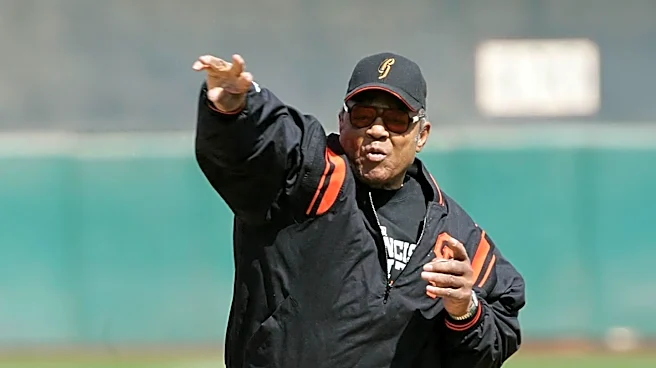


In a significant moment for baseball, Willie Mays, one of the sport's most iconic figures, made a dramatic return to New York in 1972, joining the Mets after a long and storied career with the Giants. This move marked a poignant homecoming for Mays, who had begun his major league journey in New York with the Giants before their relocation to San Francisco. The trade, driven by a combination of financial realities for his former team and a strong desire
from the Mets' ownership, allowed Mays to conclude his playing career in the city where his legend first blossomed, leaving an indelible mark on the Mets franchise and its fans.
A Difficult Departure from San Francisco
Before his trade to the New York Mets, Willie Mays faced a challenging period with the San Francisco Giants. The 1972 season began tortuously for the veteran outfielder, as he batted a mere .184 with only three runs batted in through his first 19 games. This struggle on the field was compounded by underlying tensions and financial considerations off it. Prior to the season's commencement, Mays had sought a substantial ten-year contract from the Giants organization, envisioning a future role in an off-the-field capacity once his playing days concluded. However, the Giants organization was grappling with financial difficulties, which ultimately prevented them from meeting his request for such a long-term commitment.
Consequently, Mays had to settle for a two-year playing contract valued at $330,000. The strained relationship extended to the dugout, where Mays found himself at odds with manager Charlie Fox. A notable incident occurred on April 30, when Mays left the stadium before the start of a doubleheader without informing his manager, highlighting the growing friction. These circumstances set the stage for a significant change, as the Giants, facing both financial constraints and a veteran player whose performance was showing signs of decline, began to consider options that would lead to Mays' departure from the team he had played for since 1951.
The Homecoming Trade to New York
The pivotal trade that brought Willie Mays back to New York occurred on May 11, 1972. In this transaction, Mays was sent to the New York Mets in exchange for pitcher Charlie Williams and an undisclosed sum of money, rumored to be $100,000. The Mets, under the ownership of Joan Payson, had a long-standing desire to bring Mays back to his baseball roots in New York, where he had remained immensely popular despite the Giants' move to the West Coast. This sentiment, combined with the Giants' financial situation, created the perfect opportunity for the Mets to acquire the legendary player.
As part of the agreement, the Mets committed to maintaining Mays' salary at $165,000 per year for both the 1972 and 1973 seasons. Furthermore, they made a significant promise to Mays: he would receive $50,000 annually for ten years after his retirement, ensuring a stable financial future beyond his playing career. This comprehensive package underscored the Mets' dedication to Mays and their recognition of his iconic status. His debut with the Mets on May 14 against his former team, the Giants, was nothing short of spectacular. Mays put New York ahead for good with a fifth-inning home run, a moment that was met with ecstatic applause from the fans at Shea Stadium, signaling a triumphant return for the beloved "Say Hey Kid."
Mays' Impact and Final Seasons
Willie Mays' tenure with the New York Mets, though brief, was impactful, particularly in his first season. In 1972, he appeared in 69 games for the Mets, where he batted .267, hit eight home runs, and drove in 19 runs batted in. While these statistics might not have matched his peak years, his presence alone brought a renewed sense of excitement and legitimacy to the Mets franchise. His experience and leadership were invaluable to a team that was building towards contention. The following year, 1973, would mark his final season as a professional baseball player.
Mays retired after the conclusion of the 1973 season, bringing an end to one of the most illustrious careers in baseball history. His connection to the Mets, however, did not end with his playing days. He continued to serve the organization as a coach from 1974 to 1979, further cementing his legacy within the club. In a testament to his profound impact and enduring popularity, the New York Mets honored Willie Mays by retiring his number 24, a recognition that placed him among the most revered figures in the team's history. His return to New York, even for a short period, provided a fitting final chapter to a career that began and ended with the cheers of New York baseball fans.