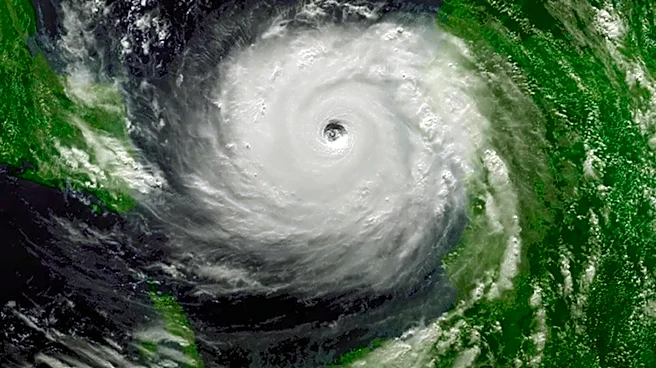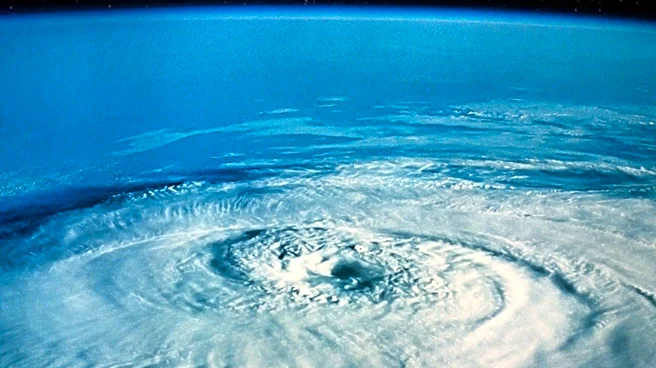





Hurricane Laura, a powerful Category 4 storm in 2020, left an indelible mark on the U.S. Gulf Coast, particularly in Louisiana and Texas. This destructive tropical cyclone holds the distinction of being tied with the 1856 Last Island hurricane and 2021's Hurricane Ida as the strongest hurricane on record to make landfall in Louisiana, based on maximum sustained winds. Its journey from a tropical wave off West Africa to a major hurricane making landfall near
Cameron, Louisiana, involved rapid intensification and widespread devastation, making it a significant event in the 2020 Atlantic hurricane season.
Origins and Early Development
Hurricane Laura's meteorological history began on August 16, 2020, when a large tropical wave moved off the West African coast. This wave gradually organized, leading to the formation of a tropical depression on August 20. Despite being in an environment only marginally conducive for intensification, the depression strengthened into a tropical storm just a day later. This early development made Laura the earliest twelfth named storm on record in the North Atlantic basin, forming eight days earlier than Hurricane Luis in 1995.Laura's initial trajectory took it through the Lesser Antilles, where it first made an impact as a tropical storm. It then brushed Puerto Rico before moving across the island of Hispaniola. This early phase of the storm's life was already marked by tragedy, as it caused 31 deaths in Haiti and four in the Dominican Republic. The storm's path continued across the length of Cuba, prompting tropical storm warnings and the evacuation of over 260,000 people. Even as it moved over land, Laura's large size and lack of a defined inner core allowed it to maintain much of its intensity, with its structure improving as it moved back over water.
Rapid Intensification and Landfall
After traversing the Greater Antilles, Laura entered the Gulf of Mexico. Initially, its strengthening was slow, but a period of rapid intensification began on August 26. On this day, Laura officially became a major hurricane, a designation for storms reaching Category 3 or higher on the Saffir-Simpson Hurricane Wind Scale. It continued to intensify, ultimately attaining peak 1-minute sustained winds of 150 mph (240 km/h), classifying it as a powerful Category 4 hurricane. This rapid strengthening prompted numerous warnings and watches for Louisiana and Texas, leading to extensive evacuations.Early on August 27, Hurricane Laura made landfall near its peak intensity in Cameron, Louisiana. This landfall was historically significant, as Laura was the tenth-strongest U.S. hurricane on record by windspeed. The effects across Louisiana were devastating, with nearly 10-foot high storm surge recorded in Cameron Parish. Numerous parishes experienced severe flooding and extreme damage to homes. Roads were closed, and drivers were advised to seek alternative routes. The storm directly caused the deaths of 30 people in Louisiana alone, with a total of at least 41 fatalities in the United States.
Aftermath and Lingering Impact
Following landfall, Laura rapidly weakened as it moved inland, becoming a tropical storm later that day and further degenerating into a tropical depression over Arkansas the next day. By August 29, Laura had become a remnant low over Kentucky before being absorbed into another extratropical storm near the East Coast of the U.S. The overall impact of Hurricane Laura was immense, causing more than $23.3 billion in damages and a total of 81 deaths across its path. Southwestern Louisiana and southeastern Texas, particularly near the Gulf of Mexico, bore the brunt of the financial and human cost.The aftermath in Louisiana was particularly challenging. Roads in Calcasieu and Cameron Parishes became impassable, cutting off access to communities like Cameron and Creole. Approximately 200,000 people were left without drinking water due to 80 water systems becoming inoperable. Power grids suffered complete destruction in some areas, leaving over a million people without electricity, with some expected to be without power for weeks or even months. Many homes were rendered uninhabitable, partly due to destroyed air conditioning units. Recovery efforts were further complicated by additional rainfall in the days following Laura's passage. The region, especially the Gulf Coast, faced another challenge just six weeks later when Hurricane Delta made landfall, impacting many of the same areas already devastated by Laura.