
The Chinese chicken salad, a popular dish in the United States, represents a fascinating example of culinary fusion rather than a direct import from traditional Chinese cuisine. This salad, characterized
by its blend of chopped chicken and Chinese culinary ingredients, has become a staple in American dining, particularly with roots tracing back to California. Its evolution highlights how diverse cultural influences can converge to create entirely new and beloved dishes.
Origins in American Pan-Asian Cuisine
The popularity of Chinese chicken salad in the U.S. is largely attributed to pan-Asian cuisine or fusion cuisine influences. Unlike many traditional Chinese dishes, green lettuce salad, a core component of this dish, is primarily of Western origin. While various non-Western cultures do feature salads, the specific combination found in Chinese chicken salad appears to have developed within the American culinary landscape.
Food historians and writers have explored its emergence. Sylvia Lovegren, in "Fashionable Food: Seven Decades of Food Fads," suggests that while China has many cold chicken salads, the version popular among the fashionable set in the U.S. likely originated in California. Akasha Richmond, in "Hollywood Dish," further links its rise to Hollywood in the 1960s, noting its popularity at Madame Wu's in Santa Monica. Madame Wu herself is credited with developing a version that became an American luncheon classic, featuring shredded chicken, fried vermicelli, green onions, and toasted almonds, based on a recipe she vaguely recalled from Shanghai.
Key Ingredients and Characteristics
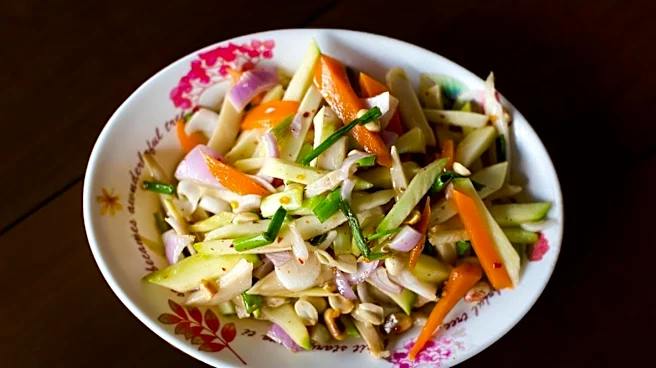
Chinese chicken salad, while having many variations, shares common features that define its identity. These typically include lettuce, cabbage, carrots, and cucumbers (which can be pickled or regular). The chicken component is usually breast meat, often shredded or chopped. A distinctive element is the inclusion of deep-fried wonton skins or rice vermicelli, which add a crucial textural contrast. Nuts, such as sliced almonds, cashews, or peanuts, are also common garnishes, contributing to both flavor and crunch.
The dressing for Chinese chicken salad is typically a basic vinaigrette. Essential ingredients for this dressing include vegetable oil, sesame oil, and rice vinegar, or sometimes citrus juice. Optional seasonings that enhance its unique flavor profile include dry hot mustard, sesame seeds, coriander, and either raw or pickled ginger. These ingredients collectively create a balance of savory, sweet, and tangy notes that are characteristic of the dish.
Evolution and Widespread Adoption
The presence of Asian-style lettuce salads began to appear in American cookbooks from the 1950s into the 1970s. Publications like California's Sunset Magazine played a significant role in popularizing these new culinary trends. By the 1970s, Sunset's cookbooks featured recipes for "Chinese Chicken Salad," which closely resembled the versions known today. These early recipes often included soy sauce, salad oil, garlic, ginger, Chinese five-spice (or cinnamon as a substitute), marinated broiler fryer chicken, sesame seeds, shredded iceberg lettuce, green onions, coriander, and cashews or peanuts, with a lemon dressing.
Initially, some recipes omitted traditional crisp noodles, perhaps due to the difficulty for homemakers to find or prepare fried vermicelli. Similarly, sesame oil was not always included, as it might have been less common in home kitchens at the time. The continued popularity of Chinese chicken salad has led to its widespread adoption, appearing on menus from fast-food establishments like Wendy's, with its "Asian Cashew Chicken Salad," to upscale restaurants, such as Wolfgang Puck's "Chinois Chicken Salad." Modern home-style versions might incorporate water chestnuts, mandarin orange slices, or even use store-bought instant ramen noodles and their seasoning packets for the vinaigrette, showcasing its ongoing adaptation and interpretation.