




Egocentric bias is a fundamental psychological phenomenon characterized by a strong reliance on one's own perspective or an inflated self-perception compared to reality. This cognitive bias is deeply intertwined with psychological motivations, particularly those related to self-enhancement, and significantly influences memory processes. Research indicates that information aligning with an individual's existing beliefs, experiences, or self-concept
is more easily recalled, thereby reinforcing an egocentric viewpoint. Michael Ross and Fiore Sicoly were among the first to identify this bias in their 1979 paper, "Egocentric Biases in Availability and Attribution," establishing it as a broad term encompassing various related phenomena.
The Origins and Nature of Egocentric Bias
The term "egocentric bias" was formally coined in 1980 by Anthony Greenwald, a psychologist at The Ohio State University. Greenwald described it as a phenomenon where individuals unconsciously alter their beliefs, causing what they remember or initially understood to diverge from what actually occurred. He connected this to the self-reference effect, a concept where people better recall information if they consider how it will personally affect them during the encoding process. Greenwald argued that this self-reference effect leads individuals to exaggerate their own role in situations. Furthermore, information is better encoded, and thus people are more susceptible to egocentric bias, when they actively produce information rather than passively receive it, such as by having a direct role in an outcome.
Egocentric bias fundamentally arises when people fail to consider situations from the perspectives of others. This bias can even influence ethical judgments, leading individuals to believe that self-interested outcomes are not only preferable but also morally sound. People are naturally more aware of their own behaviors because they have direct access to their own thoughts and emotions, which provides them with more information about themselves. These internal states can significantly shape how individuals perceive themselves in relation to others in various situations. For instance, when asked to allocate credit in a collaborative project, people often feel their contributions were greater than those of others, primarily because they focus more on their own efforts.
Unintentional Distortion Versus Conscious Motivation
Research has delved into the underlying causes and motivations for egocentric bias, particularly whether it stems from an unintentional distortion of reality or a conscious desire to appear normalized. A 1983 study by Brian Mullen, inspired by earlier work on the false consensus effect, investigated this by analyzing contestants on the NBC television show "Play the Percentages." The show offered significant financial incentives for unbiased estimates of consensus, as contestants had to estimate the percentage of correct answers given by a studio audience to trivia questions.
Statistical analysis of the data from this show revealed that the "egocentric bias of false consensus was observed in spite of the potent incentive for unbiased estimates of consensus." This finding strongly supports the hypothesis that egocentric bias is a result of unintentional perceptual distortion of reality rather than a deliberate, conscious motivation to conform or appear normal. From a psychological standpoint, memories appear to be stored in the brain in an egocentric manner, where one's own role is magnified to make experiences more personally relevant and thus easier to recall. This might also explain why early childhood memories are often harder to retrieve, as one's sense of self is less developed, leading to weaker connections between older memories and the self.
The Evolutionary and Developmental Aspects of Egocentric Bias
Egocentric bias may have evolutionary roots, potentially developing during hunter-gatherer times. In small, interdependent communities, individuals could reasonably assume that others shared very similar outlooks. An egocentric view in such contexts would have reduced cognitive load and enhanced communication efficiency, making it a beneficial trait for survival and social cohesion. This historical perspective suggests that the bias is not merely a modern cognitive quirk but a deeply ingrained aspect of human cognition.
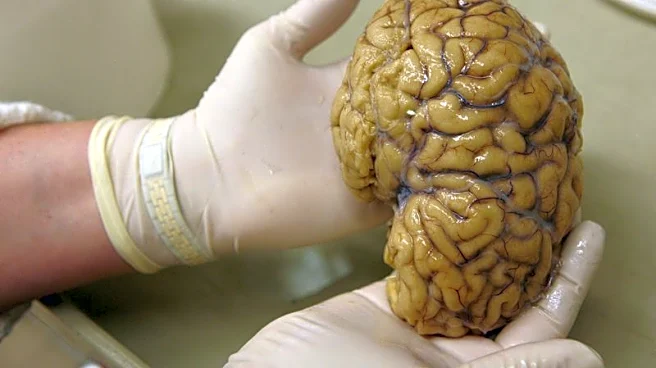
Furthermore, the degree to which egocentric bias is experienced can vary with age. A 2016 study found that adolescents and older adults tend to exhibit egocentric bias to a much greater extent than young and middle-aged adults. This variation is attributed to the developmental cycle of the right supramarginal gyrus (rSMG) of the parietal lobe, a brain region that finishes developing in late adolescence and begins to decay early. This suggests a neurological basis for the observed age-related differences in egocentric bias, highlighting how brain development and decline can influence our perception of self and others.
Personal Characteristics and Mitigating Egocentric Bias
Beyond age, other personal characteristics can influence the manifestation of egocentric bias. For instance, recent studies have explored egocentric bias in bilingual individuals. Research by Paula Rubio-Fernández and Sam Glucksberg indicated that bilingual people are less prone to egocentric bias. This reduced susceptibility is thought to stem from their increased attention to others' thoughts, a skill developed through navigating multiple linguistic and cultural perspectives. This makes it less challenging for them to differentiate between their own opinions and those of others, offering a potential avenue for mitigating the bias.
Egocentric bias is also considered one of Daniel Schacter's "seven sins" of memory, reflecting the prominent role the self plays in encoding and retrieving episodic memories. It is a pervasive cognitive tendency that shapes how we interpret events, recall information, and interact with the world around us. Understanding this bias is crucial for recognizing how our inherent self-focus can subtly, yet significantly, influence our perceptions and judgments.