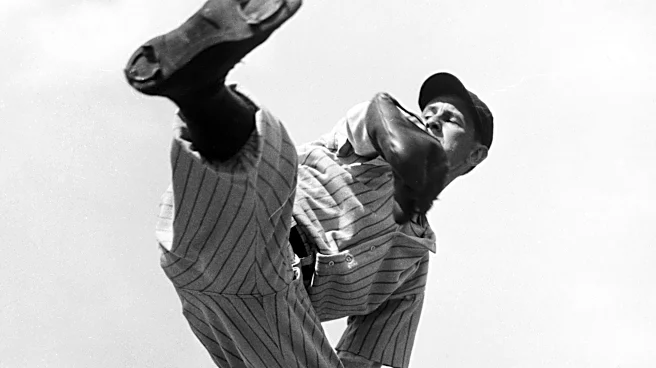







Reginald Martinez "Reggie" Jackson, a prominent outfielder in Major League Baseball (MLB) for 21 seasons from 1967 to 1987, left an indelible mark on the sport through his powerful hitting and numerous statistical achievements. Born on May 18, 1946, in Abington, Pennsylvania, Jackson was recognized as one of the premier players of the 1970s. His career was characterized by a blend of prodigious home run power and a less flattering record for strikeouts,
painting a comprehensive picture of a player who consistently aimed for the fences.
Leading the League: Home Runs and Slugging Percentage
Jackson's offensive capabilities were frequently at the top of the American League. He led the league in home runs four times during his career, specifically in 1973, 1975, 1980, and 1982. This consistent power output was a hallmark of his game, making him one of the most feared hitters of his era. His ability to drive the ball for extra bases was also evident in his slugging percentage, where he led the American League three times: in 1969, 1973, and 1976. These statistics underscore his significant impact as an offensive force, capable of changing the game with a single swing.
Beyond these specific categories, Jackson also demonstrated his all-around offensive value by leading the league in runs scored twice, in 1969 and 1973, and in RBIs (runs batted in) once, in 1973. The 1973 season, in particular, stands out as a peak year for his offensive production, where he simultaneously led the league in home runs, slugging percentage, runs, and RBIs, showcasing his comprehensive dominance at the plate.
Career Milestones and Records
Over his extensive career, Reggie Jackson accumulated 563 home runs, placing him 14th on the all-time MLB list. This impressive total is a testament to his sustained power and longevity in the league. However, his aggressive hitting style also led to another significant, though less celebrated, MLB record: he holds the career record for most strikeouts, with 2,597. This statistic highlights the all-or-nothing approach that defined much of his batting philosophy, where he was willing to risk a strikeout for the chance at a home run.
In addition to his regular season achievements, Jackson's postseason statistics further solidify his place in baseball history. In playoff history, he is tied for tenth in home runs with 18 and in RBIs with 48. When focusing solely on World Series history, Jackson ranks tied for fifth in home runs with ten, seventh in slugging percentage with .755, and tied for eighth in RBIs with 24. These postseason numbers reinforce his reputation as "Mr. October," demonstrating his ability to perform at an elite level when championships were on the line.
Recognition and Legacy
Jackson's remarkable career was recognized in 1993 when he was elected into the National Baseball Hall of Fame, receiving 93.6% of the votes. This honor cemented his legacy as one of baseball's all-time greats. Furthermore, both the New York Yankees and the Oakland Athletics have retired his jersey numbers, 44 and 9 respectively, ensuring that no future player for these franchises will wear those numbers. This act of retiring his numbers signifies the profound impact he had on both organizations and the sport as a whole, acknowledging his statistical prowess and his role in their championship successes.