





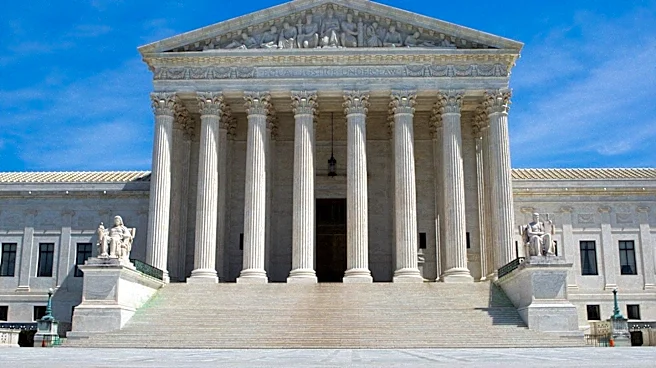

The Civil Rights Act of 1875, a significant piece of Reconstruction-era legislation, aimed to guarantee equal treatment for African Americans in public accommodations and other areas. However, its legal standing was severely challenged and ultimately undermined by the Supreme Court's decision in the "Civil Rights Cases." This landmark ruling, delivered in an 8-1 decision, profoundly impacted the scope of federal power to address racial discrimination,
particularly concerning private acts rather than state-sanctioned actions. The Court's interpretation of the 13th and 14th Amendments set a precedent that would influence civil rights law for decades.
The Court's Interpretation of the 14th Amendment
Justice Joseph P. Bradley, writing for the majority, articulated that the language of the 14th Amendment, which prohibits states from denying equal protection, did not grant Congress the authority to regulate private acts of discrimination. The Court reasoned that the 14th Amendment was designed to address discriminatory actions by states, not by individual citizens. According to this interpretation, if Black individuals experienced discrimination due to the conduct of private individuals, rather than state law or action, the federal government was powerless to intervene under the 14th Amendment. Section five of the Amendment, the Court held, only empowered Congress to enforce the prohibition on state action, not to legislate on matters within the domain of the states concerning private conduct.
Bradley emphasized that "individual invasion of individual rights is not the subject-matter of the [14th] Amendment." He clarified that the Amendment's "deeper and broader scope" was to nullify and void all state legislation and state action that impaired citizens' privileges and immunities, injured them without due process, or denied them equal protection of the laws. Consequently, private acts of racial discrimination were categorized as "simply private wrongs" that the national government lacked the power to correct through legislation based on the 14th Amendment.
The 13th Amendment and the Limits of Federal Power
The Supreme Court also considered the applicability of the 13th Amendment, which abolished slavery, to private acts of discrimination. While acknowledging that the 13th Amendment does apply to private actors, the Court significantly limited its scope. It ruled that the Amendment only prohibited individuals from owning slaves, not from exhibiting discriminatory behavior in other contexts. The Court famously stated that "it would be running the slavery argument into the ground to make it apply to every act of discrimination which a person may see fit to make as to guests he will entertain, or as to the people he will take into his coach or cab or car; or admit to his concert or theatre, or deal with in other matters of intercourse or business."
This narrow interpretation meant that while the 13th Amendment outlawed the institution of slavery, it did not provide a basis for Congress to prohibit private discrimination in public accommodations. The combined effect of these rulings on both the 13th and 14th Amendments was to strip the Civil Rights Act of 1875 of its constitutional foundation, effectively rendering it unenforceable. This decision marked a significant setback for civil rights efforts during Reconstruction, leaving African Americans vulnerable to private discrimination without federal recourse for many decades.