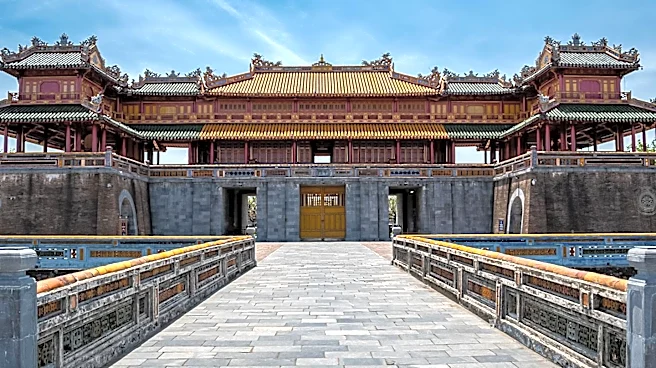








Vietnam's history is a rich tapestry woven from various cultural, political, and social threads. From its early days as a collection of small states to its current status as a unified nation, Vietnam's journey is marked by resilience and transformation. This article explores the key historical milestones that have shaped Vietnam, providing a glimpse into the events and influences that have defined this Southeast Asian country.
Ancient Beginnings
Vietnam's history dates
back to the Paleolithic age, with early states forming in the first millennium BC in the Red River Delta. This region, located in modern-day northern Vietnam, became a cradle of civilization, where early Vietnamese societies developed agriculture, particularly wet rice cultivation, which became a staple of their diet. The Red River valley's fertile lands and strategic location fostered the growth of these early communities.
The influence of Chinese culture began to permeate Vietnam as early as 111 BCE, when much of the region came under Chinese dominance. Despite this, Vietnam maintained a distinct identity, with numerous uprisings and periods of de facto independence. The arrival of Buddhism and Hinduism by the 2nd century CE further enriched Vietnam's cultural landscape, making it a unique blend of Chinese and Indian influences.
Colonial and Post-Colonial Struggles
The French colonial period, beginning in the mid-19th century, marked a significant chapter in Vietnam's history. The French imposed political and cultural changes, introducing a Western-style education system and integrating Vietnam into the union of French Indochina. This period saw the rise of nationalist movements, as Vietnamese leaders sought to reclaim their country's sovereignty.
The struggle for independence intensified after World War II, leading to the First Indochina War between the Viet Minh and French forces. The war ended in 1954 with the Geneva Accords, which temporarily divided Vietnam into North and South. This division set the stage for the Vietnam War, a conflict that would have profound implications for the country and the world.
Reunification and Modernization
The Vietnam War concluded in 1975 with the reunification of North and South Vietnam under the Socialist Republic of Vietnam. The post-war period was marked by efforts to rebuild the nation and transition from a planned economy to a socialist-oriented market economy. The Đổi Mới reforms, introduced in 1986, played a crucial role in this transformation, encouraging private ownership and foreign investment while maintaining state control over strategic industries.
Today, Vietnam is a dynamic and rapidly developing country, balancing its historical legacy with modern aspirations. Its journey from ancient states to a unified nation reflects a story of resilience, adaptation, and growth, making Vietnam a fascinating subject of historical study.