






The John F. Kennedy Center for the Performing Arts, established in Washington, D.C., in 1971, operates under a distinctive public-private partnership model. Named in honor of President John F. Kennedy, this institution is not solely a government entity but relies on a blend of federal support and private fundraising. This dual nature has shaped its financial landscape, leading to both consistent federal appropriations for certain functions and significant
reliance on external contributions for others. Over its history, the center has navigated complex funding arrangements, capital improvement projects, and, at times, financial controversies that highlight the intricacies of its operational structure.
Early Funding and Federal Involvement
The concept of a national cultural center, which eventually became the Kennedy Center, gained federal backing with the National Cultural Center Act, signed by President Dwight D. Eisenhower in 1958. This act marked a pivotal moment, as it was the first instance of the federal government helping to finance a structure dedicated to the performing arts. However, this federal support came with a condition: a portion of the estimated costs, initially between $10 million and $25 million, had to be raised through private means within five years. Early fundraising efforts, led by the National Cultural Center Board of Trustees established by President Eisenhower, were initially slow, raising only $13,425 in the first three years.
President John F. Kennedy's personal interest and leadership provided a crucial boost to the project. He appointed Roger L. Stevens as chairman of the board of trustees, who, along with First Lady Jacqueline Kennedy and former First Lady Mamie Eisenhower, invigorated fundraising. Despite these efforts, by the time of President Kennedy's assassination in 1963, only $13 million had been raised. Following his death, the project was re-envisioned as a "living memorial" to him, and Congress renamed it the John F. Kennedy Center for the Performing Arts in 1964. This renaming solidified its national importance and likely influenced subsequent federal commitment.
Operational Funding and Capital Improvements
Upon its opening, the Kennedy Center's operational and maintenance expenses became a subject of congressional appropriations. In June 1971, Congress authorized funds for one year to the board of trustees for these costs. In subsequent years, these appropriations were directed to the National Park Service, covering operations, maintenance, security, safety, and other functions not directly related to the performing arts. A cooperative agreement between the National Park Service and the Kennedy Center stipulated that each party would contribute to operating and maintenance costs based on the building's usage for performing arts. However, this agreement lacked clarity on responsibility for long-term capital improvement projects, leading to only periodic, one-time congressional funding for such needs.
Recognizing the necessity for substantial upgrades, Congress recommended significant allocations for capital improvements in fiscal years 1991 and 1992, totaling $27.7 million. This included funds for structural repairs to the garage and other structural and mechanical repairs, as well as improvements for handicapped access. In 1994, the Kennedy Center assumed full responsibility for capital improvement projects and facility management. From 1995 to 2005, over $200 million in federal funds were allocated for long-term capital projects, repairs, and to ensure compliance with modern fire safety and accessibility codes. These projects included renovations to the Concert Hall, Opera House, public spaces, and a new fire alarm system. While essential, some renovations exceeded their budgets by 13 to 50 percent due to modifications during the process, incurring overtime and penalties. Renovations to the Eisenhower Theater were completed in 2008.
Recent Controversies and Financial Scrutiny
More recently, the Kennedy Center has faced significant financial and branding challenges. In October 2025, The Washington Post reported a drastic decline in ticket sales, reaching levels not seen since the COVID-19 pandemic. This decline coincided with a period of leadership changes and policy shifts. In November 2025, a letter from Senator Sheldon Whitehouse alleged that the Kennedy Center had become a "swamp for cronyism and self-dealing" under its interim executive director, citing contracts awarded to associates, rental-fee discounts for political allies, and luxury spending unrelated to fundraising. The interim executive director, Richard Grenell, countered these claims, asserting that he achieved a balanced budget, significantly reduced development staff, and implemented a policy requiring events to be revenue-neutral. An investigation by the Senate environment and public works committee was launched in November 2025.
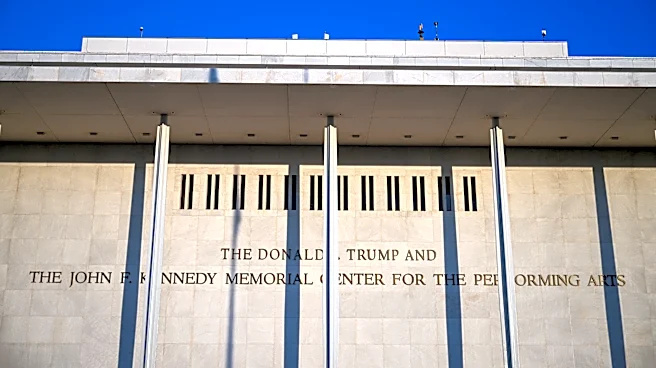
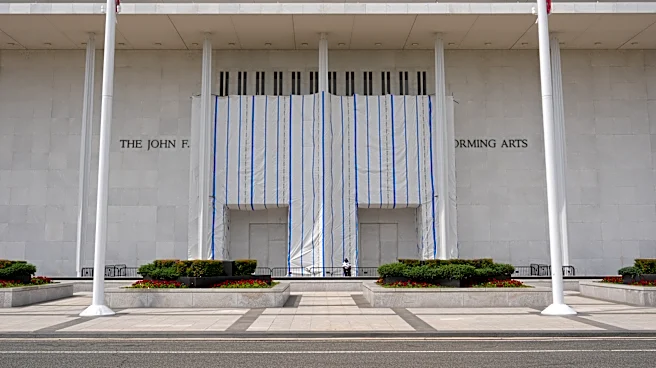
Further financial concerns emerged in August 2026, when The Washington Post, based on a review of confidential internal documents, concluded that ticket sales and fundraising had collapsed after a controversial name change, despite public claims of a financial turnaround. The records projected a $100 million revenue shortfall for fiscal year 2026, representing missed budget targets and a 70% decline in earned income, alongside a $23 million deficit. These events underscore the ongoing financial complexities and the delicate balance required to sustain a major cultural institution operating as a public-private partnership.