




The Iran hostage crisis, a diplomatic standoff from November 4, 1979, to January 20, 1981, involved the captivity of 52 American diplomats and citizens in the U.S. embassy in Tehran. Decades later, the question of Mahmoud Ahmadinejad's involvement in this event became a subject of intense debate and conflicting accounts. Ahmadinejad, who later served as Iran's president, has consistently denied any participation, a stance supported by the Iranian
government and the CIA. However, several former hostages and even a former Iranian president have presented claims suggesting his presence and even leadership during the crisis.
Conflicting Accounts from Iranian Officials
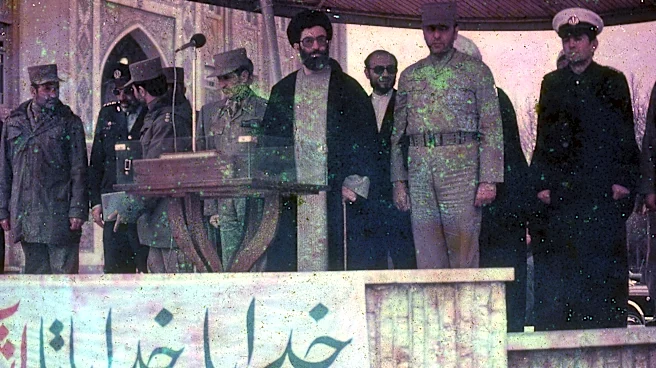
Former Iranian president Abolhassan Banisadr claimed that Mahmoud Ahmadinejad was present inside the U.S. Embassy during the hostage crisis. According to Banisadr, Ahmadinejad was not a primary decision-maker but served as a liaison between the hostage-takers and Ali Khamenei, who was the Friday prayer leader of Tehran at the time. Banisadr further alleged that Ayatollah Khamenei, who later became Iran's Supreme Leader, visited the hostage-takers multiple times within the compound. Interestingly, Banisadr also stated that Ahmadinejad initially opposed the embassy takeover but changed his mind once Ayatollah Khomeini endorsed it.
Adding another layer to the complexity, Masoumeh Ebtekar, a spokeswoman for the hostage-takers known as "Sister Mary" by U.S. media, also indicated that Ahmadinejad had initially been against the embassy takeover. Ahmadinejad himself has stated that he did not support the seizure of the embassy until Ayatollah Ruhollah Khomeini gave his endorsement, which occurred late on November 4, 1979, the day the embassy was taken. Reportedly, Ahmadinejad had argued that the protest should have been directed at the Soviet embassy instead, and some reports suggest he proposed simultaneous actions against both the U.S. and Soviet embassies.
Identification by Former American Hostages
Despite Ahmadinejad's denials, several former American hostages have alleged his direct involvement, even identifying him as one of the leaders of the hostage-taking. Five former U.S. hostages—Dr. William Daugherty, Kevin Hermening, David Roeder, U.S. Army Col. Charles Scott, and U.S. Navy Capt. Donald Sharer—have claimed that Ahmadinejad was a key figure during their 444-day captivity. Col. Charles Scott, for instance, stated that Ahmadinejad was "one of the top two or three leaders" and recalled an incident where Ahmadinejad berated a guard for allowing two Americans to visit another hostage, reportedly saying, "You shouldn't let these pigs out of their cells."
Donald Sharer, a retired Navy captain and cellmate of Col. Scott, remembered Ahmadinejad as "a hard-liner, a cruel individual" and believed he was an interrogator. Both Scott and Roeder expressed certainty that Ahmadinejad was present during their interrogations, with Scott asserting, "This is the guy. There's no question about it." While most of these former hostages were firm in their identification, some, like former USAF Col. Thomas E. Schaefer and Paul Lewis, expressed uncertainty, with Lewis noting that his memories were "more of the gun barrel, not the people behind it." Barry Rosen, another former hostage, did not personally recognize Ahmadinejad but expressed belief in those who did.
Official Denials and CIA Investigations
In contrast to the claims made by former hostages and Banisadr, Mahmoud Ahmadinejad, the Iranian government, and the CIA have all denied his involvement in the hostage crisis. A CNN report, citing multiple official sources, detailed the results of a CIA investigation. This report concluded with "relative certainty" that Ahmadinejad was not involved in the hostage-taking. One U.S. official stated that the report indicated "no evidence to date that the new Iranian president was among those who held U.S. diplomats hostage." Furthermore, CIA analysis of a photograph of one of the hostage-takers determined that the man in the picture was not Ahmadinejad. These official denials and investigative findings stand in direct opposition to the personal recollections of some of the former captives, leaving the question of Ahmadinejad's role a subject of ongoing historical debate.