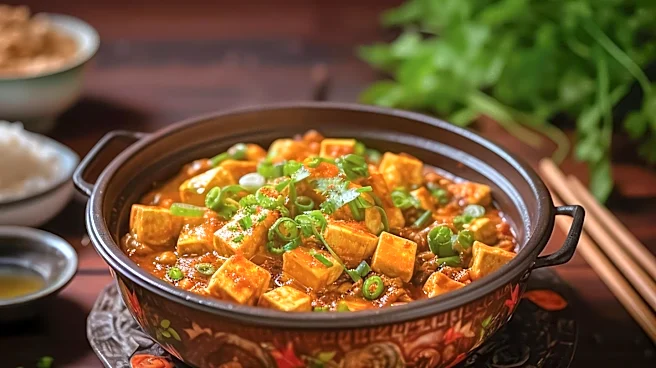







Mapo Tofu is a renowned dish from the Sichuan province of China, known for its spicy and flavorful profile. This dish has a rich history that dates back to the 19th century, originating in Chengdu. Over the years, Mapo Tofu has evolved, adapting to various tastes and preferences while maintaining its core ingredients and essence.
The Birth of Mapo Tofu
The story of Mapo Tofu begins in the 1860s or 1870s at a small eatery in Chengdu, Sichuan. This eatery, named Chenxingsheng,
was run by a couple known as the Chens. The dish was initially created by Mrs. Chen, who was affectionately nicknamed "Chen Mapo," meaning "pockmarked old woman." The original recipe was simple, consisting of tofu, chili, pork, and Sichuan pepper. This combination of ingredients created a dish that was both spicy and numbing, a hallmark of Sichuan cuisine.
The name "Mapo Tofu" itself is derived from the Chinese words "ma," meaning pockmarks, and "po," meaning old woman or grandma. Thus, the dish is sometimes referred to as "pockmarked grandma's beancurd." This unique name reflects the personal touch and history behind the dish, linking it directly to its creator.
Transformation and Popularization
In the 1920s, the Chen Mapo eatery underwent a significant transformation. A chef named Xue Xiangshun was hired, and he played a crucial role in refining the dish. Xue introduced beef as a substitute for pork and added douchi, or fermented black beans, to enhance the flavor. These changes helped perfect the recipe, making it more appealing to a broader audience.
The dish's popularity grew, and it became a staple in Sichuan cuisine. The first written recipe for Mapo Tofu appeared in a 1950s document by the Food, Beverage, and Hospitality Bureau, which cataloged recipes from across China. This documentation helped preserve the dish's traditional preparation methods while allowing for regional variations.
Modern Variations and Global Reach
Today, Mapo Tofu is enjoyed worldwide, with variations that cater to different tastes and dietary preferences. In Japan, the dish was popularized by Chinese-Japanese chef Chen Kenmin and his son Chen Kenichi, who featured it on the television program Iron Chef. This exposure helped introduce Mapo Tofu to a global audience.
In addition to the traditional meat-based version, vegetarian adaptations have emerged, using ingredients like shiitake mushrooms as a substitute for ground meat. These variations maintain the dish's signature spicy and numbing flavors while offering options for those who prefer plant-based diets.
Mapo Tofu's journey from a humble Chengdu eatery to a globally recognized dish highlights its adaptability and enduring appeal. Its rich history and evolving nature continue to captivate food enthusiasts around the world.