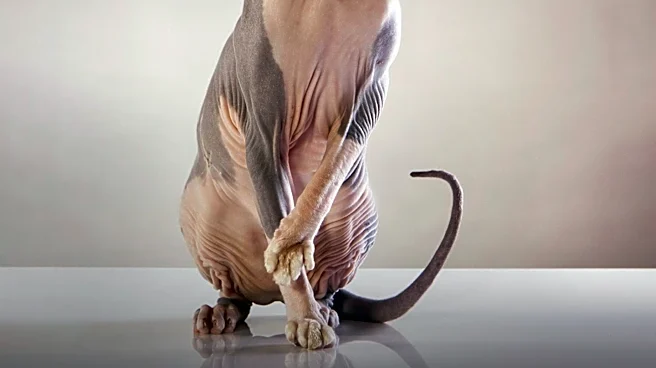





The Sphynx cat, also known as the Canadian Sphynx, is a distinctive breed renowned for its lack of fur. Originating in Canada, this medium-sized, muscular feline has captured attention not only for its unusual appearance but also for its engaging personality. While often perceived as completely hairless, a closer look reveals a fine, downy fuzz covering its body, contributing to its warm, suede-like feel. This breed's development began in the 1960s
through the selective breeding of naturally occurring hairless cats, establishing its unique place among domestic felines.
Physical Characteristics and Misconceptions
Sphynx cats are characterized by their medium build and muscular physique. They possess large ears, prominent cheekbones, and a strong chin, contributing to their striking facial features. Despite their seemingly hairless state, a subtle layer of fine hair covers their entire body. This downy coat, combined with the direct release of body heat from their skin, gives them a noticeably warm feel to the touch, often leading to the misconception that they have a higher body temperature than other cats. However, their internal temperature is comparable to that of other breeds; it is simply more apparent due to the absence of insulating fur.Their unique skin also presents specific care requirements. Sphynx cats are prone to producing an excessive amount of greasy secretion, or sebum, which can accumulate as a sticky, dark brown or reddish-brown layer. This necessitates regular cleaning to maintain their hygiene. Furthermore, they tend to produce more earwax than most hairy domestic cats, a consequence of having minimal to no hair within their ears, which allows for the buildup of dirt, skin oils, and earwax. Owners must also pay attention to cleaning under their nails and within their numerous skin folds, where oils and debris can collect.
Personality and Social Behavior
Beyond their distinctive looks, Sphynx cats are celebrated for their extroverted and affectionate personalities. They are known for their high energy levels, intelligence, and curiosity, often forming strong bonds with their owners. Many describe them as "dog-like" in their behavior, frequently greeting their human companions at the door and displaying friendliness towards strangers. This breed tends to be highly attached to its owners, often demanding significant attention and interaction.Their lack of fur also influences their social habits, as they frequently seek out warmth, often cuddling with their owners or other pets. A 2012 study published in the Journal of Veterinary Behavior, while noting the need for further research, indicated that owners rated purebred Sphynx cats as friendlier compared to purebred European cats. This suggests a predisposition towards a more sociable and amiable temperament within the breed. Their need for warmth also means that in colder climates, owners often provide them with coats or other clothing to help them conserve body heat, and they should generally not be left unattended outdoors.
Sun Sensitivity and Allergen Information
Due to their lack of protective fur, Sphynx cats are particularly sensitive to sunlight. Light-skinned Sphynx cats can easily get sunburned and experience skin damage similar to humans if exposed to unprotected sun contact. Therefore, it is crucial to protect them specifically from the sun, and they should never be allowed outdoors unsupervised. This sensitivity is not unique to hairless cats, as cats with white or light-colored fur also share this vulnerability.Despite their hairless appearance, Sphynx cats are not necessarily hypoallergenic. Allergies to cats are primarily triggered by a protein called Fel d1, found in cat saliva and sebaceous glands, rather than the hair itself. While some individuals with allergies have reported successfully tolerating Sphynx cats, the number of people who experience allergic reactions to them is still significant. Therefore, direct contact with Sphynx cats can still provoke allergic responses in sensitive individuals.