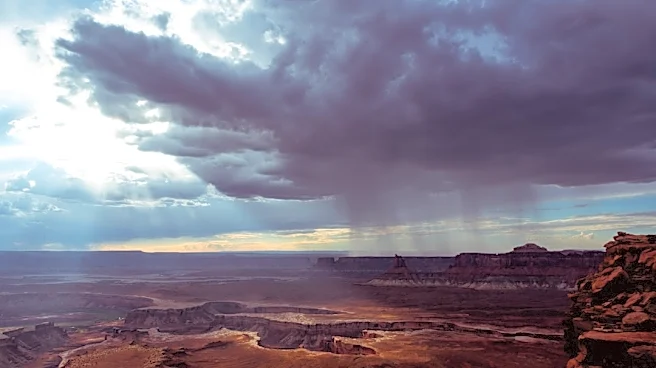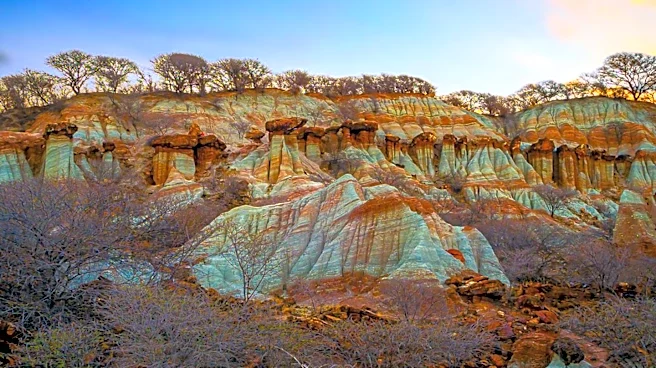






Canyonlands National Park is not merely a landscape of stunning natural beauty; it is also a repository of deep historical significance, bearing the marks of ancient civilizations and serving as a focal point for ongoing conservation efforts. From the intricate rock art left by early hunter-gatherers and Ancestral Puebloans to the continuous scientific study of its pristine ecosystems, the park embodies a rich tapestry of human interaction with the natural world.
Its establishment and continued protection reflect a commitment to preserving both its geological wonders and its cultural heritage for future generations.
Echoes of Ancient Civilizations
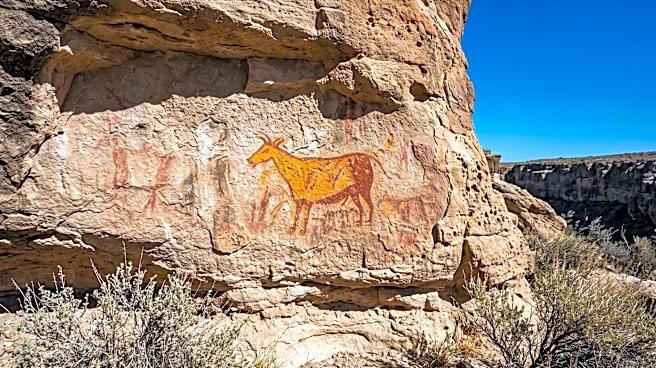
The rugged canyons and mesas of Canyonlands have been home to human populations for millennia, leaving behind invaluable traces of their existence. The Ancestral Puebloans, who inhabited the Needles district, constructed stone and mud dwellings that remain remarkably well-preserved today. While many of their tools and personal items were unfortunately removed by looters, the structures themselves offer a tangible link to this ancient culture. Even more enduring are the petroglyphs, or rock carvings, created by the Ancestral Puebloans, most notably visible on Newspaper Rock along the Needles access road. These intricate designs provide insights into their beliefs, daily lives, and artistic expressions.Further back in time, the geographically detached Horseshoe Canyon, located north of the Maze district, reveals even older evidence of human presence. Here, panels of rock art were created by hunter-gatherers during the Late Archaic Period, spanning from 2000 to 1000 BC, predating the Ancestral Puebloans. These artifacts, dwellings, pictographs, and murals are considered among the oldest in America. Interestingly, some images depicting horses in Horseshoe Canyon date from after 1540 AD, indicating the period when the Spanish reintroduced horses to the American continent, showcasing a blend of ancient and more recent historical influences within the park's art.
The Visionaries Behind the Park's Creation
The establishment of Canyonlands National Park on September 12, 1964, was the culmination of years of dedicated effort and political negotiation. Bates Wilson, then superintendent of Arches National Monument, is often referred to as the "Father of Canyonlands" for his early explorations and persistent advocacy for the area's protection. His initial focus on the Needles District expanded to include the confluence of the Green and Colorado rivers, the Maze District, and Horseshoe Canyon, shaping the park's eventual boundaries.Secretary of the Interior Stewart Udall's interest was piqued by an aerial view of the Confluence in 1961, leading him to champion Wilson's proposal. Utah Senator Frank Moss then took up the legislative challenge, introducing bills to Congress. The process was complex, involving years of debate, revisions, and reintroductions, as it sought to reconcile the interests of nature preservationists with those of commercial developers. Ultimately, President Lyndon B. Johnson signed the legislation, Pub. L. 88–590, into law, officially establishing Canyonlands National Park and appointing Bates Wilson as its first superintendent.
Ongoing Conservation and Future Aspirations
Conservation remains a critical aspect of Canyonlands National Park's mission. Since the 1950s, scientists have been studying a unique 200-acre area within Horseshoe Canyon, completely encircled by cliffs. This natural barrier has prevented cattle from grazing on its 62 acres of grassland, which scientists believe may be the largest undisturbed grassland in the Four Corners region. To maintain this nearly pristine environment, the area has been closed to the public since 1993, with studies continuing biannually since the mid-1990s.Beyond specific research sites, broader conservation goals persist. Political compromises during the park's creation limited the protected area to an arbitrary portion of the Canyonlands basin. Conservationists today hope to complete the park by extending its boundaries to encompass the high sandstone rims that naturally define the Canyonlands landscape. This ongoing effort reflects a desire to fully protect the ecological and geological integrity of this magnificent national treasure, ensuring its preservation for generations to come.