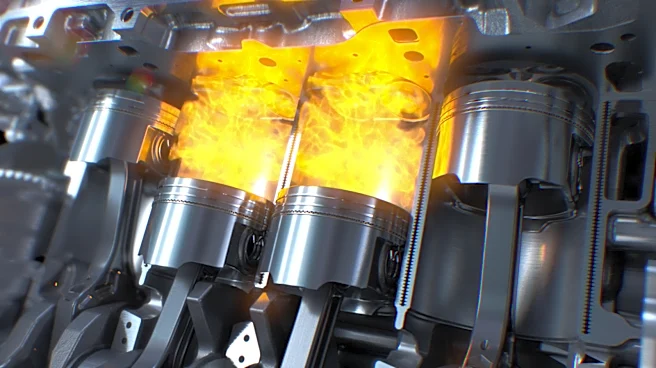

The engine of a Top Fuel dragster is not merely a powerful machine; it is a highly specialized, meticulously engineered marvel designed to produce immense power for a very short duration. While based on the
second-generation Chrysler RB Hemi, every component is custom-built to withstand extreme forces and temperatures. These engines are capable of generating between 8,500 and 10,000 horsepower, with some tests showing over 11,000 horsepower, making them among the most potent internal combustion engines in existence. This incredible output is achieved through a combination of unique design choices, specialized materials, and precise operational control, all within strict regulatory limits.
Core Architecture: Block, Heads, and Valvetrain
The foundation of a Top Fuel engine is its block, machined from a single piece of forged aluminum, featuring press-fitted, ductile iron cylinder liners. A key design element is the absence of water passages, which significantly enhances the block's strength and stiffness. Cooling is instead managed by the incoming air/fuel mixture and the lubricating oil. Like the original Hemi, the racing cylinder block incorporates a deep skirt for added strength, and its five main bearing caps are secured with aircraft-standard-rated steel studs, further reinforced with additional main studs and side bolts. Only three approved suppliers—Keith Black, Brad Anderson, and Alan Johnson—produce these custom blocks, underscoring their specialized nature.
Similarly, the cylinder heads are machined from aluminum billets and also lack water jackets, relying on the air/fuel mixture and lubricating oil for cooling. They retain the original Chrysler design of two large valves per cylinder. The intake valve is crafted from solid titanium, while the exhaust valve uses solid Nimonic 80A or a similar high-performance alloy. Valve sizes are approximately 2.45 inches for the intake and 1.925 inches for the exhaust. The heads are sealed to the block using copper gaskets and stainless steel o-rings, secured by aircraft-rated steel studs and nuts. The valvetrain includes a billet steel camshaft, mechanical roller lifters, and steel pushrods driving steel rocker arms, all designed for extreme durability and precision.
Crankshaft, Pistons, and Connecting Rods: Built for Brutality
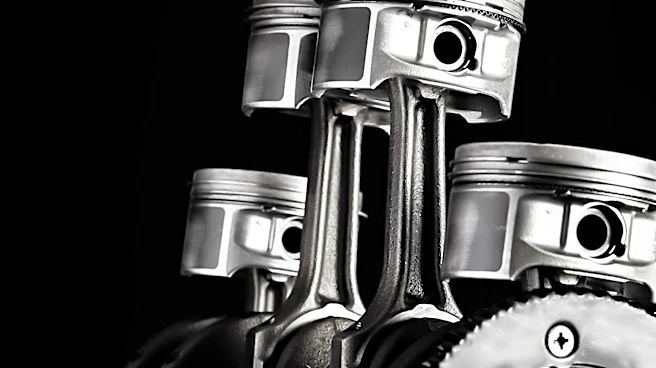
Billet steel crankshafts, all with a cross-plane (90-degree) configuration, run in five conventional bearing shells. While 180-degree crankshafts have been tested, their tendency to create significant vibration, despite being lighter, makes the 90-degree design preferable for Top Fuel engines, which have separate exhaust pipes for each cylinder. The strength of these crankshafts is legendary; in one incident, an entire engine block was blown off a car during a failure, yet the crankshaft, with all eight connecting rods and pistons, remained bolted to the clutch.
Pistons are made of forged aluminum, featuring three rings. The top ring is an L-shaped "Dykes" ring, providing an optimal seal during combustion, while a second ring prevents excessive oil from entering the combustion chamber during intake strokes. A third oil scraper ring removes oil film from the cylinder wall, aiding in heat removal and preventing contamination. The connecting rods are forged aluminum, chosen for their shock-damping properties. Unlike titanium, which transmits too much combustion impulse to the rod bearings, aluminum helps protect these critical components. Each connecting rod has two bolts and shell bearings for the big end, with the wrist pin running directly in the rod.
Fuel and Ignition: The Heart of the Power
The air/fuel mixture, primarily 90% nitromethane and 10% methanol, is ignited by two 14 mm spark plugs per cylinder, fired by two 44-ampere magnetos. Normal ignition timing is dramatically advanced, typically 58-65 degrees Before Top Dead Center (BTDC), due to the slower burn rate of nitromethane and alcohol compared to gasoline. Immediately after launch, the timing is temporarily decreased by about 25 degrees to allow the tires to achieve their correct shape. The ignition system limits engine speed to 8400 rpm and provides an initial 60,000 volts and 1.2 amperes, with a long-duration spark delivering 950 millijoules of energy. The spark plugs are strategically placed to be cooled by the incoming charge, and a timer-based retard system is used, as the ignition system is not allowed to respond to real-time information.
Exhaust gases exit through eight individual open exhaust pipes, known as "zoomies," which are 2.75 inches in diameter and 18 inches long. These steel pipes are fitted with thermocouples to measure exhaust gas temperature, which can reach about 1,796 °F by the end of a run. During nighttime events, the slow-burning nitromethane creates visible flames extending many feet from the exhaust pipes. The engine is warmed up for about 80 seconds, after which valve covers are removed, oil is changed, and the car is refueled. The entire run, including tire warming, lasts about 100 seconds, resulting in a "lap" of approximately three minutes. After each run, the entire engine is disassembled, examined, and any worn or damaged components are replaced, a testament to the extreme stresses these engines endure.