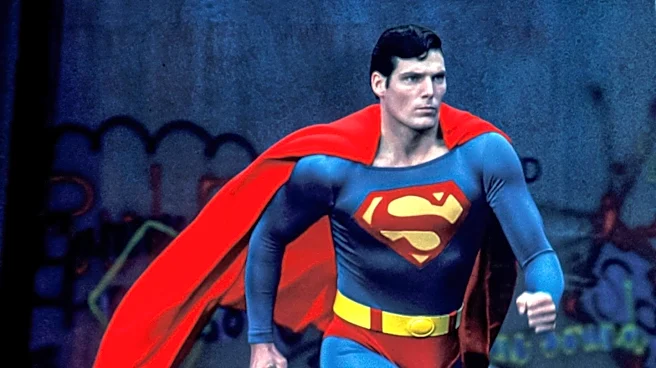







The "Adventures of Superman" television series, a pioneering superhero show of the 1950s, was more than just a simple adaptation of comic book characters; it was a product of specific creative and production choices that shaped its identity and evolution. From its origins as a feature film pilot to its distinctive musical score and changing narrative tone, the series offers a fascinating look into early television production. These decisions, influenced
by budget, audience reception, and evolving broadcast standards, defined how Superman was presented to a generation of viewers.
From Pilot Film to Television Series
The journey of "Adventures of Superman" to the small screen began with a 58-minute black-and-white film titled "Superman and the Mole Men." Released in November 1951 by California exhibitor and B-movie producer Robert L. Lippert, this film starred George Reeves and Phyllis Coates, with a script by Robert Maxwell and direction by Lee Sholem. This feature served as the direct pilot for the television series, prompting the commencement of production for the first season in August or September of the same year. The film was later re-edited into a two-part storyline, "The Unknown People," for syndication, becoming the series' only multi-part narrative and sometimes broadcast as an "unofficial" season one finale.
Initially, the series remained unaired until September 1952, when Kellogg's, a cereal manufacturer that had previously sponsored the Superman radio series, agreed to back the show. This sponsorship was crucial for the series' broadcast. The success of the show came as a surprise to the cast, with Jack Larson recalling his unexpected newfound fame in New York City. The series was produced for first-run syndication, rather than for a specific network, which contributed to some discrepancies regarding its exact first and last air dates, generally accepted as September 19, 1952, and April 28, 1958.
Musical Score and Opening Sequence
The musical landscape of "Adventures of Superman" was largely drawn from stock music libraries, often adaptations of scores from B-movies. For instance, a cue used in the episode "Peril by Sea" also appeared in "Plan 9 from Outer Space." Another notable example is a cue from Miklos Rozsa's "Theme, Variations & Finale," Op. 13, from 1933, which was utilized in several second-season episodes like "The Machine that Could Plot Crimes" and "The Golden Vulture." While much of the music was pre-existing, original music was also composed for the series, including the March used in the credits, often ascribed to studio music arranger Leon Klatzkin, though it was adapted from Sammy Timberg's earlier Superman March for the 1940s Superman cartoons.
The opening sequence of the show was iconic, featuring Bill Kennedy's voice-over narration, which expanded upon the introductions from the 1940s radio show and cartoons. This narration famously included lines like "Faster than a speeding bullet! More powerful than a mighty locomotive! Able to leap tall buildings at a single bound!" and the classic "Look! Up in the sky! It's a bird! It's a plane! It's Superman!" The show's title card imitated the three-dimensional lettering of the comic book covers, and the Hollywood First National Bank served as one of the Metropolis backdrops. The opening narration also included the sponsor's mention, "Kellogg, 'The Greatest Name In Cereals', presents the Adventures of Superman!" which was later removed in syndication when Kellogg's was no longer the sponsor.
Evolving Tones and Thematic Elements
The series underwent significant tonal shifts throughout its run. The first two black-and-white seasons featured dark, gritty, and often violent storylines, with Superman battling gangsters and crime lords, and onscreen deaths occurring. However, with the transition to color filming in the later seasons, the tone softened considerably. Villains became more caricatured, violence was toned down, and Superman's physical confrontations were less frequent and more stylized. The focus often shifted to the comedic predicaments of Jimmy Olsen and Lois Lane. By the sixth and final season, there was an attempt to reintroduce some seriousness, incorporating science fiction elements such as a Kryptonite-powered robot and atomic explosions, indicating a continuous effort to evolve the narrative and maintain audience engagement.