

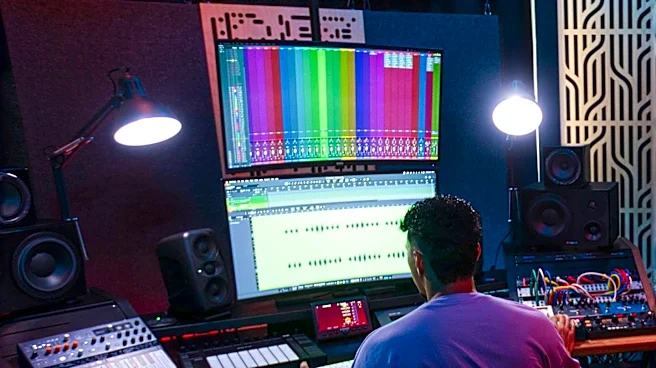
Released on October 1, 1982, Donald Fagen's debut solo studio album, "The Nightfly," stands out not only for its musical content but also for its groundbreaking technical achievements. Produced by Gary Katz, this album is recognized as one of the earliest examples of a fully digital recording in popular music. This innovative approach to recording, mixing, and mastering set a new standard for audio fidelity and had a significant influence on the music industry,
demonstrating the potential of digital technology in music production.
Early Digital Recording and Its Impact
"The Nightfly" was among the first albums to be entirely produced using digital technology, from the initial sound capture to the final mastering process. This commitment to digital recording was a bold move for its time, as the technology was still relatively new and not widely adopted in mainstream music production. The album's pristine sound quality, a direct result of this digital process, quickly became a benchmark. Even today, "The Nightfly" is frequently used by audiophiles to test the quality of high-fidelity sound systems, a testament to its enduring sonic excellence.
This pioneering use of digital recording had a profound effect on the perception of audio quality in popular music. It showcased that digital formats could offer a level of clarity and precision that was difficult to achieve with analog methods. The album's success helped to pave the way for the widespread adoption of digital recording technologies throughout the 1980s and beyond, fundamentally changing how music was produced and consumed.
Enduring Audio Quality and Audiophile Reference
The extraordinary quality of "The Nightfly's" recording is a key aspect of its legacy. Its meticulous production and the clarity afforded by digital technology meant that the album sounded remarkably clean and detailed. This attention to sonic detail made it a favorite among audio enthusiasts and critics alike.
For many, the album's sound quality remains unparalleled. In the ongoing debate between compact disc (CD) and vinyl LP formats, the LP version of "The Nightfly" is often considered superior and continues to be a reference point in the audiophile community. This sustained reputation highlights how well the album's digital origins translated into a high-quality listening experience across different physical formats, solidifying its status as a landmark in audio engineering.
Continuity with Steely Dan's Sophistication
While a solo effort, "The Nightfly" maintained a continuity with the sophisticated production techniques and musical style that Donald Fagen had established with Steely Dan, particularly following their last album, "Gaucho," released two years prior. The album's sophisticated production was a hallmark, showcasing intricate arrangements and a polished sound that was characteristic of Fagen's previous work. This blend of familiar musicality with cutting-edge digital production created an album that was both innovative and deeply rooted in Fagen's artistic identity.
The album's ability to blend complex musical structures with advanced recording technology resulted in a sound that was both rich and transparent. This combination not only appealed to a broad audience but also demonstrated how digital tools could enhance, rather than detract from, artistic expression. "The Nightfly" thus stands as a significant milestone, not just for its digital innovation, but also for its role in evolving the sound of jazz-pop and rock music.