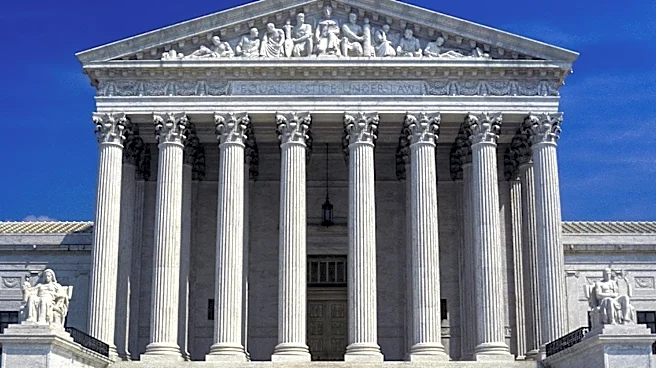







Robert Bork's nomination to the Supreme Court in 1987 ignited a fierce and highly partisan debate, marking a significant turning point in the history of judicial confirmations. The hearings were characterized by intense scrutiny of Bork's legal philosophy, past actions, and personal views, drawing widespread attention from civil rights groups, women's rights advocates, and the public. This period saw the emergence of new strategies in opposing judicial nominees,
ultimately leading to Bork's rejection by the Senate and leaving a lasting impact on the confirmation process for future Supreme Court justices.
Opposition from Civil and Women's Rights Groups
A major driving force behind the opposition to Bork's nomination came from civil and women's rights organizations. These groups expressed deep concerns about Bork's perceived inclination to reverse landmark civil rights rulings that had been established by the Warren and Burger Courts. His stance on the federal government's authority to enforce voting fairness standards on states was also a point of contention. The American Civil Liberties Union (ACLU), a prominent civil liberties organization, notably opposed Bork, making him one of only four Supreme Court nominees to face their opposition, alongside William Rehnquist, Samuel Alito, and Brett Kavanaugh.
Beyond civil rights, women's rights groups were particularly alarmed by Bork's originalist views and his belief that the Constitution did not explicitly protect a "right to privacy." This position was interpreted as a clear indication that, if confirmed, Bork would likely vote to overturn *Roe v. Wade*, the Supreme Court's 1973 decision establishing a woman's right to abortion. Further fueling these concerns was his marriage to Mary Ellen Pohl, a former Roman Catholic nun and an outspoken anti-abortion supporter, which led some to speculate about her potential influence on his judicial decisions regarding abortion.
Executive Power and the "Saturday Night Massacre"
Critics also targeted Bork for his perceived advocacy of disproportionate powers for the executive branch, bordering on "executive supremacy." This concern was significantly amplified by his role in the infamous "Saturday Night Massacre" during Richard Nixon's Watergate scandal. In October 1973, Bork, then Solicitor General, fired Special Prosecutor Archibald Cox after his superiors, Attorney General Elliot Richardson and Deputy Attorney General William Ruckelshaus, resigned rather than comply with Nixon's order to do so. This action was seen by many as an attempt to protect Nixon from investigation. The United States District Court for the District of Columbia later ruled Bork's firing of Cox illegal in the case of *Nader v. Bork*.
This historical event cast a long shadow over his confirmation hearings, with opponents using it to argue that Bork held an expansive view of presidential authority, including the concept of unitary executive theory, which posits that the President possesses unrestrained authority over the executive branch. His past actions and writings on executive power were thoroughly scrutinized, contributing to the perception that he might be too deferential to presidential authority if appointed to the Supreme Court.
The Role of Privacy and the "Bork Tapes"
One of the more unusual and widely publicized aspects of the confirmation hearings involved the issue of privacy, specifically concerning Bork's personal life. During the debate over his nomination, a list of videotapes Bork had rented was leaked to the press. This leak was reportedly inspired by Bork's own opposition to privacy protections that extended beyond those explicitly enumerated in the Constitution. The list, gathered and published by writer Michael Dolan for Washington, D.C.'s City Paper, included titles such as *A Day at the Races*, *Ruthless People*, and *The Man Who Knew Too Much*.
While the content of the rented videos proved to be innocuous, the incident itself sparked a significant public outcry regarding the vulnerability of personal information. In response to this privacy breach, Congress enacted the 1988 Video Privacy Protection Act, often referred to as "the Bork Bill." This legislation aimed to protect individuals' video rental records, imposing strict privacy protections and heavy civil liability on violators. The incident underscored the public's growing concern for privacy rights, a concept that Bork himself had been criticized for downplaying in his legal philosophy.
Senator Joe Biden's Chairmanship and Ideological Clash
Senator Joe Biden, as Chairman of the Judiciary Committee, presided over Bork's hearings. Biden had initially expressed approval of a hypothetical Bork nomination the previous year, but reversed his stance after the actual nomination, drawing criticism from conservatives who questioned his impartiality. Despite these initial concerns, Biden ultimately earned praise for conducting the proceedings fairly and with a degree of humor and courage, even as his own 1988 presidential campaign faced challenges during the hearings.
Biden's opposition to Bork was rooted in a fundamental ideological disagreement. He argued that the Constitution provided rights to liberty and privacy that extended beyond the text's explicit enumerations. He viewed Bork's strong originalist interpretation of the Constitution as ideologically incompatible with this broader understanding of constitutional rights. This clash of judicial philosophies, particularly concerning the scope of unenumerated rights and the interpretation of the Ninth Amendment, became a central theme of the hearings, highlighting the deep divisions within the legal and political landscape regarding the role of the judiciary.
Bork's Bluntness and Moderated Views
Throughout the hearings, Bork was criticized for his bluntness before the committee, particularly his direct criticism of the reasoning behind *Roe v. Wade*. This candor, while perhaps reflecting his intellectual honesty, may have alienated some senators and the public. Conversely, his supporters expressed frustration that some of his more controversial and conservative views, especially those concerning the First Amendment and the Equal Protection clause of the Fourteenth Amendment, appeared to have been moderated during his testimony compared to his earlier writings and opinions. This perceived shift raised questions about the sincerity of his testimony and whether he was attempting to soften his image for confirmation.
The hearings ultimately concluded with the Senate rejecting Bork's nomination, a decision that had profound implications for the future of Supreme Court appointments. The intense scrutiny, the mobilization of interest groups, and the focus on a nominee's judicial philosophy and past actions set a new precedent for the confirmation process, making it a more overtly political and often contentious affair. The term "bork" itself entered the political lexicon, signifying the act of systematically defaming or vilifying a public official, especially to prevent their appointment to office.