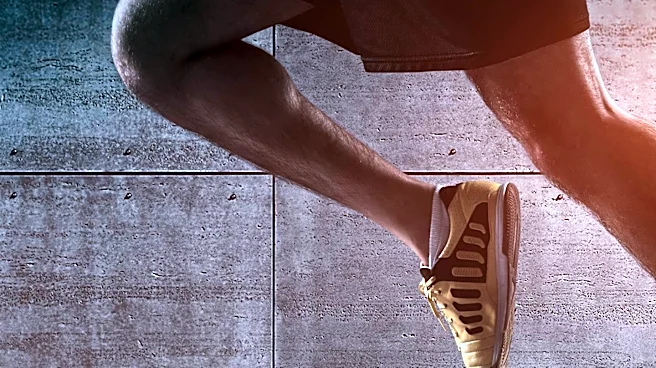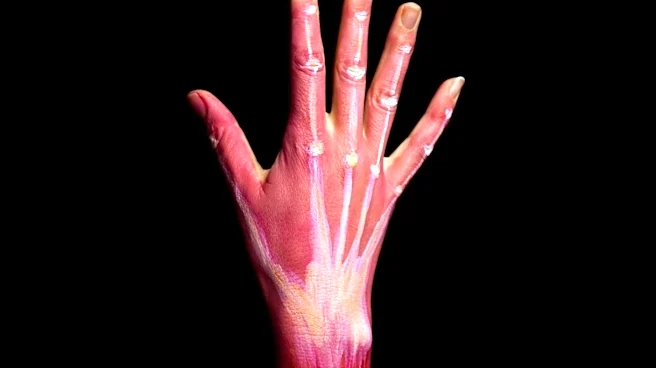


The vastus intermedius muscle, often referred to by its older name, Cruraeus, is a significant component of the quadriceps femoris group located in the thigh. This muscle plays a crucial role in knee extension, a fundamental movement for activities like walking, running, and jumping. Its unique position and characteristics within the quadriceps make it particularly interesting from an anatomical and functional perspective, distinguishing it from its more
superficial counterparts.
Anatomical Origins and Structure
The vastus intermedius originates from a broad area on the front and lateral surfaces of the body of the femur, specifically in its upper two-thirds. It also draws fibers from the lower part of the lateral intermuscular septum. This deep origin positions it directly beneath the rectus femoris muscle, which is the most superficial of the quadriceps muscles. The fibers of the vastus intermedius converge into a superficial aponeurosis, a flat sheet of tendon-like material, which then forms the deep part of the quadriceps femoris tendon. This tendon is essential for transmitting the force generated by the quadriceps muscles to the patella and subsequently to the tibia, enabling knee extension.
Relationship with Other Quadriceps Muscles
While the vastus intermedius is distinct, it shares a close anatomical relationship with the vastus medialis. In fact, these two muscles often appear to be inseparably united upon initial observation. However, during dissection, if the rectus femoris muscle is reflected, a narrow interval can be observed. This interval extends upward from the medial border of the patella, separating the vastus medialis and vastus intermedius. This separation can be traced as far as the lower part of the intertrochanteric line, although at this point, the two muscles frequently become continuous. This close integration highlights the complex and interconnected nature of the quadriceps muscle group, where individual muscles work in concert to produce powerful movements.
Unique Challenges in Stretching and Manipulation
Due to its deep and central location within the quadriceps muscle group, the vastus intermedius presents unique challenges when it comes to stretching and therapeutic manipulation. It is considered the most difficult of the quadriceps muscles to stretch effectively once maximum knee flexion has been achieved. Unlike the rectus femoris, which can be further stretched by hip extension, the vastus intermedius cannot be influenced by hip position. This means that traditional stretches targeting the rectus femoris may not adequately address the vastus intermedius.
Furthermore, its deep position makes it less accessible for massage therapy. While the vastus lateralis and vastus medialis, being more superficial, can be manipulated with massage to stretch their fibers sideways, the vastus intermedius is largely protected by the overlying rectus femoris and its central location. This inaccessibility means that direct manual techniques to stretch its fibers sideways are not as effective. Understanding these limitations is crucial for physical therapists and individuals seeking to improve flexibility or address tightness in this specific quadriceps muscle.