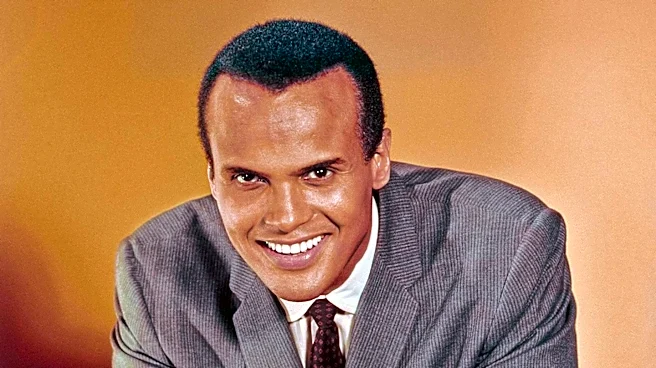






Harry Belafonte, born Harold George Bellanfanti Jr. on March 1, 1927, in New York City, was a multifaceted American artist renowned as a singer, actor, and civil rights activist. His career, spanning from 1948 to 2023, left an indelible mark on popular culture and social justice movements. Belafonte is widely credited with popularizing calypso music among international audiences during the 1950s and 1960s, achieving significant commercial success
and critical acclaim throughout his long and impactful life.
His breakthrough came with the 1956 album *Calypso*, which made history as the first million-selling LP by a single artist. This album, along with his iconic recordings such as "Day-O (The Banana Boat Song)," "Jump in the Line (Shake, Senora)," "Jamaica Farewell," and "Mary's Boy Child," cemented his status as a global music sensation. Beyond calypso, Belafonte's musical repertoire was diverse, encompassing blues, folk, gospel, show tunes, and American standards, showcasing his versatility as a performer.
Musical Milestones and Artistic Range
Belafonte's musical journey began in the late 1940s, and by the mid-1950s, he had become a household name. His ability to blend various genres and his captivating stage presence contributed to his widespread appeal. The success of *Calypso* not only launched him into superstardom but also introduced a new sound to millions, making him known as the "King of Calypso."Throughout his career, Belafonte released numerous albums, including *Mark Twain and Other Folk Favorites* (1954), *Belafonte Sings of the Caribbean* (1957), and *Jump Up Calypso* (1961). He also recorded live albums like *Belafonte at Carnegie Hall* (1959), which further demonstrated his prowess as a live performer. His collaborations with other artists, such as Lena Horne on *Porgy and Bess* (1959) and Miriam Makeba on *An Evening with Belafonte/Makeba* (1965), highlighted his willingness to explore different musical landscapes and his commitment to cross-cultural artistic exchange.
A Champion for Civil Rights
Beyond his artistic endeavors, Harry Belafonte was a passionate and influential civil rights activist. He was a close confidant of Martin Luther King Jr. during the pivotal civil rights movement of the 1950s and 1960s, actively participating in and supporting the struggle for racial equality. His commitment extended to serving as the American Civil Liberties Union's celebrity ambassador for juvenile justice issues, advocating for the rights and well-being of young people.Belafonte's activism was not limited to domestic issues; he was also a vocal critic of U.S. foreign policy and a staunch opponent of apartheid. In 1987, he served as the master of ceremonies for a reception honoring African National Congress President Oliver Tambo, demonstrating his solidarity with the anti-apartheid movement. His political engagement continued into the 21st century, where he voiced strong criticisms of the policies of the George W. Bush and first Donald Trump administrations, particularly regarding the Iraq War. He famously compared the Bush administration's actions to those of terrorists and criticized figures like Colin Powell and Condoleezza Rice, sparking considerable controversy but remaining steadfast in his convictions.