
The Major League Baseball Most Valuable Player (MVP) Award, presented annually by the Baseball Writers' Association of America (BBWAA) since 1931, is one of the sport's most coveted individual honors.
While the award aims to recognize the most outstanding player in both the American and National Leagues, the criteria for "most valuable" are intentionally left undefined by the BBWAA. This flexibility allows individual voters to interpret the term, leading to interesting trends and notable exceptions in the award's history, particularly concerning player positions, team performance, and unique individual achievements.
The voting process for the MVP award occurs before the postseason, with results announced only after the World Series concludes. The BBWAA's approach to voting has seen adjustments over time, starting with three writers from each league city in 1938, and later reducing to two per league city in 1961. This system, combined with the open-ended definition of "most valuable," has shaped the diverse group of players who have earned the award throughout its history.
Positional Dominance and Rare Achievements
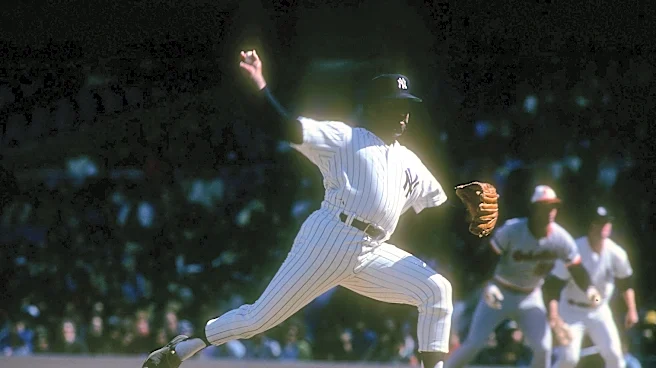
Historically, certain positions have seen more MVP winners than others. First basemen lead all infielders with 35 MVP awards, followed by second basemen (16), third basemen (15), and shortstops (15). Pitchers have also been recognized, with 25 hurlers winning the award; 15 of these were right-handed and 10 were left-handed. Walter Johnson, Carl Hubbell, and Hal Newhouser are the only pitchers to win multiple times, with Newhouser achieving consecutive wins in 1944 and 1945.
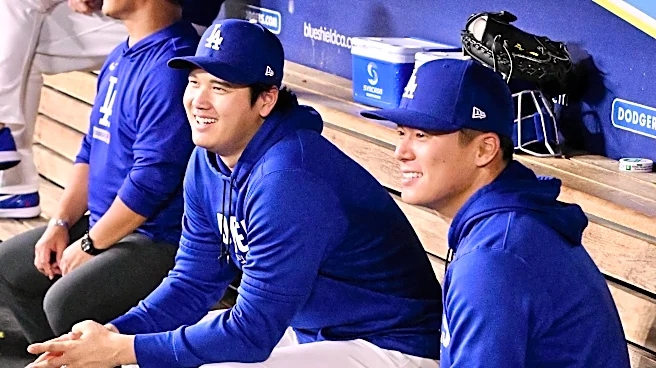
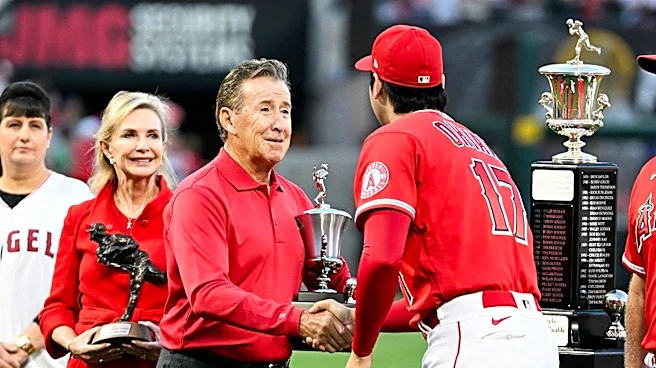
In recent decades, however, pitchers have rarely won the MVP award. For instance, when Shohei Ohtani won the American League MVP in 2021, he became the first pitcher in either league to receive the honor since Clayton Kershaw in 2014, and the first in the American League since Justin Verlander in 2011. Ohtani's unique status as a two-way player further highlights this rarity, as he became the first two-way player to win the award. In 2023, he made history again as the first player to win MVP by unanimous vote twice. Notably, Ohtani is also the only pitcher to win an MVP award without also winning a Cy Young Award in the same year since the Cy Young Award's inception in 1956.
Unconventional Winners and Team Performance
The MVP award is typically associated with players on successful teams, but there have been notable exceptions. Alex Rodriguez and Andre Dawson are the only players to win the award while playing for a last-place team, specifically the 2003 Texas Rangers and the 1987 Chicago Cubs, respectively. This demonstrates that individual brilliance can sometimes transcend team standings in the eyes of voters. The award's only tie occurred in the National League in 1979, when Keith Hernandez and Willie Stargell received an equal number of points, further illustrating the subjective nature of the voting.
Some players have achieved MVP status across different positions or with multiple teams. Hank Greenberg, Stan Musial, Alex Rodriguez, Robin Yount, and Shohei Ohtani have all won the award while playing different positions. Rodriguez stands out as the only player to win the award with two different teams at two different positions, while Ohtani is unique for doing it at two positions in the same season, a feat he accomplished twice. Frank Robinson and Shohei Ohtani are the only players to win the award in both the American and National Leagues, with Ohtani being the first to win in consecutive seasons across both leagues. These instances highlight the diverse paths to MVP recognition and the evolving understanding of what constitutes "most valuable" in baseball.