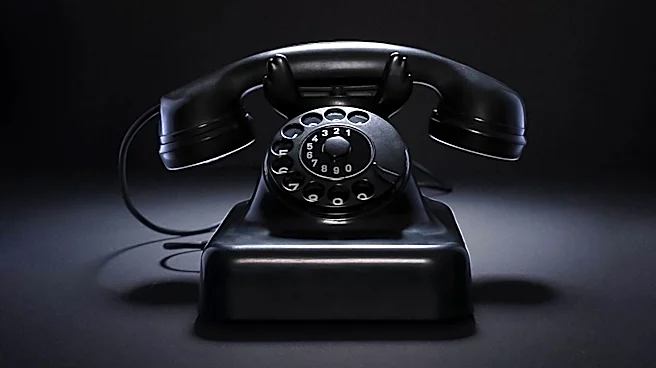









The history of the telephone in the United States is a dynamic narrative of invention, innovation, and widespread adoption, fundamentally altering how Americans communicate. Beginning with Alexander Graham Bell's groundbreaking patent in 1876, the device evolved from a luxury item to an everyday necessity, culminating in the ubiquitous smartphone of the 21st century. This journey reflects significant technological advancements and shifts in societal
usage.
The Dawn of Telephony and Early Growth
Alexander Graham Bell received the first telephone patent in 1876, marking the official beginning of the telephone's role in American communications. His company quickly grew, increasing its capital significantly within six years and strategically acquiring control of Western Electric to manufacture its equipment. By 1881, the American Bell Telephone Company reported substantial profits and operated over 133,000 telephones, demonstrating rapid market penetration. The company's policy of leasing telephones and retaining ownership ensured control over its network and equipment.
The expiration of Bell's second fundamental patent in 1894 opened the door for independent telephone companies to emerge, fostering competition and expanding service, particularly in rural areas that AT&T often overlooked. However, AT&T, which became the parent company of all Bell entities in 1899, quickly reasserted its dominance. By 1930, AT&T owned 80% of the nation's telephones, with nearly all others connected to its network, solidifying its near-monopoly status for much of the 20th century.
Technological Advancements and Shifting Usage Patterns
Throughout the early to mid-20th century, AT&T invested heavily in research and development, notably through Bell Telephone Laboratories established in 1925. This led to crucial innovations like the improvement of the vacuum tube, which was vital for both long-distance telephone transmission and radio development. These advancements allowed for a nationwide telephone system that provided reliable and extensive long-distance service.
Initially, the telephone was primarily seen as a tool for business and emergencies. However, by the 1920s, it became widely popular among the general population. Ordinary people either subscribed to service or used public pay telephones, which were introduced in the 1890s by William Gray. Long-distance calls, initially much more expensive, facilitated communication between businesses, friends, and relatives, gradually displacing telegrams. By 1927, the U.S. saw 29 billion calls annually, averaging 5.4 calls per telephone per day.
The Modern Era: From Breakup to Smartphones
The dominance of AT&T ended with its breakup in 1982, ushering in an era of increased competition in the telecommunications market. This paved the way for further innovation and diversification of services. The early 21st century witnessed another monumental shift with the arrival of the smartphone. This device integrated a mobile computer, cellular phone, digital camera, and internet access, bundled with powerful features like text messaging, which began to displace traditional voice calls.
Smartphones provided users with a small mobile computer equipped with a microphone and speaker, offering capabilities such as email, audio and video playback, and capture. The touch screen became the primary interface for most tasks, including dialing. This evolution from Bell's initial patent to the sophisticated smartphone highlights a continuous trajectory of technological advancement, transforming the telephone from a simple voice communication device into a multifaceted personal computing and communication hub.