









Blanche Stuart Scott, often referred to as "The Tomboy of the Air," carved out a remarkable career in the nascent and male-dominated field of aviation during the early 20th century. Born in 1885, Scott's audacious spirit, first demonstrated in her youth as an automobile enthusiast, found its true calling in the skies. Her journey from being possibly the first American woman aviator to becoming a celebrated stunt pilot and the first female test pilot highlights
her significant contributions to the development and public perception of aviation. Her public performances and record-setting flights captivated audiences and inspired many, solidifying her legacy as a true pioneer.
From First Flight to Public Acclaim
Blanche Stuart Scott's entry into aviation was facilitated by pioneer aviator Glenn Curtiss, who provided her with flying lessons at America's first flying school in Hammondsport, New York. While the exact circumstances of her first solo flight on September 6, 1910, remain debated—whether it was intentional or due to a gust of wind or a shifting throttle limiter—it marked her as possibly the first woman to pilot and solo an airplane in the United States. This initial flight quickly propelled her into the public eye, setting the stage for her professional career.
Her professional debut came on October 24, 1910, as a member of the Curtiss exhibition team at an air meet in Fort Wayne, Indiana. Despite challenging conditions at the venue, which was a roughly prepared race track rather than a proper airfield, Scott insisted on flying. She successfully navigated the difficult terrain, took off, performed eight revolutions around the grounds, and landed safely. This event was historic, as it made her the first woman to fly at a public event in America, earning her the enduring nickname, "The Tomboy of the Air." This moniker perfectly encapsulated her daring nature and her willingness to challenge the conventions of the era.
A Master of Stunts and Record-Breaking Flights
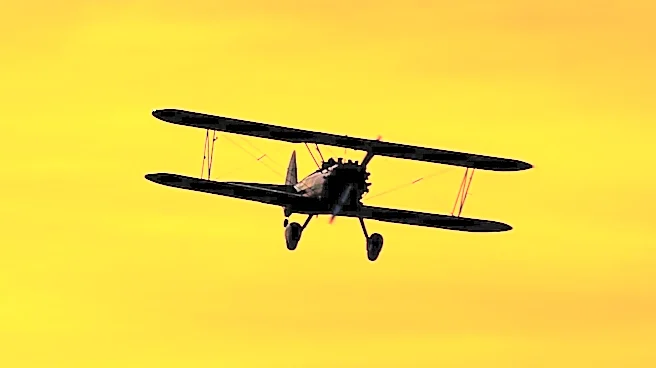
As her career progressed, Blanche Stuart Scott became renowned not only for her pioneering status but also for her exceptional skill as a stunt pilot. She was celebrated for her audacious aerial maneuvers, which included flying upside down and performing what were known as "death dives." These dramatic dives involved plummeting from an altitude of 4,000 feet and then abruptly pulling up just 200 feet from the ground, thrilling spectators and showcasing her incredible control and bravery. Such performances cemented her reputation as a fearless and highly capable aviator.
Beyond her exhibition flying, Scott also made significant contributions to aviation through her record-setting achievements. In 1911, she established several distance records for women. On July 30, she flew 10 miles, and in August of the same year, she extended that record to 25 miles. Her most notable long-distance achievement came when she became the first woman in America to fly 60 miles non-stop from Mineola, New York. These flights demonstrated not only her endurance but also the increasing capabilities of early aircraft, pushing the boundaries of what was thought possible for female aviators.
The First Female Test Pilot and Later Career
Blanche Stuart Scott's influence extended beyond public exhibitions and record attempts. In 1912, she signed a contract with Glenn Martin, a prominent aircraft manufacturer, to become the first female test pilot. In this groundbreaking role, Scott was responsible for flying Martin prototypes even before their final blueprints had been completed. This position required a deep understanding of aircraft mechanics and performance, as well as an exceptional level of piloting skill and courage, as she was essentially testing unproven designs. Her work as a test pilot was crucial for the advancement of aviation technology, as it provided valuable feedback for aircraft development.
In 1913, Scott joined the Ward exhibition team, continuing her career as a professional aviator. However, her demanding profession came with significant risks. Later that same year, she suffered a serious crash, which necessitated a year-long period of recuperation. Despite this setback, she continued to be a prominent figure in aviation until her retirement from professional flying in 1916. Her career, though relatively short, was packed with groundbreaking achievements that left an indelible mark on the history of aviation, particularly for women.